10 High-Paying Side Hustles You Can Start While Still in School

College is expensive. Tuition, textbooks, rent, food, and that bubble tea habit add up faster than you can say “broke student life.”
You need money, but your schedule is packed with lectures, assignments, and maybe a social life if you’re lucky. Traditional part-time jobs want you to commit to fixed shifts that clash with your exam schedule. Not ideal.
The good news? There are side hustles for college students that pay well, fit around your classes, and don’t require you to sacrifice sleep or your GPA.
Side hustles for college students offer flexible earning opportunities that work around academic schedules. From freelance writing and tutoring to reselling and social media management, students can earn $15 to $50+ per hour while building valuable skills. Success requires choosing work that matches your strengths, managing time effectively, and treating your hustle professionally despite the flexible nature.
Why traditional part-time jobs don’t work for most students
Fixed schedules are the enemy of student life.
You have classes at random times. Labs run late. Group projects demand last-minute meetings. Exams require intense study weeks where you can’t commit to regular shifts.
Traditional retail or food service jobs expect you to show up at the same time every week. Miss a shift for an exam? You might lose the job entirely.
Side hustles flip this model. You control when you work, how much you take on, and which projects to accept. This flexibility matters when your schedule changes every semester.
Top side hustles that actually pay well
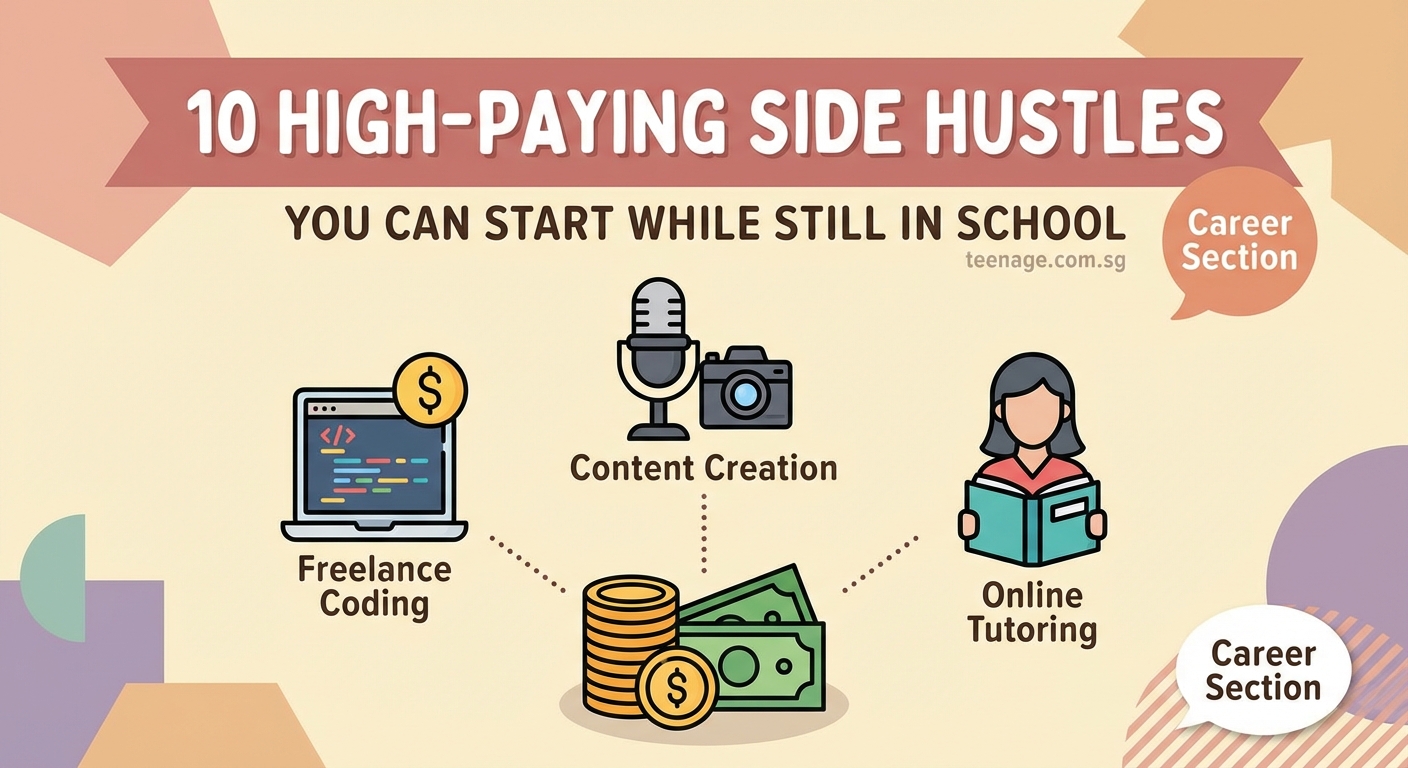
Not all side hustles are created equal. Some pay minimum wage for maximum effort. Others offer serious money for skills you already have or can learn fast.
Here are the best options for college students who want to earn real money without destroying their academic performance.
Freelance writing and content creation
Businesses need content constantly. Blog posts, website copy, social media captions, email newsletters.
Students with decent writing skills can charge $50 to $200+ per article depending on length and complexity. Start with smaller gigs on platforms like Upwork or Fiverr, build a portfolio, then raise your rates.
The beauty of freelance writing? You can do it from your dorm room at 2 AM if that’s when you work best. No commute, no dress code, no manager breathing down your neck.
Online tutoring
If you’re strong in any subject, other students will pay you to help them understand it. Math, science, languages, test prep, you name it.
Tutoring rates range from $20 to $60 per hour depending on the subject and your qualifications. Platforms like Wyzant, Tutor.com, and Chegg Tutors connect you with students.
You can also tutor locally. Post flyers around campus, join student Facebook groups, or ask professors if they know anyone who needs help. High school students preparing for college entrance exams pay especially well.
Social media management
Small businesses know they need to be on Instagram, TikTok, and Facebook. They don’t know how to make it happen.
You do. You’ve been using these platforms since middle school. That experience is valuable.
Offer to manage social media accounts for local cafes, boutiques, or service providers. Create posts, respond to comments, run basic ad campaigns. Charge $300 to $1,000+ per month per client depending on how many posts and platforms they need.
Start with one or two clients. Once you prove you can grow their following and engagement, word spreads fast in small business communities.
Reselling and flipping items
Buy low, sell high. Simple concept, proven results.
Thrift stores, garage sales, and clearance sections are goldmines for people who know what to look for. Vintage clothing, sneakers, electronics, textbooks, collectibles, all can be resold for profit on eBay, Poshmark, Depop, or Facebook Marketplace.
One student I know makes $500+ monthly buying discounted sneakers and flipping them to collectors. Another sources vintage band tees from thrift stores and sells them online for 10x what she paid.
The learning curve is real. You need to research what sells, understand pricing, and handle shipping. But once you get the system down, it’s almost passive income.
Graphic design and digital art
Canva has made basic design accessible to everyone, but businesses still need professional-quality work for logos, flyers, social media graphics, and marketing materials.
If you have design skills or are willing to learn software like Adobe Illustrator or Photoshop, you can charge $25 to $100+ per project. Students in design programs already have the skills. Others can learn through YouTube tutorials and practice.
Create a portfolio with mock projects if you don’t have real clients yet. Show what you can do, then start pitching to small businesses or posting your services online.
Photography and videography
Everyone has a smartphone camera, but not everyone knows how to use it well.
Students with photography or video skills can shoot content for events, products, social media, or personal branding. Rates vary wildly based on the project, from $100 for a simple photoshoot to $500+ for event coverage.
Campus events, student organizations, local businesses, and individuals all need visual content. Start building a portfolio by offering discounted rates to your first few clients, then raise prices as demand grows.
How to choose the right side hustle for you
Not every hustle fits every student. Pick based on three factors.
Your existing skills. What are you already good at? Writing, math, design, photography, talking to people? Start there. Learning new skills is great, but you’ll earn faster doing what you already know.
Your available time. Be honest about how many hours you can realistically work per week. Some hustles require consistent effort. Others let you work in bursts during breaks or light academic weeks.
Your earning goals. Need $200 a month for groceries? Or $1,000+ to cover rent? Different hustles have different earning ceilings. Match your choice to your financial needs.
Getting started without experience
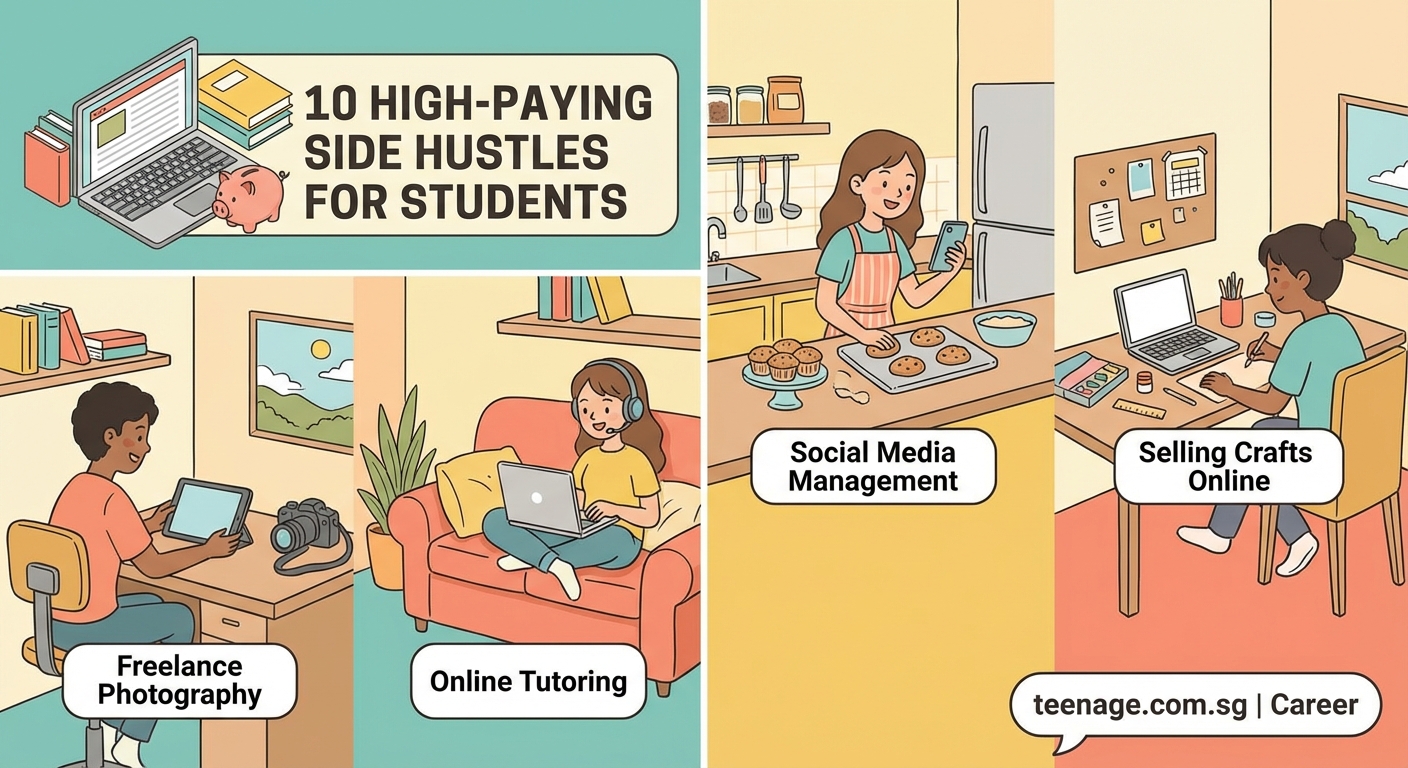
The biggest barrier isn’t skill. It’s confidence.
You think you need years of experience before anyone will pay you. Not true. Everyone starts somewhere, and clients care more about results than credentials.
Here’s how to get your first paying gig:
- Choose one hustle and commit to it for 30 days. Don’t try five things at once. Pick one, learn it, and give it a real shot.
- Create a simple portfolio or profile. Even if it’s just mock projects or practice work, show what you can do.
- Offer your first few services at a discount. Not free, discounted. This gets you real clients and testimonials without devaluing your work.
- Ask for reviews and referrals. Happy clients will recommend you to others. This is how you grow without spending money on ads.
- Raise your rates after every 5-10 clients. As you get better and busier, charge more. Don’t stay stuck at beginner prices.
Balancing side hustles with school
Making money is great. Failing your classes is not.
The whole point of flexible side hustles is that they fit around your education, not replace it. Here’s how to keep both on track.
Set clear boundaries. Decide how many hours per week you’ll work on your hustle. Treat it like a part-time job with limits. When you hit your hours, stop. Your degree matters more than an extra $50 this week.
Use dead time strategically. Gaps between classes, late nights when you can’t sleep, weekends when your friends are busy. These are hustle hours. Don’t sacrifice study time or sleep you actually need.
Automate and systematize. The more you can streamline your hustle, the less time it takes. Use templates for common tasks, batch similar work together, and create processes that save time.
Say no when necessary. During exam weeks or when big projects are due, it’s okay to pause your hustle or turn down new clients. Protect your academic performance first.
Students who balance school, social life, and self-care successfully often apply the same time management principles to their side hustles.
Common mistakes to avoid
New hustlers make predictable errors. Learn from them instead of repeating them.
| Mistake | Why it hurts | Better approach |
|---|---|---|
| Undercharging severely | Attracts difficult clients and devalues your work | Research market rates and charge at least 75% of average |
| Taking on too many clients | Leads to burnout and poor quality work | Start with 2-3 clients, add more only when comfortable |
| Not tracking income and expenses | Tax season becomes a nightmare | Use a simple spreadsheet or app to log everything monthly |
| Ignoring contracts or agreements | Clients can refuse to pay or change terms | Always get scope, price, and deadlines in writing |
| Waiting for perfection | You never start because nothing feels ready | Launch with “good enough” and improve as you go |
Tax basics every student hustler needs to know
Making money means dealing with taxes. Sorry.
If you earn more than $400 from self-employment in a year, you need to report it to the IRS. This applies even if you’re a full-time student and your parents claim you as a dependent.
Keep records of everything. Income from clients, expenses for your hustle (software, supplies, mileage), and receipts. Apps like Wave or QuickBooks Self-Employed make this easier.
Set aside 25-30% of your hustle income for taxes. Open a separate savings account and transfer this percentage every time you get paid. When tax season arrives, you’ll have the money ready instead of scrambling.
Consider talking to a tax professional or using software like TurboTax Self-Employed for your first year. The cost is worth avoiding mistakes that could trigger audits or penalties.
Scaling up when you’re ready
Once your hustle is running smoothly, you might want to grow it.
Raise your rates first. This is the easiest way to earn more without working more hours. If clients consistently say yes to your prices, you’re probably charging too little.
Specialize in a niche. Instead of being a general freelance writer, become the go-to person for tech startups or fitness brands. Specialists charge more than generalists.
Build systems that save time. Templates, processes, and tools that let you deliver quality work faster mean you can take on more clients without burning out.
Some students turn their side hustles into full businesses after graduation. Others keep them as supplemental income alongside their careers. Both paths are valid. The skills you build while hustling, time management, client communication, financial literacy, matter regardless of where you end up.
Tools and resources that make hustling easier
You don’t need fancy equipment or expensive software to start. But a few tools can make your life significantly easier.
For freelancers: Upwork, Fiverr, and Freelancer connect you with clients. PayPal and Venmo handle payments. Google Docs and Canva cover most content creation needs.
For tutors: Zoom for online sessions, Google Calendar for scheduling, Calendly to let clients book time slots automatically.
For resellers: eBay, Poshmark, Depop, and Facebook Marketplace for selling. Pirate Ship for discounted shipping labels.
For everyone: Notion or Trello for tracking projects and clients. Wave or QuickBooks for finances. A dedicated email address for your hustle keeps business separate from personal.
Many students find that free apps designed for productivity help them manage both schoolwork and side projects more efficiently.
Building skills that matter after graduation
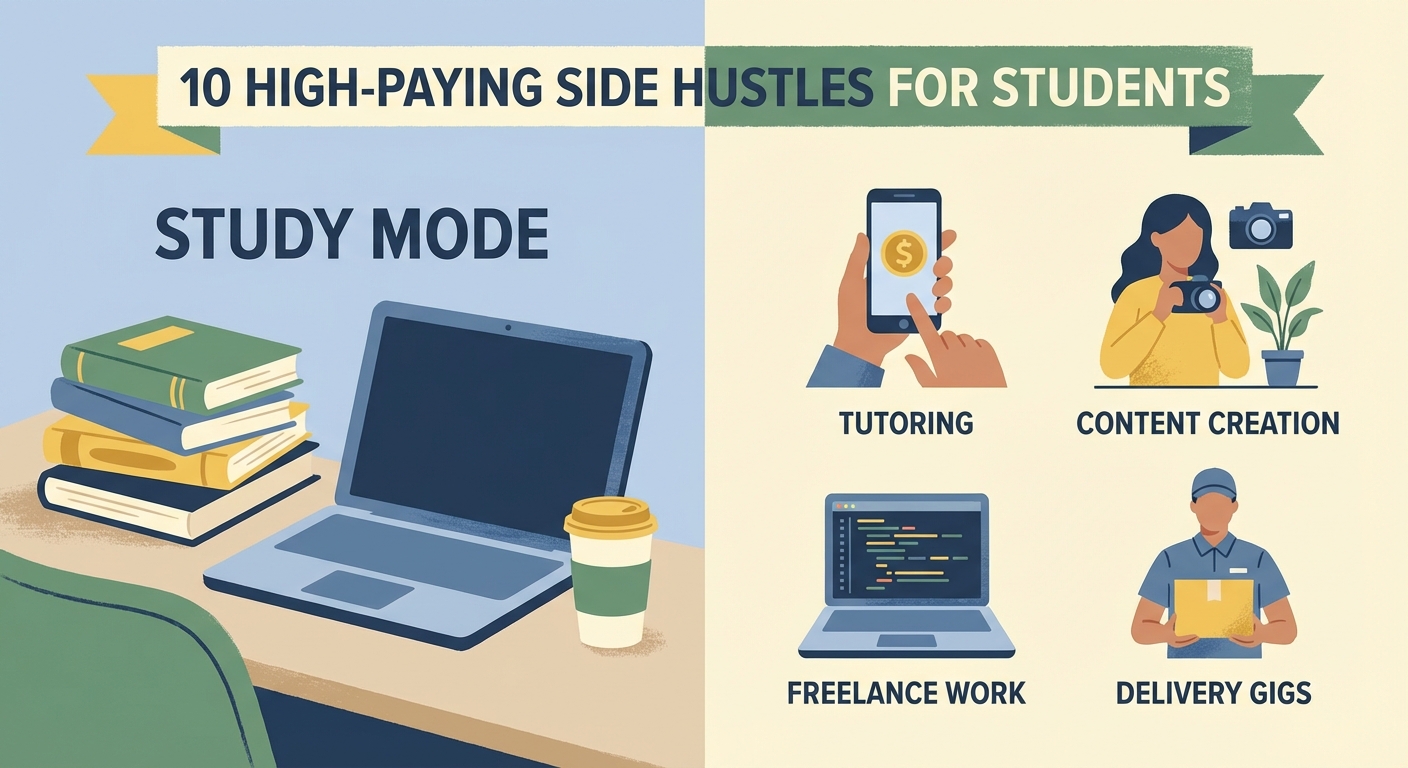
Side hustles aren’t just about money. They’re about experience.
Employers love seeing entrepreneurial spirit on resumes. Managing clients, meeting deadlines, handling money, and solving problems independently are exactly what hiring managers look for.
A student who tutored 10 clients and managed their schedule demonstrates responsibility and communication skills. Someone who ran a reselling business shows initiative and business acumen. A freelance writer has a portfolio of published work before they even graduate.
These experiences often matter more than internships at big companies. You’re not just following instructions. You’re making decisions, dealing with consequences, and proving you can create value.
Plus, the money you earn now reduces student debt later. Every dollar you make is a dollar you don’t have to borrow or pay interest on. That compounds significantly over time.
“The best time to start a side hustle is when you have the safety net of being a student. You can experiment, fail, and learn without risking your livelihood. By the time you graduate, you’ll have skills and income streams that most entry-level employees don’t.” – Career counselor at a major university
When to treat your hustle like a real business
At first, your side hustle is casual. A few clients here and there, some extra spending money.
But if you’re consistently earning $500+ per month, it’s time to get more professional.
Register a business name if you want to operate under something other than your personal name. Open a separate bank account for business income and expenses. Consider liability insurance if you’re providing services that could potentially go wrong.
Look into forming an LLC if your hustle involves any risk. This protects your personal assets if someone sues your business. It also makes you look more legitimate to higher-paying clients.
None of this is required to start. But as you grow, these steps protect you and help you scale further.
Students interested in building professional skills often benefit from learning how to write a resume that showcases their side hustle experience effectively.
Making your hustle sustainable long-term

The goal isn’t to work yourself to death. It’s to create a sustainable income source that supports your life without consuming it.
Protect your energy. Burnout is real. If you start resenting your hustle, you’ll quit. Take breaks. Have days where you don’t work at all. Treat yourself well.
Diversify your income. Don’t rely on one client for all your income. If they leave, you’re back to zero. Aim for multiple smaller clients instead of one big one.
Keep learning. The more skilled you become, the more you can charge. Invest time in improving your craft through free online courses, YouTube tutorials, or practice projects.
Build relationships. Happy clients refer new clients. Treat people well, deliver quality work, and communicate clearly. Your reputation is your most valuable asset.
Your money, your schedule, your rules


Side hustles for college students offer something traditional jobs can’t: complete control over your time and earning potential.
You decide when to work, which projects to take, and how much to charge. You build skills that matter in the real world while earning money that actually makes a difference in your daily life.
The students who start hustling now graduate with more than a degree. They have experience, confidence, and often a client base ready to support them as they transition into full-time careers.
Start small. Pick one hustle from this list. Commit to trying it for 30 days. See what happens.
The worst case? You learn something new and make a little money. The best case? You build a sustainable income stream that supports you through college and beyond.
Your future self will thank you for starting today.














Post Comment