5 Signs You’re Picking the Wrong Major and What to Do About It

That sinking feeling hits during lecture. Again.
You’re staring at your professor, but nothing clicks. Your classmates seem excited about concepts that make you want to check your phone. Meanwhile, your electives are the only classes you actually look forward to. Sound familiar?
Choosing a major is one of the biggest decisions you’ll make in college, and getting it wrong happens more often than you think. About 30% of students change their major at least once, and many wish they’d recognized the warning signs earlier.
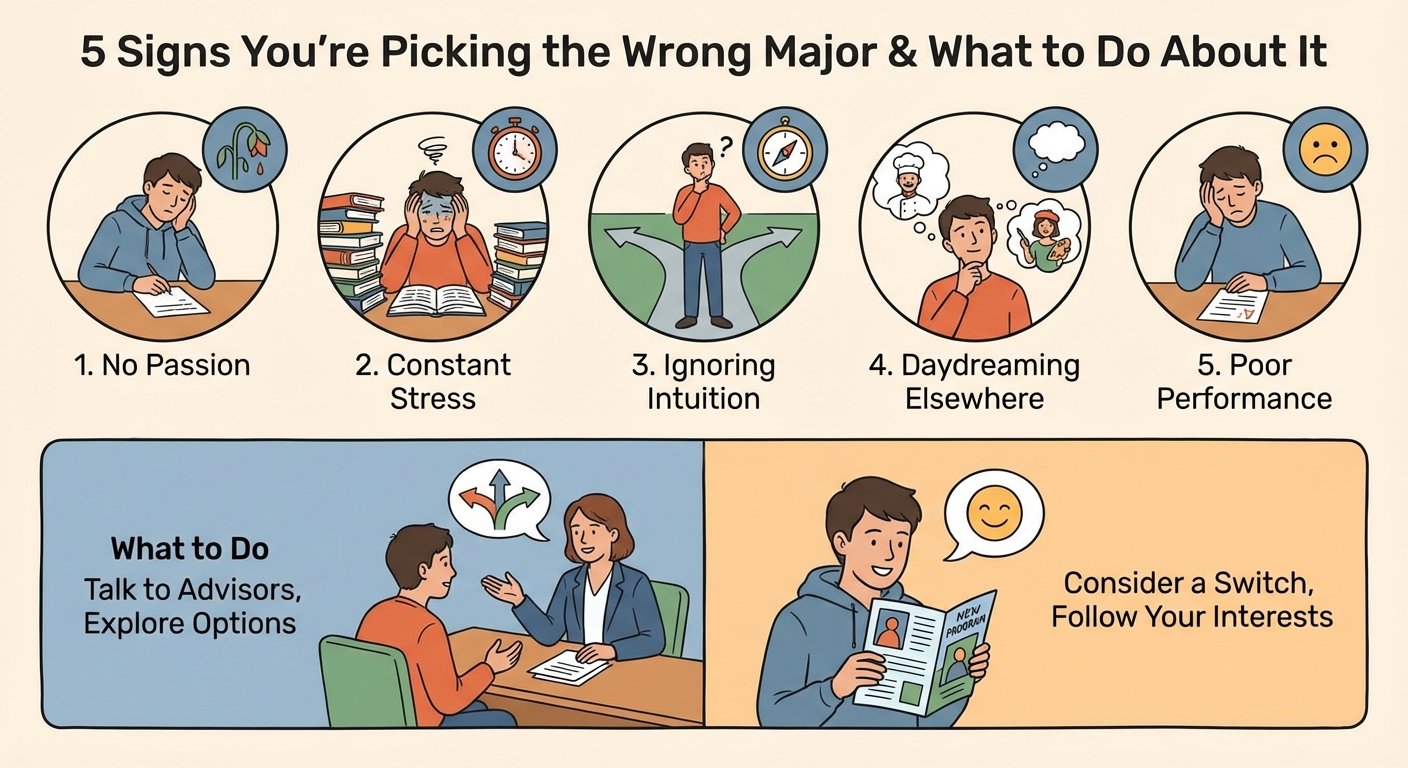
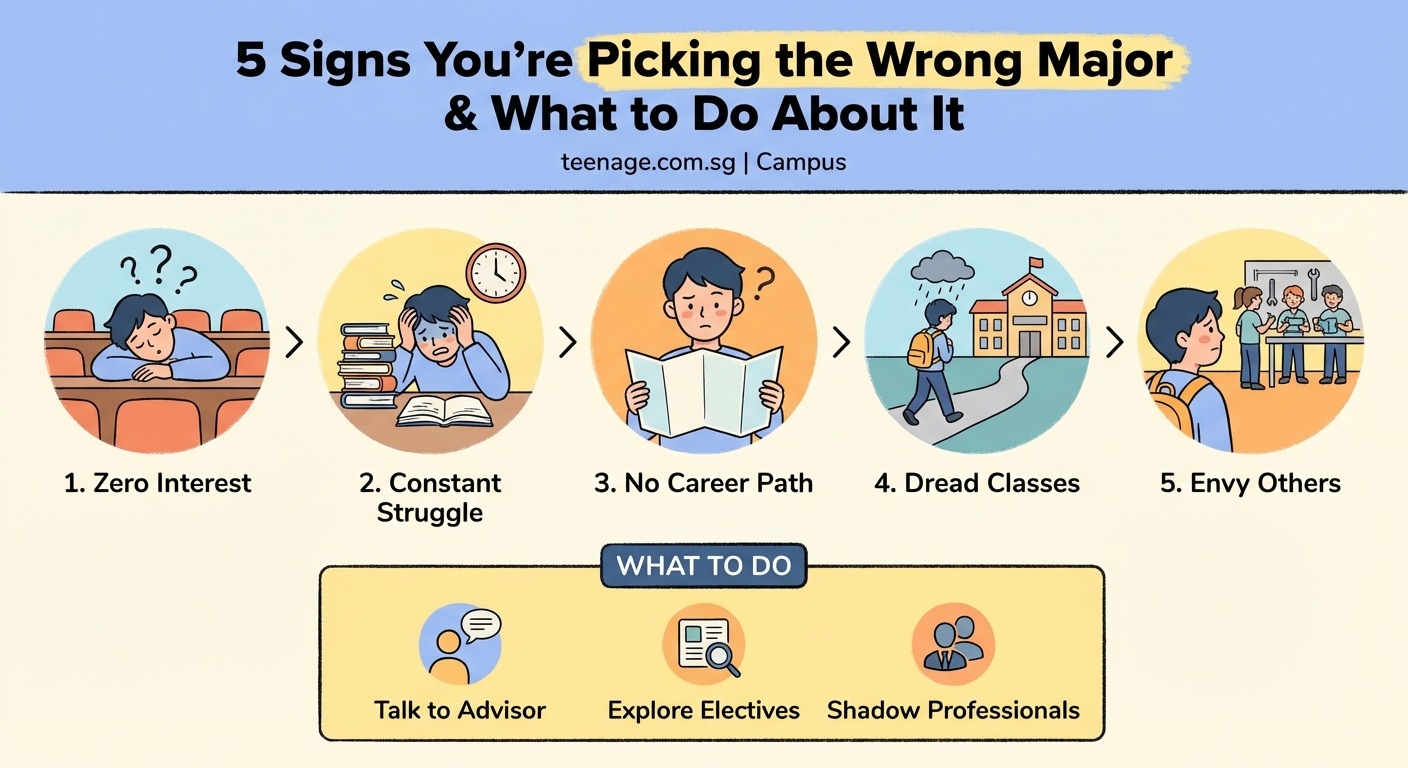
Recognizing signs you picked the wrong major early saves time and money. Common red flags include dreading classes, struggling despite effort, finding more interest in other subjects, feeling disconnected from career goals, and experiencing declining mental health. Taking action now through academic advising, exploring alternatives, and understanding transfer credits can help you switch paths before investing too many semesters in the wrong direction.
You dread going to your major classes
This goes beyond typical Monday morning blues.
If you find yourself making excuses to skip classes in your major while never missing electives, that’s a red flag. College is supposed to challenge you, but it shouldn’t make you miserable.
Pay attention to how you feel on Sunday nights. Are you anxious about the week ahead because of your major coursework? Do you procrastinate on assignments until the last possible second?
Some stress is normal. Constant dread isn’t.
Your classmates might be geeking out over the latest assignment while you’re counting down minutes until class ends. That enthusiasm gap matters. It signals a fundamental mismatch between your interests and your chosen field.
Your grades are suffering despite real effort
Struggling in a class or two doesn’t mean you’re in the wrong major.
But consistently poor performance across multiple core courses? That’s different.
Here’s what to watch for:
- You study for hours but still barely pass exams
- Concepts that seem easy for classmates feel impossible to grasp
- Your GPA in major courses is significantly lower than in general education classes
- Professors suggest you might want to reconsider your path
- You need tutoring for nearly every major requirement
The difference between a challenging major and the wrong major comes down to progress. Challenge pushes you forward. The wrong fit keeps you stuck no matter how hard you work.
“If you’re putting in the hours but not seeing results, it might not be about effort. Some subjects just don’t align with how your brain works, and that’s okay. Better to recognize it now than after graduation.” — Academic advisor at a major state university
Compare your performance across different subject areas. If you’re acing your study strategies in other classes but failing in your major, the problem isn’t your work ethic.
Everything you research points to different fields
Your browser history tells a story.
You’re supposed to be writing a paper for your major, but instead you’re reading articles about completely different careers. Your YouTube recommendations are full of content about industries that have nothing to do with your current path.
This happens when your curiosity pulls you elsewhere:
- You spend free time learning skills unrelated to your major
- You follow professionals on social media who work in different fields
- You feel more excited talking about other subjects with friends
- Your personal projects have nothing to do with your coursework
Your genuine interests deserve attention. They’re not distractions from your “real” major. They might be pointing you toward your actual calling.
Look at what you do when no one’s watching. What videos do you watch? What articles do you save? What conversations energize you? Those answers matter more than what you declared on a form during freshman orientation.
The career path feels completely wrong
You picked your major with a specific job in mind.
Now that you’re learning what that job actually involves, the reality doesn’t match your expectations. Maybe you shadowed someone in the field and felt bored. Maybe you landed an internship and counted down the days until it ended.
| Warning Sign | What It Means | Action to Take |
|---|---|---|
| Internship feels like punishment | Day-to-day work doesn’t suit you | Talk to people in adjacent roles |
| Can’t picture yourself in the job | Lack of genuine career connection | Research alternative paths using same skills |
| Job descriptions sound draining | Core tasks don’t match your strengths | Identify what aspects you actually enjoy |
| Industry news bores you | No passion for the field’s direction | Consider related fields that excite you more |
Career goals change. That’s normal.
What’s not normal is forcing yourself down a path that makes you unhappy just because you declared it 18 months ago. The whole point of college is figuring out what you want to do with your life, and sometimes that means admitting your first guess was wrong.
Think about your ideal workday five years from now. Does it involve the skills and tasks your major is preparing you for? If not, you have valuable information.
Your mental health is taking a hit
College is stressful for everyone.
But if your major is the primary source of anxiety, depression, or burnout, that’s a sign worth taking seriously.
Notice these patterns:
- You feel relief during breaks, then dread returning to campus
- Friends in other majors seem genuinely excited about their studies
- You’re losing sleep over coursework more than peers
- Physical symptoms like headaches or stomach issues appear before major classes
- You’ve stopped taking care of yourself because coursework feels overwhelming
Your wellbeing matters more than sticking with a major that’s destroying it. No degree is worth sacrificing your mental health, especially when switching majors is a completely normal part of the college experience.
Sometimes the pressure comes from external expectations. Parents who want you to pursue their dream career. Friends who think you’re “too smart” to switch out of a prestigious major. Societal pressure to pick practical fields over creative ones.
Those external voices don’t have to live your life. You do.
If your major is affecting your ability to function, sleep, eat, or maintain relationships, that’s your mind and body telling you something important. Listen to those signals before they get worse.
What to do if these signs sound familiar
Recognizing the problem is step one. Taking action is step two.
Don’t panic and don’t make impulsive decisions. Instead, follow this process:
- Schedule a meeting with your academic advisor within the next week
- Research majors that align with your actual interests and strengths
- Talk to students currently in those programs about their experiences
- Check graduation requirements to understand how credits will transfer
- Consider whether a minor or double major might satisfy both interests
- Look into career services to understand job prospects in different fields
- Give yourself permission to make the change if it’s right for you
The earlier you make this decision, the less it costs in time and tuition. A semester spent in the wrong major is a semester you could have used building skills you actually need.
Some practical considerations matter too. How many credits will transfer? Will switching add extra semesters? Can you afford additional time in school? These are real questions that deserve honest answers, but they shouldn’t be the only factors in your decision.
Talk to financial aid about how changing majors affects your scholarships. Some are major-specific while others aren’t. Understanding the financial implications helps you make an informed choice rather than a fear-based one.
Making space for the things that matter to you extends beyond academics. Just like organizing your living space can improve your daily life, reorganizing your academic path can transform your entire college experience.
Finding your actual path forward
Switching majors isn’t failure.
It’s course correction. It’s growth. It’s being honest with yourself about what you want instead of what you thought you wanted at 18.
Most successful people will tell you their path wasn’t straight. They tried things, realized those things weren’t right, and adjusted. That’s not just okay. It’s how life works.
Your major should energize you more than it drains you. It should connect to work you can actually see yourself doing. It should play to your strengths instead of constantly highlighting your weaknesses.
If you’re seeing multiple signs you picked the wrong major, trust your gut. Do the research. Have the conversations. Make the change if you need to. Your future self will thank you for having the courage to admit when something isn’t working and doing something about it.
The best time to switch was yesterday. The second best time is right now, before you invest another semester in the wrong direction.














Post Comment