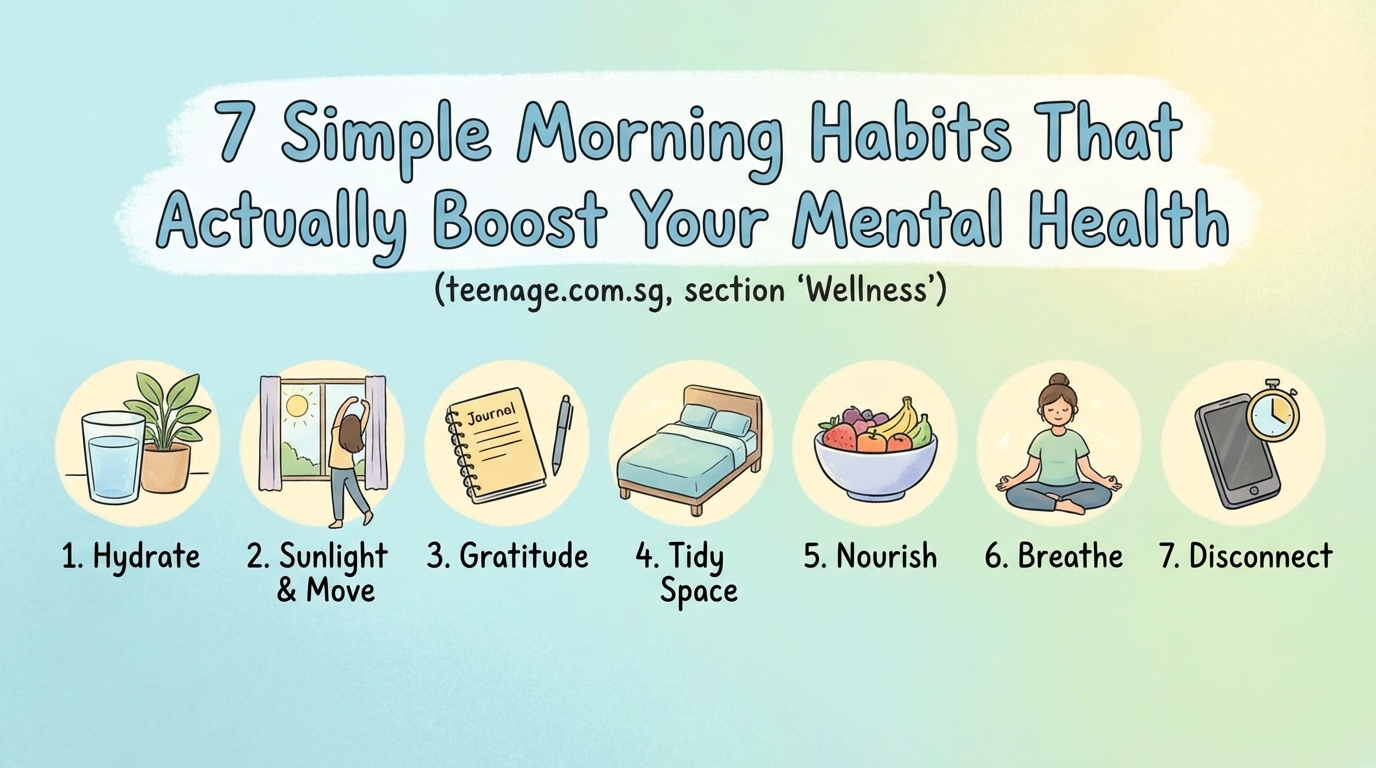
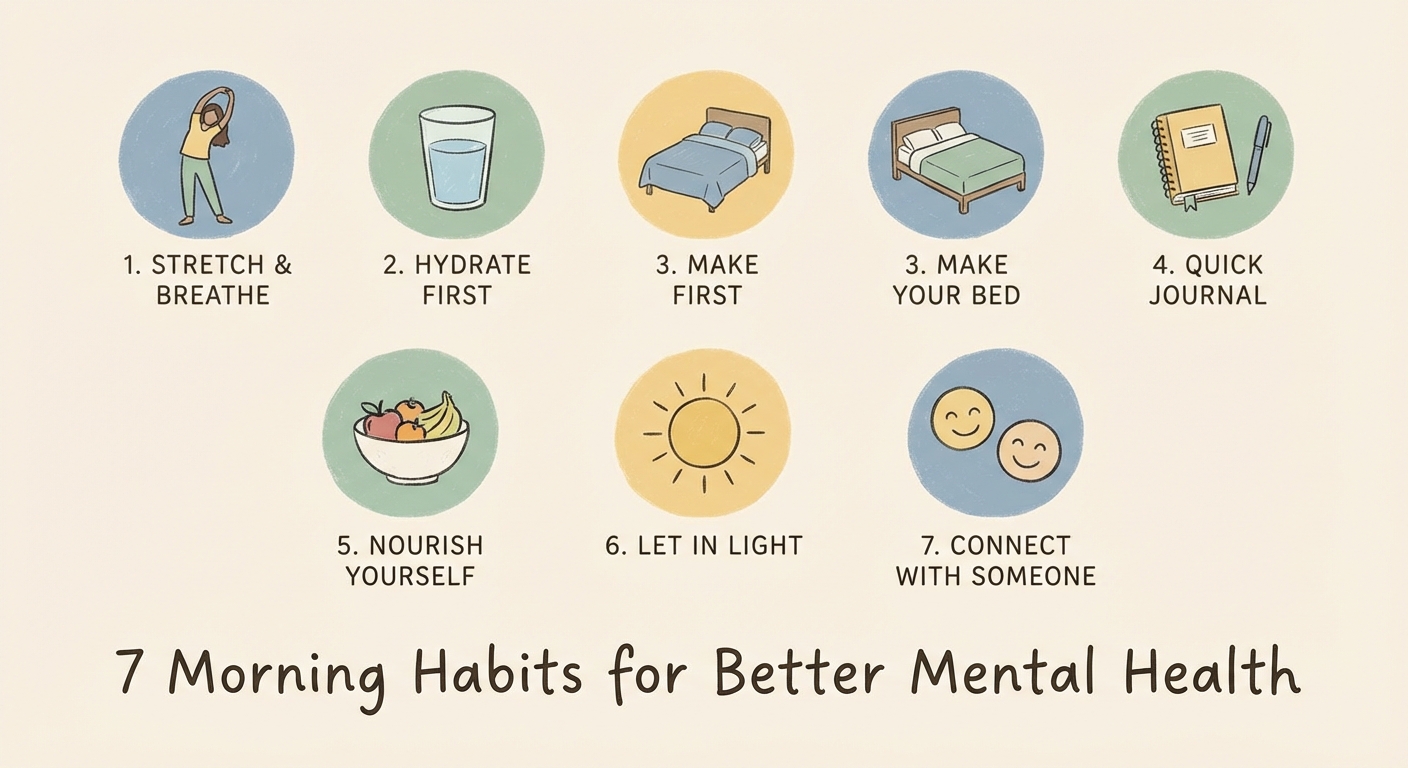
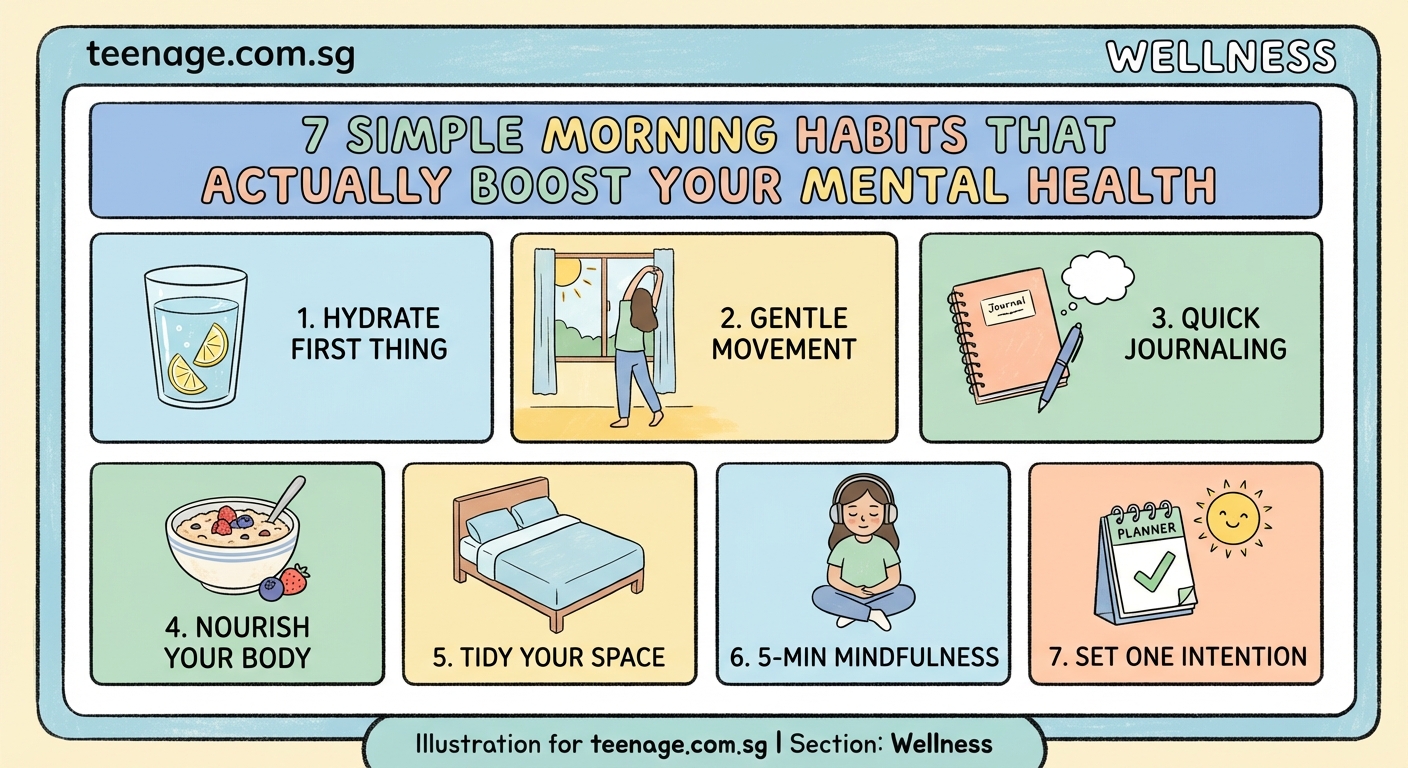
7 Simple Morning Habits That Actually Boost Your Mental Health

You wake up already feeling behind. Your phone buzzes with notifications before your feet hit the floor. The day starts in a fog of stress before you’ve even brushed your teeth.
Sound familiar?
The truth is, your morning sets the tone for everything that follows. And if you’re struggling with anxiety, stress, or just feeling mentally drained, the first hour of your day might be the problem.
But here’s the good news. Small, intentional morning habits for mental health can completely shift how you feel, think, and handle whatever life throws at you. No expensive therapy apps. No complicated routines. Just simple practices backed by research that actually work.
Morning habits for mental health don’t require hours of meditation or complex rituals. Seven simple practices can dramatically improve your mood, reduce anxiety, and build resilience: delaying phone use, hydrating first, moving your body, eating protein, practicing gratitude, getting sunlight, and planning your day. Each habit takes under 10 minutes but compounds into lasting mental wellbeing when practiced consistently.
Skip your phone for the first 30 minutes
Your brain wakes up in a vulnerable state. It’s still transitioning from sleep to full consciousness.
When you immediately grab your phone, you flood that delicate mental space with other people’s problems, news alerts, and social comparison. Your cortisol levels spike. Your nervous system goes into reactive mode.
Instead, give yourself 30 minutes of phone-free morning time.
Use those minutes to ease into the day on your own terms. Stretch. Make coffee. Sit in silence. The world can wait.
Research shows that people who delay morning phone use report lower anxiety and better mood throughout the day. Your brain gets to wake up naturally instead of being jolted into fight-or-flight mode.
Start small if 30 minutes feels impossible. Try 10 minutes. Then build up. Put your phone in another room overnight so you’re not tempted to reach for it the moment your alarm goes off.
Drink water before anything else
Your body loses about a liter of water while you sleep through breathing and sweating.
You wake up dehydrated. And dehydration directly impacts your mental state. Even mild dehydration can cause irritability, difficulty concentrating, and increased perception of task difficulty.
Before coffee. Before breakfast. Before anything. Drink a full glass of water.
Keep a water bottle on your nightstand so it’s the first thing you see. Room temperature is fine. Add lemon if you want, but plain water works perfectly.
This simple habit jumpstarts your metabolism, helps flush out toxins, and gets oxygen flowing to your brain. You’ll feel more alert and clear-headed within minutes.
Many people notice they rely less on caffeine when they prioritize morning hydration. Your energy comes from actual physiological function, not just stimulants.
Move your body for just 5 minutes
You don’t need a full workout. You don’t need gym clothes or equipment.
Just move.
Five minutes of physical activity in the morning reduces anxiety and improves mood for hours afterward. It doesn’t matter what kind of movement. Walk around your room. Do jumping jacks. Stretch on the floor. Dance to one song.
Movement releases endorphins and reduces cortisol. It also helps regulate your circadian rhythm, which improves sleep quality that night.
Here’s what 5 minutes of morning movement might look like:
- 20 jumping jacks
- 10 push-ups (on your knees is fine)
- 30-second plank
- 10 squats
- 1 minute of stretching
- Repeat once
Or simply walk outside for 5 minutes. The combination of movement and fresh air is incredibly powerful for mental clarity.
If you’re someone who struggles with sticking to routines in college, starting with just 5 minutes makes it sustainable. You can always do more, but you never have to.
Eat protein within an hour of waking
Your brain runs on glucose, but it also needs amino acids to produce neurotransmitters like serotonin and dopamine.
These chemicals directly regulate your mood, motivation, and stress response.
Skipping breakfast or eating only carbs causes blood sugar crashes that feel like anxiety. Your mood becomes unstable. You get irritable and unfocused.
Protein stabilizes blood sugar and provides the building blocks your brain needs to function optimally.
Good morning protein options:
- Two eggs (any style)
- Greek yogurt with nuts
- Protein smoothie with banana and peanut butter
- Cottage cheese with berries
- Leftover chicken or fish
- Protein oatmeal with seeds
Aim for at least 20 grams of protein. This isn’t about diet culture or weight loss. It’s about giving your brain the fuel it needs to handle stress and maintain stable energy.
People who eat protein-rich breakfasts report better concentration, fewer mood swings, and less afternoon anxiety compared to those who skip breakfast or eat only carbs.
Write down three things you’re grateful for
Gratitude practice sounds cheesy until you actually do it consistently.
The science is clear: regularly practicing gratitude rewires your brain to notice positive aspects of life more automatically. It reduces rumination, improves sleep, and increases overall life satisfaction.
Every morning, write down three specific things you’re grateful for. Not the same three every day. Really think about it.
Not just “my family” but “my sister texted me a funny meme yesterday that made me laugh out loud.”
Not just “my health” but “my body let me sleep through the night without pain.”
The specificity matters. It forces your brain to actively search for good things instead of defaulting to worry and stress.
Keep a small notebook by your bed or use the notes app on your phone. This takes less than 2 minutes but shifts your mental baseline from scarcity to abundance.
“Gratitude turns what we have into enough. When practiced consistently in the morning, it sets a positive mental filter for interpreting the day’s events, reducing the tendency to catastrophize or ruminate on negative experiences.” (Dr. Robert Emmons, gratitude researcher)
Get natural light within 15 minutes of waking
Your circadian rhythm controls more than just sleep. It regulates mood, hormone production, metabolism, and stress response.
Natural light is the primary signal that sets this internal clock.
Getting sunlight in your eyes (not through a window, not with sunglasses) within 15 minutes of waking tells your brain it’s time to be alert and awake. It triggers cortisol release at the right time, which actually reduces anxiety later in the day.
It also starts a timer for melatonin production about 14-16 hours later, helping you sleep better that night.
Step outside for even 5 minutes. Stand by an open window. Sit on your balcony with your morning water.
On cloudy days, you still get enough light exposure. Your eyes are incredibly sensitive to natural light even when it doesn’t feel bright.
This habit alone can reduce symptoms of seasonal depression, improve sleep quality, and stabilize mood throughout the day. If you’re dealing with mental health struggles related to screen time, morning sunlight becomes even more critical for resetting your system.
Plan your top three priorities before checking email
Most people start their day in reactive mode. Email, messages, other people’s agendas.
This creates a sense of being overwhelmed and out of control before you’ve accomplished anything meaningful.
Instead, spend 3 minutes identifying your top three priorities for the day. Not everything you need to do. Just the three things that matter most.
Write them down. Be specific.
Not “work on project” but “write introduction section for project report.”
Not “study” but “review chapter 4 notes and make flashcards.”
This simple practice gives you a sense of direction and control. When you get pulled into distractions later, you can return to these three priorities.
It also helps you say no to things that don’t serve your goals. You’re not being lazy or unhelpful. You’re protecting your mental energy for what matters.
How these habits work together
These seven morning habits for mental health aren’t random suggestions. They work as a system.
Skipping your phone protects your mental space. Hydration and movement wake up your body. Protein stabilizes your brain chemistry. Gratitude shifts your mindset. Sunlight regulates your internal clock. Planning gives you direction.
Together, they create a foundation of mental resilience that carries you through whatever challenges the day brings.
Here’s a realistic morning timeline that includes all seven habits:
| Time | Habit | Duration |
|---|---|---|
| 6:00 AM | Wake up, leave phone in other room | 0 min |
| 6:01 AM | Drink full glass of water | 1 min |
| 6:02 AM | Step outside for sunlight | 5 min |
| 6:07 AM | Do 5 minutes of movement | 5 min |
| 6:12 AM | Make and eat protein breakfast | 15 min |
| 6:27 AM | Write three gratitudes | 2 min |
| 6:29 AM | Write top three priorities | 3 min |
| 6:32 AM | Now check your phone | 0 min |
Total time invested: 31 minutes.
You don’t have to do all seven immediately. Start with one or two that feel most manageable. Build from there.
The goal isn’t perfection. It’s consistency. Even doing three of these habits most mornings will create noticeable improvements in your mental health within two weeks.
Common mistakes that sabotage morning routines
Knowing what to do isn’t enough. You also need to avoid the traps that derail even the best intentions.
Setting unrealistic expectations. You see someone’s Instagram story about their 90-minute morning routine and think you need to match it. You don’t. Start small. Five minutes of one habit is infinitely better than zero minutes of an elaborate routine you’ll abandon by day three.
Trying to change everything at once. Your brain resists massive change. Pick one habit. Do it for two weeks. Then add another. This approach actually works.
Not preparing the night before. If you have to search for your water bottle, find workout clothes, or figure out what to eat, you’ll skip the habit. Set up everything the night before. Fill your water bottle. Lay out clothes. Prep breakfast ingredients.
Checking your phone “just for a second.” There’s no such thing. One notification turns into 20 minutes of scrolling. Keep your phone in another room or use an app that locks it for the first hour.
Beating yourself up when you miss a day. Life happens. You’ll sleep through your alarm. You’ll have an emergency. One missed day doesn’t erase your progress. Just start again the next morning.
| Habit | Common Mistake | Better Approach |
|---|---|---|
| Skip phone | Checking “just for weather” | Get a cheap alarm clock, keep phone in another room |
| Drink water | Forgetting because bottle isn’t visible | Fill bottle and place on nightstand every night |
| Morning movement | Thinking you need 30+ minutes | Set timer for 5 minutes, stop when it beeps |
| Eat protein | No time to cook | Prep hard-boiled eggs or overnight oats night before |
| Gratitude | Writing generic items | Force yourself to be specific and different each day |
| Get sunlight | Staying inside because it’s cold | Just step outside for 2 minutes, you can handle it |
| Plan priorities | Making endless to-do lists | Limit to exactly three items, no more |
What to expect when you start
Week one will feel awkward. You’ll forget habits. You’ll check your phone out of muscle memory. Your brain will resist the new routine.
This is normal. Keep going.
Week two gets easier. The habits start feeling less forced. You’ll notice small improvements. Maybe you feel less anxious in the morning. Maybe you sleep slightly better.
By week three, at least some of these habits will feel automatic. You’ll notice bigger changes. Better mood. More energy. Improved focus. Less reactive to stress.
After a month, these morning habits for mental health become part of who you are. You’ll feel off on days when you skip them. That’s when you know they’ve stuck.
The mental health benefits compound over time. You’re not just feeling better in the moment. You’re literally rewiring your brain’s stress response and mood regulation systems.
People around you might start asking what’s different. You seem calmer. More positive. More present.
That’s the power of intentional mornings. Not because morning people are better than night owls. But because taking control of your first waking hour gives you agency over your mental state instead of letting it happen to you.
Your mental health deserves this investment
Thirty minutes. That’s all these habits require.
Not hours of meditation. Not expensive supplements or therapy. Just 30 minutes of intentional practices that science shows actually improve mental health.
You spend more time than that scrolling social media before you even get out of bed. You spend more time than that watching shows you’re not even enjoying. You spend more time than that worrying about things you can’t control.
What if you invested that time in practices that actually help?
Your mental health isn’t a luxury. It’s the foundation for everything else. Your relationships, your work, your ability to enjoy life, your capacity to handle challenges.
These morning habits for mental health give you that foundation. They’re simple enough to start today but powerful enough to change how you experience every day that follows.
Pick one habit. Just one. Do it tomorrow morning. Then do it again the next day.
Your future self will thank you for starting.














Post Comment