The Ultimate Guide to Balancing School, Social Life, and Self-Care

You’re staring at a pile of textbooks, your phone is buzzing with group chat notifications, and you can’t remember the last time you got eight hours of sleep. Sound familiar? Juggling school, friends, and taking care of yourself feels impossible most days. But here’s the truth: balance isn’t about doing everything perfectly. It’s about making choices that keep you sane and functional.
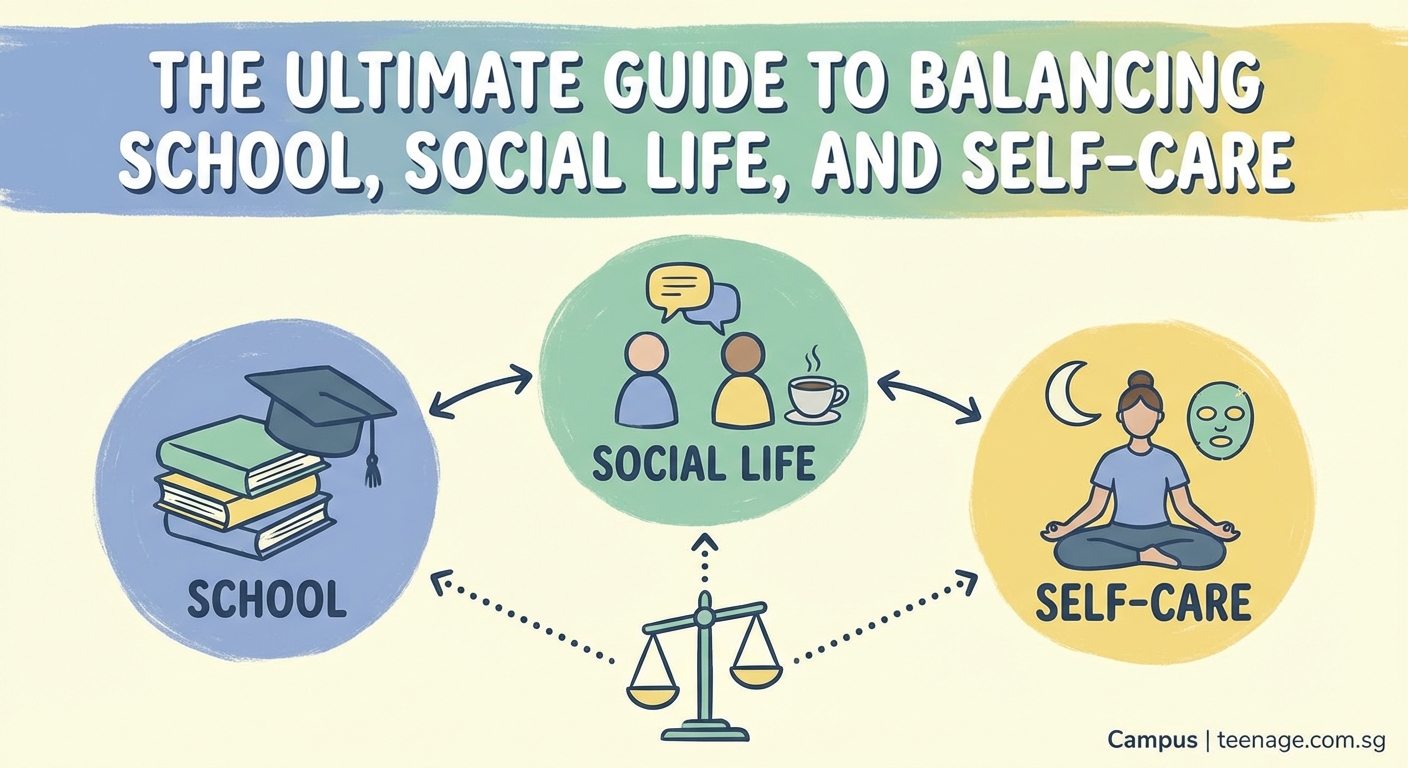
Balancing school, social life, and self care means setting realistic priorities, creating flexible routines, and learning to say no without guilt. Success comes from small, consistent habits rather than trying to excel at everything simultaneously. You need systems that adapt to your energy levels and schedules, not rigid rules that make you feel worse when life gets chaotic.
Why traditional time management advice doesn’t work for students
Most productivity tips assume you have control over your schedule. But when you’re a student, your time gets carved up by class schedules, assignment deadlines, group project meetings, and family obligations.
The problem isn’t that you’re bad at managing time. The problem is that you’re trying to fit too much into too little space.
Real balance means accepting that some weeks will be heavier on academics. Others will lean toward social activities. And sometimes, you’ll need to prioritize rest above everything else.
Building a schedule that actually fits your life
Start by mapping out your non-negotiables. These are commitments you absolutely cannot skip:
- Class times and mandatory attendance requirements
- Work shifts if you have a part-time job
- Family obligations or caregiving responsibilities
- Sleep (yes, this counts as non-negotiable)
Once you see what’s fixed, you can work with the gaps. Don’t try to fill every empty slot. Leave buffer time between commitments so you’re not constantly rushing.
Here’s a practical approach that works for most students:
- Block out all fixed commitments in your calendar first
- Add two to three hours of focused study time for each major class
- Schedule at least one social activity per week that you actually look forward to
- Reserve one full evening for complete downtime with zero obligations
- Build in 30-minute buffer zones between different types of activities
The buffer zones matter more than you think. They give you time to decompress, grab food, or handle unexpected issues without derailing your entire day.
Setting boundaries without losing your friends
Saying no feels terrible when you’re worried about missing out or letting people down. But saying yes to everything guarantees you’ll burn out.
Your friends will understand if you skip one hangout to finish a project. If they don’t, that’s information worth having about the friendship.
“The best thing I learned in college was that real friends respect your time. They don’t guilt-trip you for prioritizing your mental health or your grades. They check in, they adjust plans, and they celebrate your wins with you.” – College senior reflecting on four years of friendship dynamics
Practice these phrases until they feel natural:
- “I’d love to, but I need to catch up on sleep tonight.”
- “Can we do this next week instead? I’m swamped right now.”
- “I’m only available for an hour, but I’d still like to see you.”
Notice how none of these include apologies or lengthy explanations. You don’t owe anyone a dissertation on why you’re protecting your time.
The actual basics of self care that cost nothing

Self care isn’t face masks and bubble baths (though those are fine if you enjoy them). It’s the boring stuff that keeps your body and brain functioning.
Start here:
- Sleep seven to nine hours most nights
- Eat at least two real meals per day
- Move your body for 20 minutes, even if it’s just walking
- Spend time away from screens before bed
- Talk to at least one person you trust when you’re struggling
These aren’t Instagram-worthy habits. They’re survival basics. If you’re consistently skipping meals to study or staying up until 3 a.m. scrolling, no amount of meditation apps will fix the underlying problem.
7 simple morning habits that actually boost your mental health can help you start your day without feeling overwhelmed, even when your schedule is packed.
Recognizing when you’re heading toward burnout
Burnout doesn’t announce itself. It creeps up through small signs you might ignore until you’re completely exhausted.
Watch for these warning signals:
- You dread things you used to enjoy
- Small tasks feel overwhelming
- You’re irritable with people you care about
- You can’t focus even when you have time to study
- Physical symptoms like headaches or stomach issues become regular
If you’re checking multiple boxes, it’s time to pull back. Not next week. Now.
Drop something from your schedule. Ask for an extension on an assignment. Cancel plans. Your body is trying to tell you something important.
Making study time actually productive
Hours spent staring at notes while your mind wanders don’t count as studying. Quality beats quantity every time.
Try the focused sprint method:
- Set a timer for 25 minutes
- Work on one specific task with zero distractions
- Take a five-minute break to move around
- Repeat three to four times, then take a longer 20-minute break
This approach works because it matches how your brain actually focuses. You’re not trying to maintain concentration for three straight hours, which is basically impossible anyway.
Turn off notifications. Close unnecessary tabs. Tell your roommate you need silence. Create an environment where focus is the default, not something you have to fight for.
Students who struggle with procrastination often benefit from 10 study hacks that actually work for procrastinators, which breaks down specific techniques for getting started when motivation is low.
Finding social connection without sacrificing everything else
You don’t need to attend every party or say yes to every invitation to maintain friendships. Consistent small interactions often matter more than big events.
Consider these low-effort ways to stay connected:
- Study sessions with friends in the same classes
- Walking to class together instead of alone
- Group meals in the dining hall
- Quick coffee breaks between lectures
- Shared downtime where you’re just existing in the same space
These activities serve double duty. You’re getting social time while accomplishing other necessary tasks.
Quality friendships don’t require constant availability. They thrive on genuine presence during the time you do spend together.
When to choose academics over social life (and vice versa)
Sometimes you’ll face direct conflicts between studying and spending time with friends. Here’s how to decide:
Choose academics when:
– You have an exam or major deadline within 48 hours
– You’re genuinely behind and catching up requires focused time
– Missing the social event won’t damage an important relationship
– You’ve been prioritizing social activities heavily for the past week
Choose social life when:
– You’ve been isolating yourself for days
– The event is a once-in-a-lifetime opportunity
– Your mental health needs the connection
– You’re caught up enough that one evening won’t derail everything
The key is honest assessment. Are you avoiding studying because you’re tired and need a break? That’s valid. Are you avoiding it because you’re scared of the work? That requires a different solution.
Creating routines that bend without breaking
Rigid routines fail the moment something unexpected happens. Build flexibility into your systems from the start.
Instead of “I study from 7 to 10 p.m. every night,” try “I complete two hours of focused study before bed each night.” The outcome matters more than the exact timing.
Have backup plans for common disruptions:
| Situation | Backup Plan |
|---|---|
| Friend crisis needs immediate attention | Move study session to morning, trim social plans later in week |
| Unexpected group meeting scheduled | Use meeting time as social quota, skip planned hangout |
| Feeling physically exhausted | Take the night off completely, add 30 minutes to next three study days |
| Exam week approaching | Warn friends in advance, schedule one brief social break mid-week |
These contingency plans remove the decision-making stress when you’re already overwhelmed. You’ve already thought through the trade-offs.
The truth about multitasking and why it’s sabotaging you
You cannot effectively study while texting, watching videos, and scrolling social media. Your brain doesn’t work that way, no matter how much you think you’ve adapted.
Every time you switch tasks, you lose momentum. It takes an average of 23 minutes to fully refocus after an interruption.
Do one thing at a time:
– When you’re with friends, be with friends
– When you’re studying, only study
– When you’re resting, actually rest
This sounds simple, but it’s probably the hardest habit to build. We’re all addicted to constant stimulation. Fighting that addiction is part of taking care of yourself.
Managing energy, not just time
You might have three free hours in your schedule, but if you’re exhausted, those hours won’t be productive. Learning to work with your energy levels changes everything.
Track your natural rhythms for a week. When do you feel most alert? When does your brain turn to mush?
Schedule your hardest tasks during your peak energy windows. Save mindless work for low-energy times. Rest when your body demands it.
Some people are sharp in the morning. Others don’t fully wake up until noon. Neither is wrong. Build your schedule around your reality, not some ideal version of productivity.
Why you’re always tired (and it’s not just late night scrolling) addresses common energy drains that affect students beyond obvious sleep deprivation.
Dealing with guilt when you choose yourself
The guilt will probably show up when you prioritize self care over other commitments. That’s normal, but it doesn’t mean you’re making the wrong choice.
You’re allowed to:
– Skip social events to rest
– Turn down extra responsibilities
– Spend time alone without explanation
– Change your mind about commitments
– Put your mental health first
Guilt often comes from the belief that you should be able to handle everything. But “should” according to whom? Challenge that assumption.
Taking care of yourself isn’t selfish. It’s necessary. You can’t show up for anyone else if you’re running on empty.
Using technology to help instead of hurt
Apps and tools can support balance, but they can also become another source of stress. Choose carefully.
Helpful uses of technology:
– Shared calendars with friends to coordinate schedules
– Task management apps that break big projects into smaller steps
– Focus timers that block distracting websites
– Sleep tracking to identify patterns
Harmful uses:
– Constant availability in group chats
– Comparing your life to curated social media posts
– Using productivity apps that make you feel guilty
– Checking email or messages during designated rest time
Set boundaries with your devices. Turn off non-essential notifications. Designate phone-free zones or times. Technology should serve you, not control you.
What to do when everything falls apart anyway
Even with great systems, some weeks will completely derail. You’ll get sick, family emergencies will happen, or you’ll just hit a wall.
When this happens:
- Identify the absolute must-do items (usually fewer than you think)
- Communicate with professors, friends, and anyone affected by your reduced capacity
- Cut everything else without guilt
- Focus on basic functioning (sleep, food, hygiene)
- Ask for help from people who care about you
This isn’t failure. This is being human. The goal isn’t perfection. It’s sustainability.
Building support systems before you need them
Don’t wait until you’re drowning to figure out who can help you. Build your support network now.
Your support system might include:
– A friend who checks in regularly
– A family member who understands your stress
– Campus counseling services
– Academic advisors who can help with course planning
– Study groups where you can ask questions
Different people serve different needs. Your party friends might not be your crisis support friends, and that’s fine.
How to deal with friendship breakups when you’re still seeing them every day offers guidance for navigating complex social dynamics that can add stress to an already full plate.
Adjusting your approach as circumstances change
What works during regular semester weeks won’t work during finals. Your needs during freshman year differ from senior year. Stay flexible.
Revisit your systems every few weeks. Ask yourself:
– What’s working well right now?
– What’s causing unnecessary stress?
– What needs to change?
Give yourself permission to experiment. Try a new routine for two weeks. If it helps, keep it. If it doesn’t, try something else.
There’s no universal formula. You’re building a personalized approach through trial and error.
Making peace with good enough
Perfect balance doesn’t exist. Some days you’ll crush your goals. Other days you’ll barely survive. Both are okay.
Good enough means:
– Turning in solid work instead of perfect work
– Maintaining friendships without being everyone’s first call
– Taking care of basic needs even when you skip the extras
– Getting through tough periods without falling apart completely
Lower your standards from “excellent at everything” to “functional in what matters most.” This isn’t giving up. It’s being realistic about human limitations.
Students dealing with exam pressure specifically might find the ultimate guide to managing exam stress without burning out helpful for navigating high-stakes periods without sacrificing everything else.
Practical strategies for common scenarios
Let’s get specific about situations you’ll actually face:
When you have back-to-back exams:
Prioritize sleep over extra study hours. Your brain needs rest to retain information. Study in focused bursts. Warn friends you’ll be less available. Schedule one celebration activity for after exams.
When your friend group makes plans every night:
Commit to one or two nights per week. Explain that you need other evenings for school and rest. Suggest activities that fit your schedule instead of always adapting to theirs.
When you’re feeling lonely but too tired to socialize:
Low-key connection counts. Text a friend. Sit in a common area while doing homework. Attend something for 30 minutes then leave. You don’t need to be “on” to get social benefits.
When academic pressure feels unbearable:
Talk to your professors about workload. Visit campus counseling. Drop a class if needed. Your degree isn’t worth your mental health.
Small habits that create big changes over time
You don’t need to overhaul your entire life. Small, consistent actions compound.
Try adding just one of these:
– Lay out clothes the night before to reduce morning stress
– Keep healthy snacks in your bag for busy days
– Set a daily alarm to check in with yourself about how you’re feeling
– Block 15 minutes each Sunday to plan the week ahead
– Text one friend per day just to maintain connection
Pick one. Do it for three weeks. Then add another if you want. Slow, sustainable change beats dramatic overhauls that last three days.
Making it work for the long haul
Balance isn’t a destination you reach. It’s an ongoing practice of checking in with yourself and adjusting as needed.
You’ll mess up. You’ll overcommit. You’ll neglect something important. That’s part of learning. The goal is to notice faster and correct sooner each time.
Be patient with yourself. You’re learning skills that most adults still struggle with. Give yourself credit for trying, even when it doesn’t go perfectly.
The fact that you’re reading this means you care about finding a better way. That awareness is the first step. Now take what resonates, ignore what doesn’t, and build something that actually works for your life.





Post Comment