How to Build the Ultimate Spotify Playlist for Every Mood

Music has a weird way of knowing exactly what you need before you do. One minute you’re scrolling through hundreds of songs trying to find the right vibe, the next you’re stuck listening to the same five tracks on repeat because nothing else hits right.
Building playlists that actually match your moods changes everything. Instead of frantically searching for songs when you’re already feeling a certain way, you’ll have perfectly curated collections ready to go. Whether you’re powering through assignments, getting hyped before heading to concerts, or just vibing alone in your room, the right playlist makes those moments better.
Creating mood-based Spotify playlists involves identifying your emotional states, choosing specific themes, selecting songs that match energy levels, organizing tracks strategically, and maintaining your collections over time. Start with 3-5 core moods, aim for 30-50 songs per playlist, and update them monthly. Use descriptive names, custom covers, and collaborative features to make playlists more personal and shareable with friends.
Understanding Your Mood Categories First
Before you start throwing random songs into playlists, you need to map out your actual emotional landscape. Most people think they only have happy, sad, and angry moods. Reality is way more nuanced than that.
Think about your typical week. You probably cycle through way more emotional states than you realize. There’s the pre-exam stress energy, the Friday night excitement, the Sunday evening dread, the late night overthinking sessions, the morning motivation attempts, and everything in between.
Start by tracking your moods for a few days. Notice what you’re feeling when you reach for music. Are you trying to match your current emotion or change it? Both approaches work, but they need different playlist strategies.
Here are mood categories that actually make sense for daily life:
- Focused work mode when you need zero distractions
- Hype energy for workouts or getting ready to go out
- Chill background vibes for hanging with friends
- Emotional processing for when feelings hit hard
- Comfort zone music that feels like home
- Discovery mode for finding new sounds
- Sleep prep tracks that wind you down
- Morning energy to actually get out of bed
Don’t copy these exactly. Your emotional patterns are unique. Maybe you need a specific playlist for commuting, or one for cooking, or one for those weird in-between moments when you’re bored but not tired.
Choosing Songs That Match Energy Levels
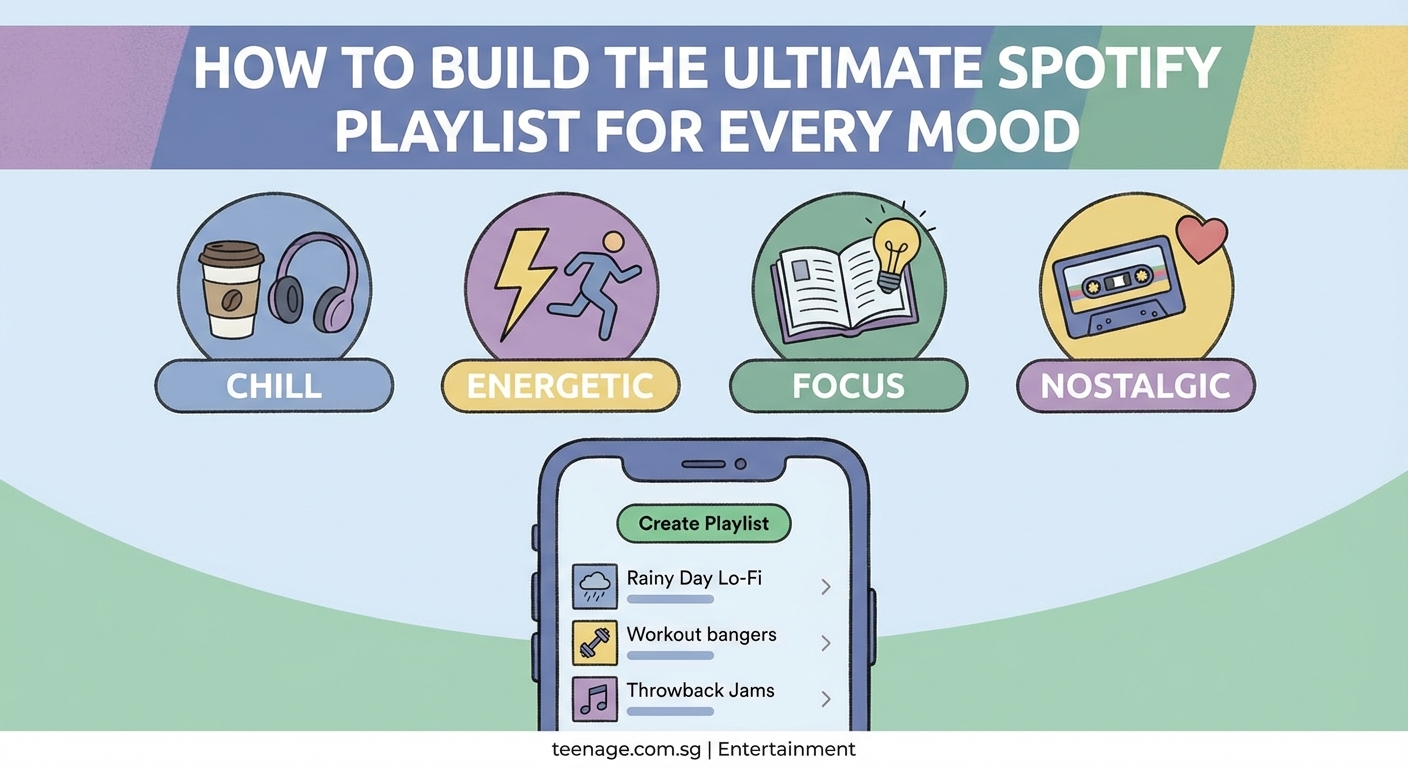
Energy matching is the secret that separates okay playlists from ones that actually work. You can’t just throw together songs you like and expect them to create a cohesive mood.
Every song has an energy signature. Tempo matters, but it’s not everything. A slow song can have intense emotional energy. A fast song can feel empty and low-energy if the production is thin.
Pay attention to these elements when selecting tracks:
Tempo and rhythm patterns: Songs between 60-80 BPM generally feel calming. 120-140 BPM hits that sweet spot for focus or moderate activity. Anything above 140 BPM brings high energy and excitement.
Instrumental density: More instruments and layers create fuller, more energizing sounds. Stripped down acoustic tracks feel intimate and calm. Electronic production can go either way depending on the mixing.
Vocal intensity: Whispered or soft vocals create different moods than belted power notes. Rap verses carry different energy than melodic singing. Instrumental tracks remove vocals entirely, which helps some people focus better.
Lyrical content: Words matter more than you think. Even if you’re not actively listening to lyrics, your brain processes them. Sad lyrics can bring down an otherwise upbeat song. Aggressive lyrics pump up energy even in slower tracks.
Test your songs in real situations. That track that seems perfect for studying might actually be too distracting once you try doing actual work with it playing. The gym song that sounds amazing at home might have awkward tempo changes that throw off your workout rhythm.
The best playlists feel like they’re reading your mind. Each song should flow naturally into the next without jarring transitions or energy mismatches that pull you out of the moment.
Building Your First Three Core Playlists
Starting with three playlists keeps things manageable while covering your most common needs. You can always expand later, but these three will handle 80% of your daily listening.
1. Focus Flow Playlist
This one’s for getting stuff done. Classes, homework, projects, whatever requires actual concentration.
Pick songs without distracting lyrics. Instrumental tracks work great here. Lo-fi hip hop, ambient electronic, classical music, jazz, video game soundtracks, and movie scores all fit this category.
Keep the energy consistent. You want a steady flow that helps you maintain focus for extended periods. Avoid songs with dramatic builds or sudden changes that grab your attention away from work.
Aim for 2-3 hours of music minimum. Running out of songs mid-study session breaks your concentration when you have to find something else to play.
2. Energy Boost Playlist
For workouts, cleaning your room, getting ready to go out, or any time you need to amp yourself up.
Load this with your favorite high-energy tracks. Fast tempos, strong beats, confident lyrics, whatever makes you feel like you can take on anything.
Front-load the biggest bangers. Put your most intense songs in the first 30 minutes when you need that initial motivation surge. You can let the energy taper slightly toward the end as you cool down.
Mix genres freely here. If death metal, K-pop, and 2000s pop punk all get you hyped, throw them all in. Energy matters more than cohesion for this type of playlist.
3. Wind Down Playlist
For late evenings, stressful days, or any time you need to decompress.
Choose mellower tracks with lower tempos and softer production. This isn’t necessarily “sad” music, just calmer and more introspective.
Avoid songs with painful associations. This playlist should feel safe and comfortable, not emotionally triggering. Save the cry-it-out tracks for a different collection.
Order matters here more than other playlists. Start with slightly more energetic calm songs, then gradually decrease intensity as the playlist progresses. This helps your nervous system actually wind down instead of staying alert.
Advanced Organization Strategies
Once you’ve got your core playlists working, you can get more sophisticated with your organization system.
Micro-mood playlists target super specific emotional states. “3am existential thoughts” hits different than general nighttime music. “Fake it till you make it confidence” serves a different purpose than genuine celebration energy. “Angry but need to stay calm” requires carefully selected tracks that acknowledge your feelings without amplifying them.
Activity-specific collections match particular situations rather than emotions. Your morning routine playlist might start calm and gradually build energy. Your commute playlist accounts for travel time. Your cooking playlist has enough energy to keep you moving but won’t distract you from following recipes.
Seasonal rotations acknowledge that your music taste shifts with the weather and time of year. Summer playlists feel different than winter ones. Back-to-school energy differs from holiday break vibes.
Collaborative mood boards let friends contribute to shared playlists. This works great for group study sessions, road trips, or party prep. Everyone adds songs that match the intended vibe, creating a collection that represents your whole friend group’s taste.
Here’s a comparison of different organizational approaches:
| Organization Type | Best For | Playlist Count | Update Frequency |
|---|---|---|---|
| Mood-based | Daily emotional shifts | 8-12 playlists | Weekly additions |
| Activity-focused | Routine consistency | 5-8 playlists | Monthly refresh |
| Genre-sorted | Music discovery | 15+ playlists | As you find new artists |
| Chronological | Tracking taste evolution | Unlimited | Archive quarterly |
| Collaborative | Social listening | 3-5 shared lists | Ongoing contributions |
| Hybrid system | Maximum flexibility | 10-20 playlists | Mixed schedule |
Naming and Visual Identity
Playlist names matter more than you’d think. “Chill vibes” tells you nothing useful. “2am can’t sleep brain won’t shut up” immediately communicates exactly when and why you’d choose that playlist.
Be specific with your naming. “Study music” is generic. “Focus mode no lyrics” or “background noise for reading” gives you actual information about what’s inside.
Use emoji strategically if that’s your style. They add visual distinction when you’re scrolling through your library. Just don’t go overboard to the point where names become unreadable.
Custom cover images help you identify playlists at a glance. Spotify lets you upload your own images or choose from their photos. Pick visuals that match the mood you’re trying to create.
Color psychology actually works here. Warm colors like red and orange feel energizing. Cool blues and greens seem calming. Dark colors suggest nighttime or introspective moods. Bright colors indicate upbeat vibes.
Keep descriptions updated in the playlist details. Note the intended use case, energy level, and any special characteristics. Future you will appreciate these reminders when you’re trying to pick the right playlist six months from now.
Song Selection and Sequencing Techniques
The order of your songs shapes the entire listening experience. Random shuffle has its place, but intentional sequencing creates better flow.
Energy arc method: Structure your playlist like a story with rising and falling action. Start medium energy, build to peaks, include valleys for breathing room, then decide whether to end high or wind down based on the playlist’s purpose.
Transition matching: Pay attention to how songs connect. The ending of one track should flow smoothly into the beginning of the next. Key changes, tempo shifts, and style jumps all affect this flow.
The rule of three: Group similar songs in sets of three before switching things up. This creates familiarity without monotony. Three upbeat tracks, then something slightly different, then back to three more in the original style.
Strategic repetition: It’s okay to include the same song in multiple playlists if it serves different purposes. That one track might work perfectly for both focused studying and late night thinking, just in different contexts.
Fresh rotation system: Keep the first 10-15 songs updated with newer additions. This prevents playlist fatigue while maintaining the core vibe that made you create the collection in the first place.
Common sequencing mistakes to avoid:
- Putting all your favorite songs at the start
- Ignoring tempo changes between tracks
- Including too many songs from the same album consecutively
- Letting playlists run too long without energy variation
- Forgetting to remove songs that no longer fit the mood
Maintenance and Evolution
Playlists aren’t set-it-and-forget-it projects. Your taste changes, new music drops, and songs that once hit perfectly might stop working for you.
Set a monthly playlist review session. Go through each collection and remove tracks that no longer serve their purpose. Add new discoveries that fit the vibe. Reorder songs if the flow feels off.
Pay attention to your skip patterns. Spotify tracks which songs you skip most often. If you’re consistently skipping certain tracks, they probably don’t belong in that playlist anymore, even if you like them in other contexts.
Create a “holding pen” playlist for songs you’re not sure about yet. When you find something new that might fit a mood but you’re not certain, drop it here first. Test it out in different situations before committing it to your main collections.
Archive old playlists instead of deleting them. Your taste will cycle back around. Music that doesn’t work for you now might be perfect again in a year. Plus, old playlists become time capsules of specific periods in your life.
Seasonal deep cleaning helps too. Every few months, do a complete audit of your playlist library. Merge similar collections that have too much overlap. Split playlists that have grown too broad and unfocused. Delete anything you genuinely never use anymore.
Leveraging Spotify Features
Spotify has built-in tools that make playlist building easier if you know where to look.
Blend playlists combine your taste with friends’ listening habits. Great for finding new music that matches your vibe while seeing what people you trust are into.
Enhanced playlists use Spotify’s algorithm to suggest songs that fit your collection. Turn this on for playlists where you want discovery, off for ones you want to keep exactly as you curated them.
Playlist folders organize your collections into categories. Group all your study playlists together, all your workout playlists together, and so on. This keeps your library manageable as your collection grows.
Collaborative playlist settings let multiple people add songs. Perfect for shared living spaces, group projects, or friend groups planning events together.
Playlist radio generates a station based on your collection. Use this when you want similar vibes but don’t want to hear the exact same songs again.
Daily mixes that Spotify creates automatically can inspire new additions to your own playlists. They’re analyzing your listening patterns anyway, might as well use their suggestions as a starting point.
Download playlists for offline listening. Nothing worse than having the perfect mood playlist ready and then losing internet connection right when you need it most.
Creating Theme Variations
Sometimes you need the same basic mood but with slight variations for different contexts.
Take a chill playlist as the base example. You might create:
- Chill with vocals for casual listening
- Chill instrumental for background music
- Chill electronic for modern vibes
- Chill acoustic for organic feels
- Chill jazz for sophisticated moods
- Chill lo-fi for study sessions
Each serves the same general purpose but fits different specific situations. This approach works for any mood category you want to expand.
Genre-specific mood playlists let you match both emotional state and musical preference simultaneously. “Sad but make it indie rock” feels completely different from “sad but make it R&B” even though the core emotion is the same.
Intensity levels within moods give you more control. Your “focused” category might include light focus for easy tasks, medium focus for standard work, and deep focus for complex projects requiring maximum concentration.
Time-of-day variations account for how the same mood feels different at different hours. Morning motivation hits different than afternoon motivation than evening motivation, even though they’re all about getting energized.
Sharing and Social Features
Your playlists can become conversation starters and connection points with other music lovers.
Make select playlists public if you’re proud of them. Other Spotify users can find, follow, and share your collections. You might even gain followers who appreciate your curation skills.
Send playlists to friends who might need them. Someone stressed about exams? Share your focus flow collection. Friend going through a breakup? Your emotional processing playlist might help.
Create playlists for specific people. Curating music for someone based on what you know about their taste and current life situation is a thoughtful gesture that costs nothing but time.
Use playlists as mood communication. Sometimes it’s easier to share what you’re listening to than explain how you’re feeling. The right playlist title and song selection tells people where your head’s at without requiring a long conversation.
Discover new music through friends’ public playlists. See what people with similar taste are listening to. Follow playlists from users whose curation style matches yours.
Join playlist exchange communities online where people share and review each other’s collections. Getting feedback helps you improve your curation skills while exposing you to new organizational ideas.
Making Playlists Work for Different Scenarios
Your playlist strategy should adapt to various life situations and challenges.
Exam season requires multiple study playlists with different energy levels. Start with higher energy for initial motivation, switch to calm focus for deep work, use something slightly more interesting for review sessions when you’re getting tired.
Social gatherings need careful curation. Read the room and have backup playlists ready. Start mellow and gradually increase energy as the event progresses. Keep explicit content in check unless you know your audience well.
Workout routines benefit from tempo-matched music. Running playlists should maintain consistent BPM. Weightlifting playlists can vary more between sets. Yoga and stretching need calmer selections.
Creative projects work with different music than analytical tasks. Some people need silence for writing, others need specific instrumental tracks. Experiment to find what actually helps your creative process rather than hindering it.
Sleep and relaxation require gradual energy reduction. Your wind-down playlist should get progressively calmer, ending with the most relaxing tracks. Consider nature sounds or ambient music for the final songs.
Travel and commuting playlists should match journey length and transportation type. Driving music differs from public transit music differs from walking music. Account for your typical mood during these transitions.
This comparison shows how to adapt playlists for common situations:
| Scenario | Ideal Length | Energy Pattern | Skip Tolerance | Update Need |
|---|---|---|---|---|
| Deep study | 3-4 hours | Steady low-medium | Very low | Monthly |
| Workout | 45-90 minutes | High consistent | Medium | Weekly |
| Getting ready | 30-45 minutes | Building intensity | High | Bi-weekly |
| Commute | Match travel time | Depends on time of day | Medium | Monthly |
| Party/social | 4-6 hours | Gradual build | Low | Per event |
| Sleep prep | 1-2 hours | Decreasing energy | Very low | Seasonally |
Troubleshooting Common Playlist Problems
Even well-planned playlists run into issues. Here’s how to fix the most common problems.
Playlist fatigue happens when you’ve heard the same songs too many times. Rotate in 5-10 new tracks monthly. Move older favorites to an archive playlist and bring them back later when they feel fresh again.
Mood mismatch occurs when a playlist doesn’t actually match its intended purpose. Be honest about whether songs truly serve the stated goal. That banger might be your favorite track ever, but if it breaks focus every time it plays during study sessions, it doesn’t belong in your focus playlist.
Energy inconsistency disrupts the listening experience. If you keep reaching for the skip button at certain points, your sequencing needs work. Map out the energy level of each song and rearrange until the flow feels natural.
Overwhelming choice paralysis strikes when you have too many playlists and can’t decide which to play. Consolidate similar collections. You probably don’t need eight different “chill” playlists. Three well-curated ones will serve you better.
Stale discovery means you’re not finding enough new music to keep playlists interesting. Follow artists you like, check out their related artists, use Spotify’s radio feature, ask friends for recommendations, and browse playlists from users with similar taste.
Technical sync issues can mess up your carefully ordered playlists. Spotify sometimes glitches and reorders songs or doesn’t sync changes across devices. Keep backup copies of your most important playlists by duplicating them periodically.
Your Soundtrack Starts Now
Building playlists for every mood transforms how you experience music and navigate your emotional landscape. Instead of music being background noise or a frantic search when you need it, you’ll have curated soundtracks ready for every situation life throws at you.
Start small with those three core playlists. Focus, energy, and wind down. Get those working smoothly before expanding into more specific moods and scenarios. Pay attention to how different songs affect your actual emotional state and productivity, not just which ones you theoretically like.
Your playlists will evolve as you do. The collection you build today will look completely different in six months, and that’s exactly how it should be. Let your library grow organically, reflecting your changing taste, experiences, and needs.
The perfect playlist isn’t about having the most songs or the most obscure tracks. It’s about creating collections that genuinely serve you in real moments when you need them most. Whether you’re managing exam stress, celebrating wins with friends, or just trying to make it through another Tuesday, the right music makes everything better.














Post Comment