The Ultimate Guide to Managing Exam Stress Without Burning Out

You’re three weeks out from finals. Your notes are scattered across your desk. Your group chat is full of panic messages. Your sleep schedule is basically nonexistent.
Sound familiar?
Exam stress hits different when it feels like your entire future depends on a few hours of testing. But here’s the thing: burning out before you even sit for the exam helps nobody, especially not you.
Managing exam stress effectively means creating realistic study schedules, prioritizing sleep and nutrition, using proven memory techniques, taking strategic breaks, and building a support system. Success comes from working smarter, not until you collapse. These evidence-based strategies help you perform better while protecting your mental health during high-pressure testing periods.
Why exam stress actually affects your performance
Stress isn’t just uncomfortable. It physically changes how your brain works.
When you’re stressed, your body releases cortisol. A little cortisol helps you focus. Too much blocks your ability to recall information and think clearly.
That blank feeling during an exam? That’s cortisol doing its thing.
Your working memory shrinks. Your prefrontal cortex (the part that handles complex thinking) basically goes offline. You end up staring at questions you definitely studied for, unable to remember a single thing.
The goal isn’t to eliminate stress completely. That’s impossible. The goal is keeping it at a level where it motivates you without destroying your ability to function.
Building a study schedule that won’t wreck you
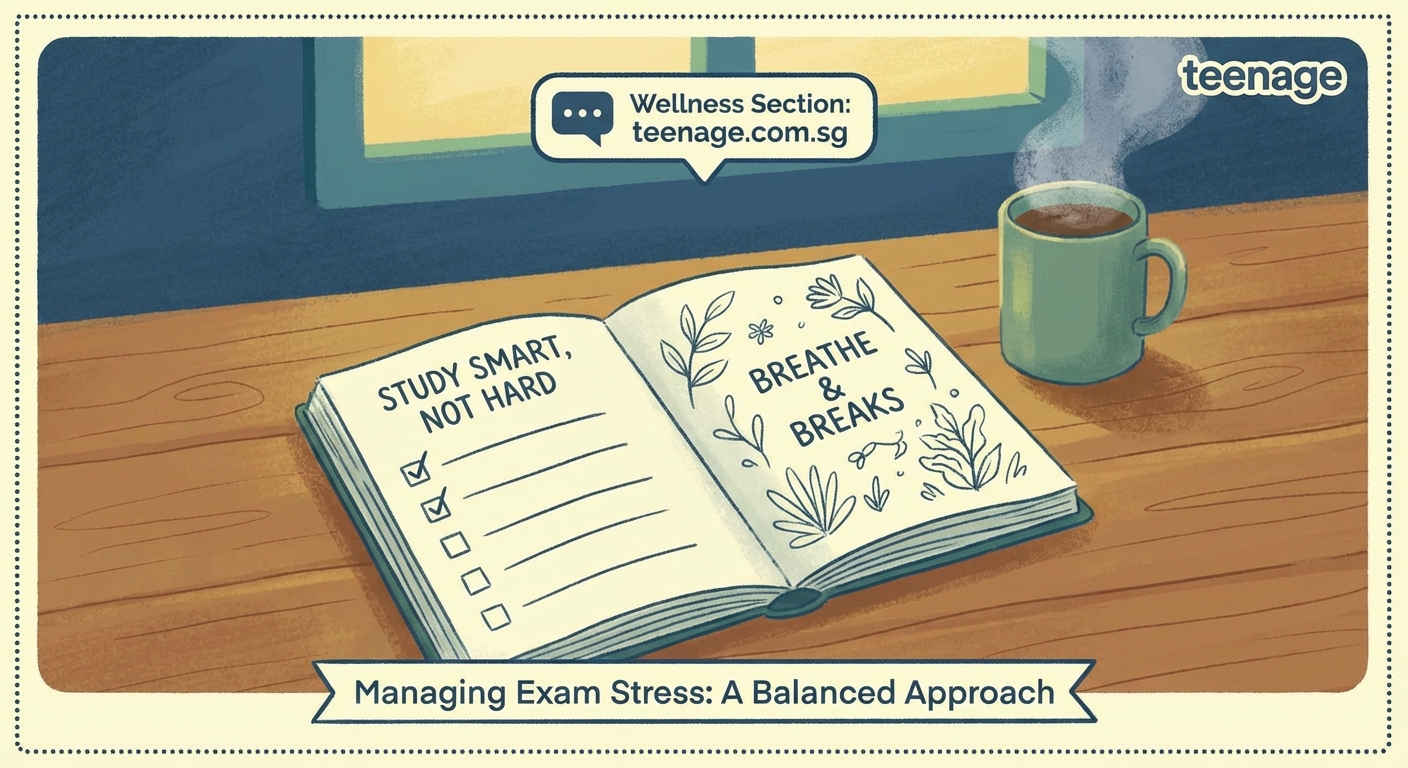
Cramming doesn’t work. Your brain needs time to move information from short-term to long-term memory.
Here’s how to structure your prep time:
- Start at least three weeks before your first exam
- Break each subject into specific topics
- Assign topics to days based on difficulty and exam dates
- Schedule harder subjects when your brain works best (morning for most people)
- Build in buffer days for topics that need more time
- Plan one full rest day per week with zero studying
Use the 25-5 rule. Study for 25 minutes, break for 5. After four rounds, take a longer 15-30 minute break.
This isn’t about being soft. It’s about how memory consolidation actually works. Your brain needs downtime to process and store what you learned.
Students who use spaced repetition (reviewing material multiple times over several days) remember 80% more than those who cram everything the night before.
What to eat and drink when you’re studying non-stop
Your brain runs on glucose. When blood sugar crashes, so does your concentration.
Skip the energy drinks and candy. The crash that follows makes everything worse.
Better options:
- Nuts and seeds for sustained energy
- Berries for antioxidants that protect brain cells
- Dark chocolate (70% or higher) for focus without the sugar spike
- Eggs for choline, which helps memory
- Oatmeal for slow-release carbs
- Water, constantly
Dehydration reduces cognitive performance by up to 30%. Keep a water bottle at your desk and actually use it.
Coffee is fine in moderation. One or two cups spread across the day helps. Six cups because you only slept three hours destroys your ability to retain information.
If you’re studying late, stop caffeine by 2pm. Otherwise you’re trading tonight’s study session for tomorrow’s exhaustion.
Sleep is not optional (seriously)
Here’s what happens when you skip sleep to study more:
Your brain can’t form new memories properly. The information you stayed up cramming? Most of it won’t stick.
Sleep, especially REM sleep, is when your brain processes and stores what you learned during the day. Cut sleep short and you’re literally deleting your own study progress.
One study found students who slept 8 hours before an exam scored 20% higher than those who stayed up studying and slept 4 hours.
Aim for 7-9 hours per night during exam season. If that feels impossible, at least get 6. Anything less and you’re actively sabotaging yourself.
Can’t fall asleep because your brain won’t shut up? Try these:
- No screens for an hour before bed
- Keep your room cool (around 65-68°F works best)
- Write down tomorrow’s tasks so your brain stops trying to remember them
- Try the 4-7-8 breathing technique (breathe in for 4, hold for 7, out for 8)
Power naps (20 minutes max) can help if you’re dragging. Any longer and you’ll wake up groggy.
Memory techniques that actually work
Rereading your notes over and over is one of the least effective study methods. Your brain needs active engagement.
Try these instead:
Active recall: Close your notes. Write down everything you remember about a topic. Check what you missed. Focus your next session on those gaps.
The Feynman Technique: Explain the concept out loud like you’re teaching it to someone who knows nothing about it. If you can’t explain it simply, you don’t understand it well enough yet.
Mind mapping: Draw connections between concepts visually. Your brain remembers images and relationships better than lists.
Practice problems: For math, science, or anything with application, do problems without looking at solutions first. Struggling with a problem (even if you get it wrong) helps you remember the correct method better.
Teach someone else: Grab a friend, family member, or even your pet. Teaching forces you to organize information clearly.
| Technique | Best For | Time Needed |
|---|---|---|
| Active recall | Memorizing facts, dates, definitions | 15-20 min per topic |
| Feynman Technique | Understanding complex concepts | 30-45 min per concept |
| Mind mapping | Seeing relationships between ideas | 20-30 min per subject |
| Practice problems | Math, science, coding | 45-60 min per session |
| Teaching others | All subjects | 30 min per topic |
When and how to take breaks without feeling guilty
Your brain isn’t designed for marathon study sessions. After about 90 minutes, your focus tanks hard.
Taking breaks isn’t slacking. It’s maintenance.
Good break activities:
- Walk outside (even 10 minutes helps)
- Stretch or do light exercise
- Call a friend who isn’t also panicking about exams
- Listen to music
- Make a snack
- Pet an animal if you have access to one
Bad break activities:
- Scrolling TikTok (you’ll lose an hour without noticing)
- Watching “just one episode” of anything
- Getting into deep conversations about how stressed you are
- Checking how much you still have to study
Set a timer for your breaks. Otherwise a 10-minute break turns into 90 minutes of procrastination, followed by guilt and more stress.
The break should refresh you, not make you feel worse about how much time you’re losing.
Dealing with panic when it hits mid-study
Sometimes stress escalates into full panic. Your heart races. You can’t breathe right. You’re convinced you’re going to fail everything.
When this happens, studying more won’t help. You need to reset.
Box breathing: Breathe in for 4 counts, hold for 4, out for 4, hold for 4. Repeat until your heart rate slows.
The 5-4-3-2-1 grounding technique: Name 5 things you can see, 4 you can touch, 3 you can hear, 2 you can smell, 1 you can taste. This pulls you out of panic mode.
Progressive muscle relaxation: Tense each muscle group for 5 seconds, then release. Start with your toes, work up to your face.
Change your environment: If you’re spiraling at your desk, go somewhere else. Different location, different mental state.
“Anxiety is not a sign you’re unprepared. It’s a sign you care about the outcome. The key is not letting that care paralyze you.” – Dr. Sarah Thompson, Educational Psychologist
If panic attacks become frequent, talk to your school counselor or a mental health professional. You don’t have to handle this alone.
What to do the day before your exam
The day before an exam is not the time for heroic study marathons.
Do a light review. Go through your summary notes or flashcards. Don’t try to learn new material. Your brain needs time to consolidate what’s already there.
Prepare your exam supplies the night before:
- Pens (bring extras)
- Calculator with fresh batteries
- Student ID
- Approved reference sheets
- Water bottle
- Snacks for between exams
Check the exam time and location twice. Set multiple alarms.
Eat a normal meal. Nothing experimental that might upset your stomach.
Do something relaxing in the evening. Watch something light, hang out with friends, or take time for self-care practices that don’t cost anything.
Go to bed at a reasonable time. Staying up until 3am reviewing notes will hurt more than help.
Morning of the exam routine
Wake up early enough that you’re not rushing. Stress starts before you even get to the exam room if you’re running late.
Eat breakfast with protein and complex carbs. Toast with peanut butter. Eggs and whole grain. Oatmeal with nuts.
Skip the five-cup coffee panic fuel. One cup is fine. More than that and you’ll be jittery and unfocused.
Do a 5-minute review of your summary notes if it makes you feel better. Don’t try to cram new information.
Get to the exam location 10-15 minutes early. Not so early you sit there spiraling, but early enough to settle in calmly.
Avoid classmates who are panicking. Their stress is contagious. Find a quiet spot to wait.
Take three deep breaths before you start. Read all instructions carefully. Budget your time based on point values.
Creating a support system that actually helps
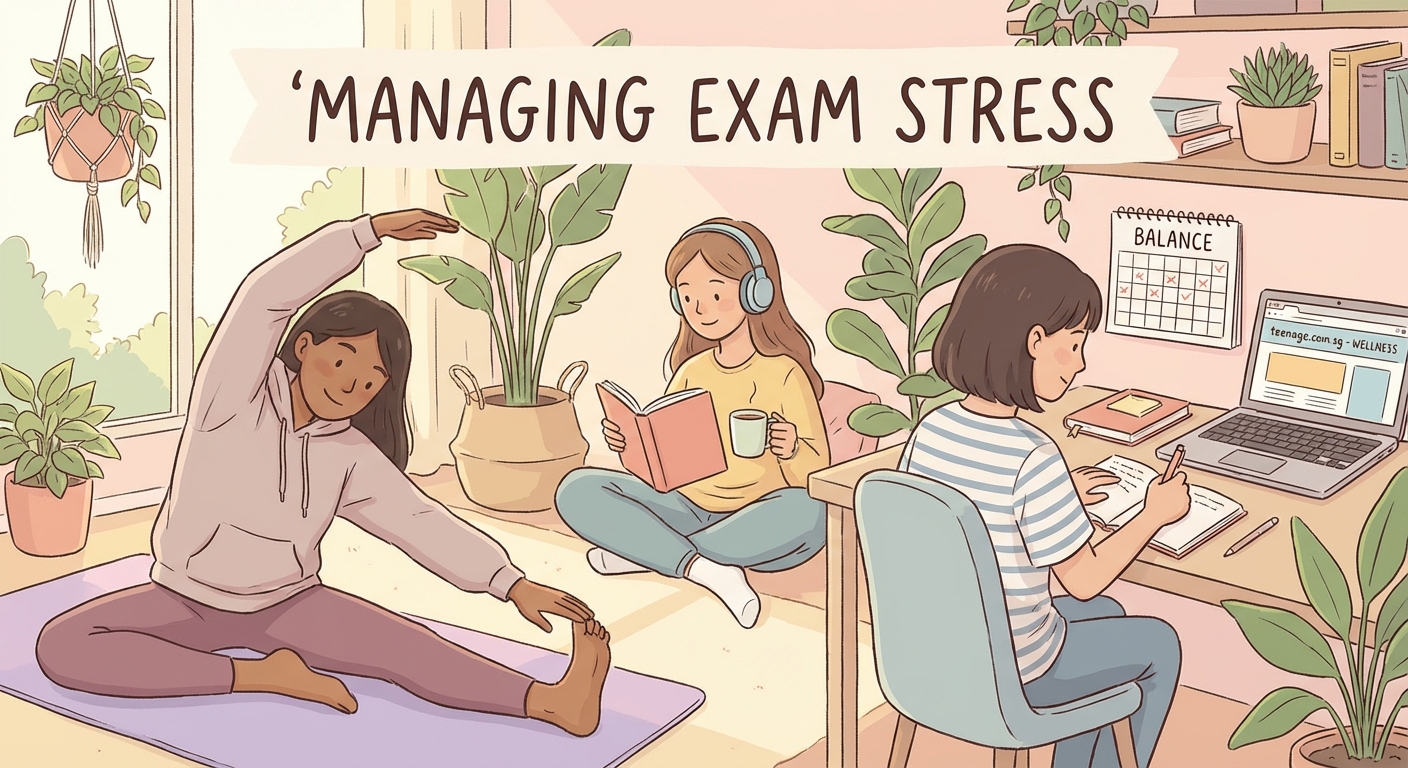
Studying alone in your room for weeks straight makes everything harder.
Find study partners who actually study. Not friends who say they’re studying but really just want to hang out and complain.
Good study groups:
- Meet with clear goals for each session
- Keep sessions to 2-3 hours max
- Take turns explaining concepts
- Hold each other accountable
- End with a plan for next time
Bad study groups:
- Spend 90% of the time talking about how stressed everyone is
- Turn into social hangouts with books nearby
- Have one person doing all the explaining while others copy
- Make you feel worse about your progress
Talk to people outside your program too. Friends and family who aren’t in exam mode can help you maintain perspective.
Balancing school, social life, and self-care gets harder during exams, but completely isolating yourself makes stress worse.
Let people know how they can help. Maybe you need someone to quiz you. Maybe you just need someone to make sure you eat lunch. Be specific.
Common mistakes that make exam stress worse
Here’s what not to do:
Comparing yourself to others: Someone else’s study schedule has nothing to do with what you need. Their three-hour sleep routine isn’t goals. It’s a recipe for disaster.
Perfectionism: You don’t need to know everything perfectly. You need to know enough to pass, ideally well. There’s a difference.
All-or-nothing thinking: Missing one study session doesn’t mean you’ve failed. One bad practice test doesn’t predict your actual exam score.
Ignoring physical symptoms: Headaches, stomach problems, and exhaustion are your body telling you to slow down. Pushing through makes everything worse.
Using stress as motivation: A little pressure helps. Constant panic doesn’t make you study better. It makes you less effective.
Skipping meals: Your brain literally cannot function without fuel. That lightheaded, can’t-focus feeling? That’s low blood sugar, not lack of intelligence.
What to do after each exam
Finish an exam and immediately start stressing about the next one? Bad strategy.
Give yourself at least a few hours to decompress. Do something fun. See friends. Watch something mindless. Get outside.
Avoid the post-exam group analysis where everyone compares answers. You can’t change what you wrote. You can stress yourself out about it though.
If you have another exam coming up, return to studying after a proper break. Not immediately. Your brain needs recovery time.
Between exam periods, build morning habits that support your mental health so you’re starting each day in a better place.
When stress becomes something bigger
Sometimes exam stress triggers or reveals deeper mental health issues.
Warning signs that you need professional help:
- Panic attacks that don’t respond to calming techniques
- Inability to sleep for multiple nights in a row
- Complete loss of appetite or stress eating to the point of feeling sick
- Thoughts of self-harm
- Feeling hopeless about everything, not just exams
- Physical symptoms that won’t go away (chest pain, severe headaches, stomach issues)
Most schools offer free counseling services. Use them. That’s what they’re there for.
Mental health support isn’t a luxury for when you have time. It’s essential maintenance, especially during high-stress periods.
Reaching out for help isn’t admitting defeat. It’s being smart enough to recognize when you need support.
Exam stress doesn’t have to destroy you
Managing exam stress isn’t about becoming a superhuman who never feels pressure. It’s about having strategies that keep stress at a manageable level.
You can study effectively without destroying your health. You can care about your grades without letting them define your entire worth. You can prepare thoroughly without sacrificing sleep, food, and every other aspect of your life.
The students who perform best aren’t the ones who study the longest. They’re the ones who study the smartest, take care of themselves, and know when to rest.
Your brain works better when you treat it well. Feed it. Rest it. Give it breaks. Support it with proper sleep and stress management.
These techniques aren’t just for getting through exams. They’re skills that’ll serve you in every high-pressure situation you face.
Start with one or two strategies from this guide. Build from there. Find what works for your brain, your schedule, and your stress patterns.
You’ve got this. Not because exam stress isn’t real or hard, but because you now have actual tools to manage it.














Post Comment