How to Ask for an Internship (Even When There’s No Job Posting)

You scroll through job boards and every internship listing has 200+ applicants already. The competition feels impossible. But here’s something most students don’t realize: some of the best internships never get posted online. Companies fill positions through cold emails and direct outreach all the time. You just need to know how to ask the right way.
Cold emailing for internships works when you research the company thoroughly, personalize your message, and demonstrate specific value you can add. Focus on smaller teams or departments that might not have formal hiring processes. Follow up strategically, keep your email under 150 words, and always include a clear call to action. Most companies appreciate proactive candidates who show genuine interest in their work.
Why cold outreach actually works for internships
Most hiring managers receive dozens of generic applications for posted positions. But a thoughtful, personalized email stands out because it shows initiative.
Small to medium companies often lack formal internship programs. They might want help but haven’t had time to create a job posting. Your email could solve a problem they didn’t know how to address.
Startups and creative agencies especially appreciate this approach. They value hustle and self-starters. Reaching out directly demonstrates exactly those qualities.
Even larger companies sometimes have teams that could use extra hands but haven’t gotten approval for official postings yet. Your timing might be perfect.
Research before you write a single word
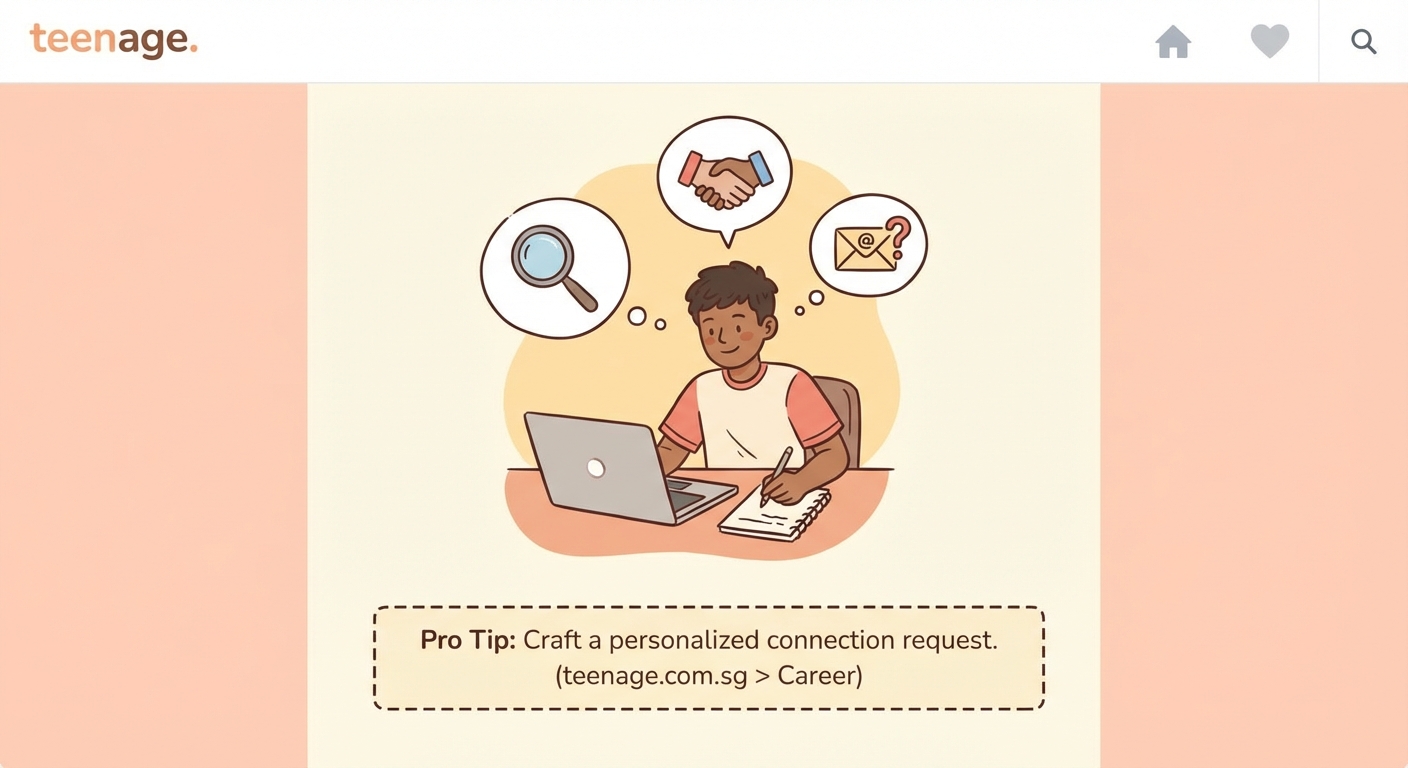
Generic emails get deleted immediately. You need to prove you actually care about this specific company.
Start by understanding what the company does and who works there. Check their LinkedIn page. Read recent blog posts or press releases. Look at their Instagram or TikTok if they’re active there.
Find the right person to contact. This matters more than you think.
- For small companies (under 50 people), email the founder or CEO directly
- For medium companies, find the department head you want to work with
- For larger companies, look for internship coordinators or talent acquisition managers
- If you can’t find a specific person, try reaching out to someone whose work you genuinely admire
Check if they’ve hired interns before. Search “[Company name] intern” on LinkedIn. If you find past interns, that’s a green light. If not, you might be proposing something new, which requires a different approach.
Look for recent company news. Did they just launch a new product? Expand to a new market? Win an award? Mentioning this shows you’re paying attention.
The anatomy of a cold internship email that gets responses
Your email needs to accomplish several things in under 150 words. That’s roughly one phone screen length. Any longer and you lose them.
Here’s what needs to be in there:
- A subject line that doesn’t sound like spam
- A personalized opening that proves you researched them
- One specific reason you’re reaching out to this company
- A brief mention of relevant skills or experience
- A clear ask with flexible timing
- An easy way to respond
Subject lines that work: “Marketing intern inquiry for [specific project]” or “Interested in supporting your [department name] team this summer.”
Subject lines that don’t work: “Internship opportunity” or “Looking for experience.”
“The best cold emails I’ve received from students mention something specific we’re working on and explain how they could contribute. It shows they’ve done their homework and aren’t just mass emailing every company in Singapore.” Career counselor at a local university
Email template you can actually use
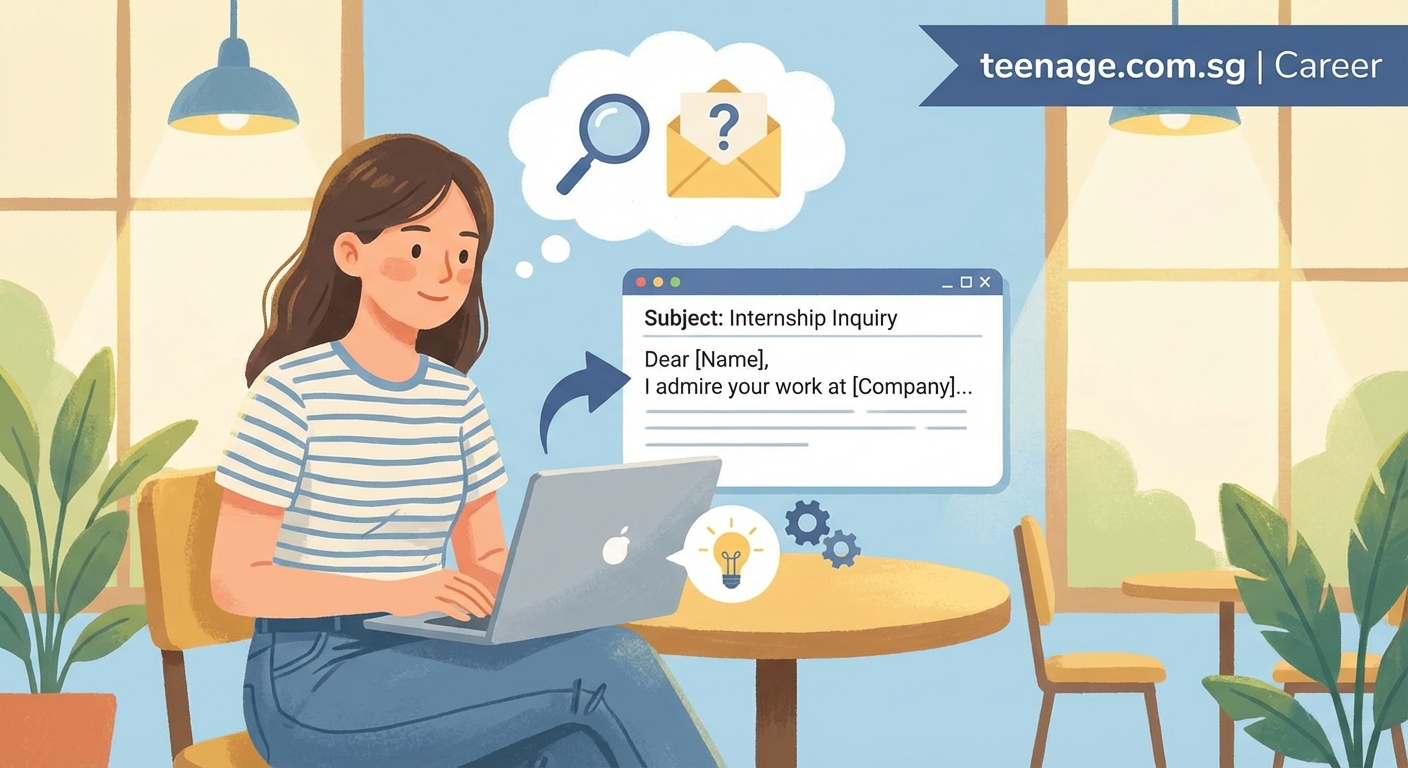
Here’s a framework that works. Customize every single bracket:
Subject: Interested in supporting [specific team/project] as an intern
Hi [First Name],
I came across [specific recent company achievement or project] and was impressed by [specific detail that caught your attention]. As a [your year] student studying [your major] at [your school], I’ve been following [company name]’s work in [their industry/niche].
I’m reaching out to see if your [specific department] team might benefit from intern support this [semester/summer]. I have experience with [1-2 relevant skills] and recently [specific relevant project or achievement].
Would you be open to a brief call to discuss whether there might be a fit? I’m flexible on timing and structure.
Thanks for considering,
[Your name]
[LinkedIn profile link]
[Phone number]
Notice what this email does. It’s short. It mentions something specific about the company. It suggests value without being pushy. It makes responding easy.
Common mistakes that kill your chances
Sending the same email to 50 companies feels efficient but it backfires. Hiring managers can tell when you’ve used a template without customization.
Asking “Do you have any internship openings?” wastes the opportunity. They already know they don’t have posted positions. That’s why you’re cold emailing. Instead, suggest how you could help with specific work.
Writing three paragraphs about yourself before mentioning the company. Nobody cares about your entire academic history in a cold email. Lead with them, not you.
Attaching your resume in the first email. It makes the email harder to read on mobile and feels presumptuous. Mention you’re happy to share your resume if they’re interested.
Using overly formal language. “I am writing to express my interest in potentially securing an internship position” sounds like a robot. Just talk like a human.
Forgetting to proofread. One typo might be forgiven. Multiple errors suggest you don’t pay attention to details.
What to do when they actually respond
If they say yes to a call, treat it like a real interview. Research more. Prepare questions. Acing your first job interview covers the basics of professional conversations.
If they say they’re not hiring right now, ask if you can follow up next semester. Also ask if they know anyone else who might be looking for interns. Networking opens doors.
If they don’t respond after one week, send a brief follow up. “Hi [Name], following up on my email from last week about potential intern opportunities with [team name]. Would love to chat if timing works on your end.”
If they still don’t respond after the follow up, move on. Some people are busy. Some emails get lost. It’s not personal.
When someone does want to move forward, be prepared to discuss logistics. Will it be paid or unpaid? How many hours per week? Remote or in-office? What would your actual responsibilities be?
Finding the right companies to contact
Don’t just email famous companies everyone knows about. Those get flooded with requests.
Look for companies that are:
- Growing (recently hired people or announced expansion)
- In industries you actually care about
- Small enough that one intern could make a real impact
- Located where you can actually work (or open to remote)
Where to find these companies:
- LinkedIn company searches filtered by size and location
- Tech meetups or industry events in Singapore
- Your school’s alumni network working in fields you like
- Companies that sponsor campus events or competitions
- Startups featured in local news or tech blogs
Create a spreadsheet to track outreach. Include company name, contact person, date sent, and follow up status. This prevents you from accidentally emailing the same person twice or forgetting to follow up.
Aim for quality over quantity. Five well researched, personalized emails beat 50 generic ones every time.
Timing your outreach for better results
When you send your email matters more than you’d think.
Best times to send:
- Tuesday through Thursday mornings (9-11 AM)
- Avoid Mondays when inboxes are overflowing
- Avoid Friday afternoons when people are mentally checked out
- Avoid sending during major holidays or school exam periods
Best times of year to ask:
- January for summer internships (companies plan ahead)
- August for fall semester opportunities
- November for spring semester positions
- Avoid December when everyone’s focused on year end
If you’re reaching out to agencies or companies in creative fields, avoid their busy seasons. Ad agencies get slammed before major campaigns. Accounting firms are chaos during tax season.
Different approaches for different company sizes
Your strategy should shift based on who you’re contacting.
Startups (under 20 people)
Email founders directly. They usually check their own email. Emphasize that you’re comfortable wearing multiple hats and learning fast. Startups value flexibility over specialization.
Mention if you’re okay with equity or project based compensation instead of traditional pay. Many startups can’t afford to pay interns much but offer incredible learning experiences.
Medium companies (20-200 people)
Find the department head or team lead. They have more authority to create positions than HR does. Explain how you could support specific projects or initiatives.
These companies often have informal internship arrangements that never get posted publicly. Someone’s nephew usually fills them, but a great cold email can change that.
Large corporations (200+ people)
Look for internship coordinators or campus recruiting contacts. They have formal processes but sometimes make exceptions for impressive candidates.
Your email should be more polished and professional. Mention any connection to the company (family member who works there, product you love, company values that resonate).
What to include in your follow up strategy
Following up separates candidates who are actually interested from those just mass emailing.
Wait one week after your initial email. If no response, send this:
Subject: Re: Interested in supporting [specific team/project] as an intern
Hi [Name],
Wanted to follow up on my note from last week. I understand you’re likely busy, but I’m genuinely interested in exploring internship opportunities with [company name].
Happy to work around your schedule for a brief call.
Thanks,
[Your name]
If still no response after another week, try one more time with a slightly different angle:
Subject: Alternative: project based work with [company name]
Hi [Name],
Since I haven’t heard back, I’m guessing full internships might not be in the cards right now. Would you be open to discussing project based work instead? I could help with [specific task] on a flexible timeline.
Let me know if that’s of interest.
[Your name]
After three attempts with no response, move on. Your time is better spent on companies that engage.
Making yourself hireable without traditional experience
“But I don’t have any experience yet. That’s why I need an internship.”
This is the classic catch-22. Here’s how to break it.
Create your own projects. Want to work in marketing? Start a TikTok account about something you’re passionate about and grow it to 1,000 followers. Want to work in design? Redesign a local business’s website as a case study. Want to work in data? Find a public dataset and create visualizations.
These self-initiated projects prove you can actually do the work. They give you something concrete to mention in your cold emails.
Volunteer your skills. Nonprofits and student organizations always need help. A few months of real work beats classroom projects every time.
Take online courses and earn certificates. Coursera, Udemy, and LinkedIn Learning offer courses in practically everything. Mentioning you completed a specific course shows initiative.
Write about what you’re learning. Start a blog or post on LinkedIn about your field. Sharing knowledge demonstrates expertise and creates content you can link to in emails.
| Approach | Effectiveness | Time Investment | Cost |
|---|---|---|---|
| Self-initiated projects | High | Medium | Free |
| Volunteer work | High | High | Free |
| Online courses | Medium | Low | $0-50 |
| Personal blog/content | Medium | Medium | Free |
| Networking events | Medium | Low | Free-$30 |
Handling rejection and radio silence
Most of your emails will get no response. That’s normal. Professional cold email response rates hover around 10-15%. For internships, expect even lower.
Radio silence doesn’t mean your email was bad. It might mean:
- They’re genuinely too busy to respond
- They don’t have budget for interns right now
- Your email got buried under 100 others
- They’re interested but need to check with their team first
- The person you emailed is on vacation
Rejection emails are actually good news. At least someone read your message and took time to respond. Thank them and ask if you can reach out again next semester.
Keep a positive mindset. Every no gets you closer to a yes. Every email you send improves your writing. Every follow up builds your persistence.
The students who succeed at cold outreach aren’t necessarily the most qualified. They’re the ones who keep going after the first 20 companies don’t respond.
Alternatives when cold emails aren’t working
If you’ve sent 30+ personalized emails with zero responses, try these approaches:
LinkedIn messages. Some people check LinkedIn more than email. Keep it even shorter than email (under 100 words).
Commenting strategy. Engage with company posts on LinkedIn or Instagram for a few weeks before reaching out. When you finally email, you’re not a complete stranger.
Informational interviews. Instead of asking for an internship directly, ask for 15 minutes of career advice. These conversations sometimes lead to internship offers organically.
Career fairs and networking events. Face to face conversations convert better than cold emails. How to score free tickets to Singapore’s biggest youth festivals and concerts sometimes includes industry networking events worth checking out.
Alumni connections. Reach out to graduates from your school working at companies you like. Shared school connection increases response rates dramatically.
Professor introductions. Faculty often have industry connections they’re happy to share with motivated students.
Turning a maybe into a yes
Sometimes companies are interested but hesitant. They’re not sure if they have enough work for an intern or if they can supervise properly.
This is your chance to make it easy for them.
Suggest a trial period. “What if I started with a one month project to see if it’s a good fit for both of us?”
Propose specific projects. “I noticed you recently launched [product]. I could help create social media content around it” is more compelling than “I could help with marketing stuff.”
Offer flexible arrangements. Remote work, part time hours, or project based work removes barriers for companies nervous about traditional internships.
Mention that you’re self directed. Companies worry about babysitting interns. Emphasize that you’re comfortable working independently and figuring things out.
Ask what their concerns are. “Is there anything holding you back from moving forward?” opens up honest conversation about obstacles you might be able to address.
Real examples that worked
Example 1: Design student to small agency
Subject: Loved your rebrand for [Client Name]
Hi Sarah,
The rebrand you did for [Client Name] was incredible. The way you incorporated their heritage into modern design really stood out.
I’m a second year design student at [School] working primarily in brand identity. Would your team benefit from intern support this summer? I could help with client presentations, mood boards, or whatever needs extra hands.
Happy to share my portfolio if you’d like to see my work.
Thanks,
Alex
[Portfolio link]
Why it worked: Specific compliment on their work. Brief mention of relevant skills. Easy ask.
Example 2: Business student to startup
Subject: Operations support for [Company Name]
Hi Marcus,
Congrats on your Series A. I saw the announcement on Tech in Asia.
I’m a third year business student interested in startup operations. As you scale, would it help to have an intern handle things like vendor coordination, data entry, or process documentation?
I’m detail oriented and comfortable with ambiguity (grew up in a family business).
Let me know if you’d like to chat.
Best,
Jamie
[LinkedIn]
Why it worked: Acknowledged recent news. Suggested specific helpful tasks. Mentioned relevant background.
Making the most of your internship once you land it
Getting the internship is just the beginning. What you do during those weeks or months determines whether it leads to future opportunities.
Show up consistently and on time. Sounds basic but some interns treat it casually because it’s “just an internship.”
Ask questions but also try to figure things out first. Balance between being resourceful and knowing when you need help.
Document what you learn. Keep notes on processes, tools, and industry insights. This helps with future job applications and interviews.
Build relationships with everyone, not just your supervisor. The junior designer today might be the creative director somewhere else in five years.
Request feedback regularly. “How am I doing? What could I improve?” shows maturity and helps you get better.
Take initiative on small things. If you notice something that could be better, suggest it. If you finish your assigned work early, ask what else needs doing.
Stay in touch after the internship ends. Send occasional updates on what you’re working on. Congratulate them on company wins. These relationships compound over time.
When it finally clicks
Landing an internship through cold outreach feels different than getting one through a job board. You created an opportunity that didn’t exist before. That’s a skill that’ll serve you way beyond this one position.
The confidence you build from successful cold outreach transfers to everything else. Networking becomes easier. Job interviews feel less intimidating. Asking for what you want stops being scary.
Plus, you’ve now got a proven system. Next time you need an internship, a freelance gig, or even a full time job, you know exactly how to reach out to companies directly.
The companies that hire through cold emails tend to be the interesting ones anyway. They value initiative and personality over credentials. They’re willing to take chances on people who show genuine interest.
Start with one email today. Pick a company you actually care about. Spend 30 minutes researching them. Write a personalized message. Hit send. Then do it again tomorrow. By the end of the month, you’ll have contacted 20+ companies. And you only need one yes.














Post Comment