10 Must-Attend Pop-Up Events in Singapore This Month That Gen Z Can’t Miss
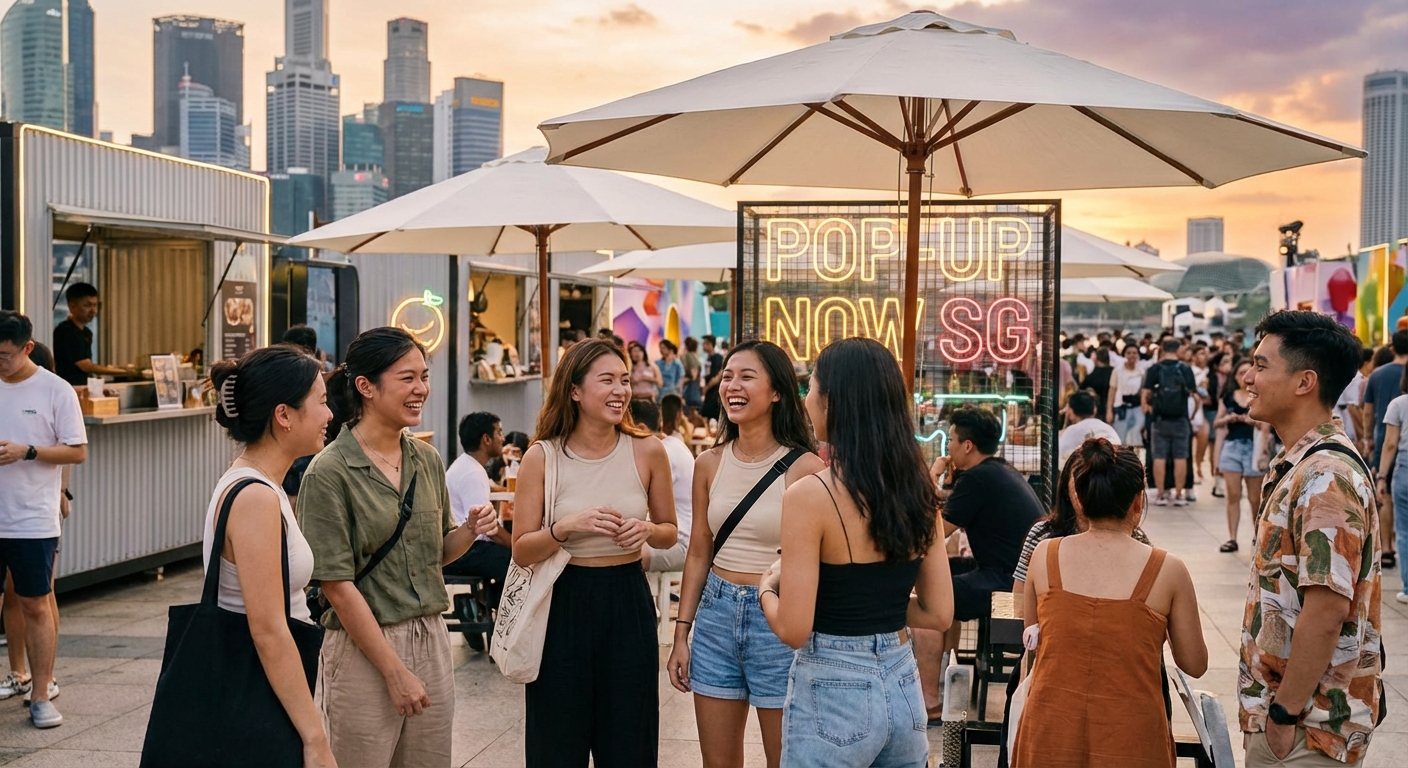
Singapore’s pop up scene is exploding right now. Every weekend brings a fresh wave of limited time experiences, from interactive art installations to themed food markets that disappear as fast as they arrive. If you’re scrolling through Instagram wondering where everyone’s getting those aesthetic photos, chances are it’s from one of the many pop up events Singapore this month is hosting.
This month’s pop up events in Singapore range from K-pop themed cafes to sustainability markets and immersive art experiences. Most are free or under $20, run for 2 to 4 weeks, and require advance registration through Instagram or event platforms. Arrive early on weekdays to avoid crowds and get the best photo opportunities at these temporary installations.
Why pop ups are taking over Singapore’s social scene
Pop up culture has become the go-to for brands trying to reach Gen Z audiences. These temporary spaces create urgency and FOMO that permanent stores just can’t match.
The format works because it’s designed for sharing. Every corner is Instagram optimized. Every experience is limited edition. You can’t just visit next week because there might not be a next week.
Singapore’s compact size makes it perfect for this trend. You can hit multiple pop ups in one day without spending hours on transport. Plus, the city’s obsession with what’s new means organizers constantly push creative boundaries to stand out.
How to find pop up events before they sell out
Timing matters when hunting for pop up events Singapore this month is featuring. Here’s the process that actually works.
- Follow event aggregator accounts on Instagram like @sgpopups and @whatsupsg
- Check Stories daily because many pop ups announce tickets there first
- Turn on post notifications for brands you love
- Join Telegram groups focused on Singapore events and lifestyle
- Set Google alerts for “pop up Singapore” and check them every morning
- Browse Peatix and Eventbrite weekly for newly listed experiences
Most pop ups announce 1 to 2 weeks before opening. The really hyped ones sell out within hours of tickets dropping.
Save event posts immediately when you see them. Instagram’s algorithm won’t show you that post again when you finally remember to register three days later.
The biggest pop up events happening right now
Here’s what’s actually worth your time and money this month.
K-wave immersive experience at Marina Bay
Running until the end of the month, this 10,000 square foot space recreates iconic K-drama sets. Think Itaewon Class bar, Squid Game dorm rooms, and a full Parasite house replica.
Entry is $18 for students. You get 90 minutes inside, which is enough time to take photos at every set and grab a Korean snack from their cafe corner.
The best time to visit is Tuesday or Wednesday afternoons. Weekends are packed with people waiting 20 minutes per photo spot. If you’re into Korean entertainment culture, this one delivers.
Sustainability market at Tiong Bahru
Every Saturday this month, 40+ local makers set up at the Tiong Bahru estate. You’ll find upcycled clothing, refillable beauty products, and zero waste home goods.
It’s completely free to browse. Most items range from $5 to $50, which beats the usual sustainable product markup you see at permanent stores.
They also run free workshops on topics like natural dyeing and composting. Registration opens Thursday nights and fills up fast.
Anime pop up cafe in Orchard
This rotating themed cafe changes its concept every 3 weeks. Right now it’s Jujutsu Kaisen, next month switches to Chainsaw Man.
The $25 entry includes one themed drink and dessert. The food is honestly average, but the photo opportunities are next level. Every table has AR filters that add animated characters to your photos.
Book at least a week ahead. Walk-ins almost never get seats, especially after 5pm on weekends.
Interactive art installation at Gillman Barracks
A collective of local digital artists created a multi-room experience exploring climate anxiety through immersive projections and soundscapes.
Entry is free but you need to book a time slot online. Each session lasts 45 minutes and caps at 15 people, so it never feels crowded.
The installation uses your phone as an interactive element. Download their app before you arrive or you’ll miss half the experience.
Night market at Clarke Quay
Friday and Saturday nights feature 30 food stalls, live music, and vintage clothing vendors. It runs from 6pm to midnight throughout the month.
No entry fee. Just show up and eat your way through. Budget around $20 to $30 for a full meal plus snacks.
The vibe is way more relaxed than your typical hawker center. Expect long tables, string lights, and a younger crowd than you’d find at Lau Pa Sat.
What makes a pop up worth attending versus skipping
Not every temporary event deserves your time. Here’s how to evaluate before you commit.
| Worth it | Skip it |
|---|---|
| Unique installations you can’t experience elsewhere | Basic product displays with a “pop up” label slapped on |
| Interactive elements or workshops included | Pure shopping with no experiential component |
| Clear photo opportunities and shareable moments | Cramped spaces with poor lighting |
| Reasonable pricing under $30 for students | Overpriced entry fees for minimal content |
| Runs 2+ weeks so you can plan around your schedule | One day only events announced last minute |
| Easy MRT access | Requires multiple bus transfers to reach |
The best pop ups balance aesthetic appeal with actual substance. You should leave with either a cool experience, useful knowledge, or a product you actually wanted.
If the main draw is “limited edition merch,” check if you can just buy it online later. Many brands restock their pop up exclusives within weeks.
Getting the perfect content without looking like a try-hard
Everyone’s there for photos. Nobody’s judging you for taking 47 shots of the same corner.
Arrive right when doors open. The first hour has the best lighting and emptiest spaces. You won’t have strangers’ elbows in every frame.
Bring a friend who’s good at candid shots. Posed photos in front of installations look stiff. Natural shots of you actually engaging with the space perform better on Instagram.
Wear solid colors that complement the space’s aesthetic. If the pop up is all pastels, don’t show up in neon. Check their Instagram first to see the color palette.
Take photos in batches. Spend 10 minutes at each spot, then move on. You can always circle back if time permits.
“The pop ups that go viral aren’t necessarily the biggest or most expensive. They’re the ones that understand their audience wants to be part of something exclusive, even if it’s only exclusive for three weeks.” — Sarah Tan, Singapore event curator
Budget hacks for experiencing more without going broke
Pop up hopping can drain your wallet fast if you’re not strategic.
Many events offer student discounts that aren’t advertised publicly. Always ask at the door or DM their Instagram before booking.
Group bookings often come with perks. Bring three friends and you might get a free add-on or extended time slot.
Follow pop up accounts closely for giveaway contests. They need to build hype, so they’re constantly giving away free passes to engaged followers.
Skip the food and drinks at themed cafes unless it’s included in entry. You’re paying for ambiance, not culinary excellence. Eat before or after at actual restaurants.
Check if free event opportunities exist for similar experiences before paying for pop up entry.
Weekday slots are sometimes cheaper than weekend pricing. A Tuesday afternoon visit might cost $5 less than Saturday for the exact same thing.
Common mistakes that ruin the pop up experience
Showing up without a booking is the biggest error. Even “walk-ins welcome” events have capacity limits. You’ll waste time traveling just to get turned away.
Not checking the actual duration of your slot. Some pop ups give you 60 minutes, others give you 3 hours. Plan accordingly or you’ll feel rushed.
Bringing too much stuff. You’ll be standing and moving between installations. A small crossbody bag works better than a backpack you have to watch constantly.
Ignoring the rules about photography. Some spaces prohibit tripods or professional cameras. Don’t be that person arguing with staff about your DSLR.
Arriving during peak hours and complaining about crowds. Of course Saturday at 2pm is packed. That’s on you for poor planning.
Not exploring beyond the main Instagram spot. Pop ups often hide their coolest elements in back rooms or upper floors that casual visitors miss.
Making the most of limited time installations
These experiences disappear fast. Here’s how to actually enjoy them instead of just documenting them.
Put your phone down for the first 15 minutes. Walk through everything once without stopping for photos. Notice what actually interests you versus what just looks good on camera.
Read the descriptions and artist statements if they’re provided. Context makes installations way more meaningful than just seeing pretty lights.
Talk to the staff or creators if they’re around. They love sharing behind the scenes details about how they built the space.
Try the interactive elements even if they feel awkward. That’s literally the point. Nobody’s watching you as closely as you think.
Save time at the end for photos. You’ll know your favorite spots by then and can shoot more efficiently.
Where pop up culture is heading next
The trend is shifting from pure aesthetics toward more purposeful experiences. Expect more pop ups tied to social causes, educational content, and community building.
Brands are also experimenting with longer runs. The traditional 2 week format is extending to 4 or 6 weeks as organizers realize people need time to actually plan visits.
Technology integration is getting more sophisticated. Basic AR filters are old news. Newer pop ups use AI personalization, NFT tie-ins, and app-based gamification.
Sustainability is becoming non-negotiable. Gen Z won’t support pop ups that generate tons of waste just for a temporary Instagram moment. Reusable materials and eco-conscious design are now baseline expectations.
Collaborative spaces are replacing single-brand takeovers. You’ll see 5 to 10 brands sharing one pop up, each with their own corner. It creates more variety and splits the rental costs.
What to do when you can’t make it to physical pop ups
Not every event fits your schedule or budget. Virtual alternatives are getting better.
Many pop ups now offer 360-degree tours on their websites. Not the same as being there, but good enough to see if it’s worth rescheduling your plans.
Instagram Live sessions from pop ups give you real-time glimpses. Follow the event account and turn on notifications for their broadcasts.
User generated content tells you more than official marketing. Search the location tag to see what regular visitors actually experienced.
Some organizers sell merchandise online after the pop up closes. You miss the experience but can still get the limited edition items.
Wait for the next iteration. Popular concepts usually return in different forms. The K-pop cafe from last year came back this month with updated themes.
Planning your pop up calendar for the rest of the month
Block out specific days for pop up visits instead of trying to squeeze them between classes. Treat them like actual plans, not backup options.
Create a shared Google calendar with friends who are also into these events. You can coordinate group visits and split transportation costs.
Set reminders for ticket drops. Add calendar alerts for one week before events you’re interested in. That’s usually when registration opens.
Build in buffer time. Pop ups run late, locations are confusing, and you’ll want extra minutes for photos. Don’t schedule back-to-back events across opposite ends of Singapore.
Check the weather forecast before outdoor pop ups. A sudden downpour will ruin your experience at markets or garden installations.
Follow up on new openings that might host pop ups in their launch period.
The social side of pop up culture
These events are designed for groups. Solo visits work fine, but you’ll have more fun with company.
Use pop ups as hangout destinations instead of the usual bubble tea and mall routine. It gives you something specific to do together beyond just talking.
Make new friends at workshop-style pop ups. Sustainability markets and craft sessions attract people with similar interests. Start conversations while you’re both learning to make natural soap or whatever.
Document the experience together. Take turns being photographer so everyone gets good shots. Trade phones and capture each other enjoying the space.
Don’t force friends who aren’t interested. If someone’s coming just because you dragged them along, they’ll complain the whole time and kill the vibe.
Plan the before and after. Grab food nearby, walk around the neighborhood, make it a whole afternoon instead of just a 90-minute pop up visit.
Why these temporary spaces matter more than you think
Pop ups give small brands and independent creators a chance to reach audiences without committing to expensive permanent retail.
They test concepts that might become permanent later. That anime cafe could turn into a full restaurant if the pop up proves there’s sustained demand.
For visitors, they break the monotony of Singapore’s permanent fixture landscape. The city can feel repetitive when you’ve been to every mall and museum. Pop ups inject newness into familiar neighborhoods.
They also create shared cultural moments. When everyone’s talking about the same installation or market, it builds community even among people who’ve never met.
The temporary nature makes you appreciate experiences more. You can’t procrastinate or take it for granted. Either you go this month or you miss it forever.
Making pop up events part of your regular routine
Set a monthly budget specifically for experiences. Treat pop up visits like a subscription service you’re investing in for memories and content.
Create a running list on your phone of events you hear about. When Friday rolls around and you’re wondering what to do, you’ll have options ready.
Rotate between different types of pop ups. One month do food focused events, next month try art installations. Variety keeps it interesting.
Share your experiences genuinely. Post about what you actually enjoyed, not just the most photogenic corner. Your followers will appreciate real recommendations over obvious ads.
Use pop ups as motivation to get out of your usual routine. They’re scattered across Singapore, so you’ll end up visiting neighborhoods you’d normally skip.
Balance trendy events with meaningful ones. Instagram-worthy spaces are fun, but pop ups teaching skills or supporting causes offer more lasting value.
Your next steps for this month’s pop up scene
Check Instagram right now for events happening this weekend. Don’t wait until Friday afternoon when everything’s booked.
Pick one event from this list and register today. Starting is harder than continuing. Once you attend one pop up, you’ll naturally seek out more.
Tell two friends about an event that matches their interests. Going together makes it better and holds you accountable to actually show up.
Set aside $30 to $50 this month for pop up experiences. That’s enough for 2 to 3 events if you’re strategic about free ones and student discounts.
The pop up events Singapore this month is hosting won’t last forever. That’s literally the entire point. Stop saving posts for later and start making plans for this weekend.


Post Comment