How to Make Friends in College When You’re Naturally Shy or Introverted

Starting college as an introvert feels like everyone else got a manual you didn’t receive. They’re already forming groups in the dining hall while you’re wondering if sitting alone makes you look weird. The truth is, being introverted doesn’t mean you can’t make friends. It just means you do it differently.
Making friends as an introverted college student requires finding spaces that match your energy, starting with one-on-one connections instead of large groups, and using your natural listening skills as strengths. Focus on quality over quantity, join smaller clubs that align with your interests, and remember that authentic friendships take time to develop naturally.
Understanding what introversion actually means in college
Introversion gets misunderstood constantly. You’re not antisocial or unfriendly. You just recharge through alone time instead of social interaction.
Extroverts gain energy from being around people. Introverts spend energy in social situations and need quiet time to refill.
This matters because college throws nonstop social opportunities at you. Orientation week. Dorm parties. Study groups. Club fairs. It’s exhausting.
You don’t need to attend everything. That’s the first lesson. Selective socializing beats burning out by week three.
Why traditional friend-making advice fails introverts
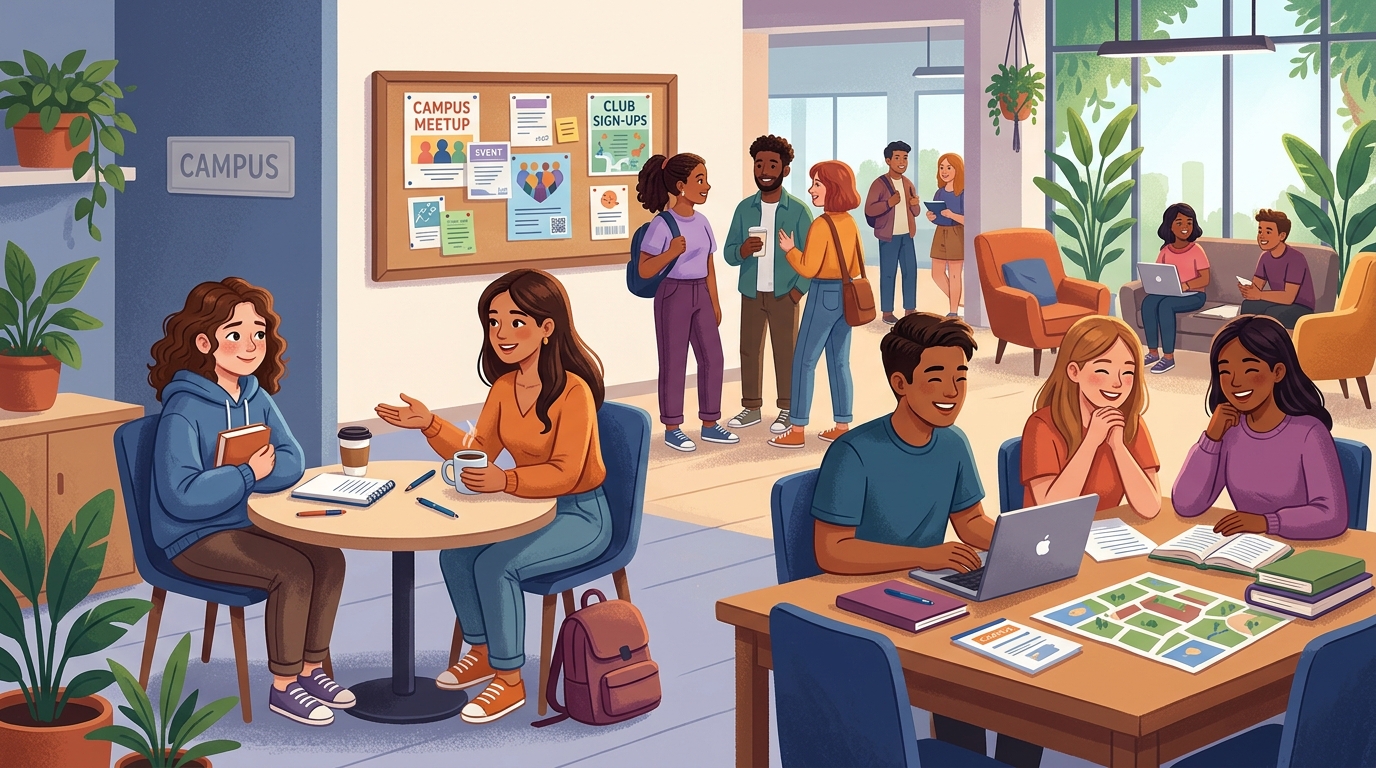
Most college friendship advice sounds like this: “Just put yourself out there!” or “Join tons of clubs!” or “Talk to everyone in your dorm!”
That approach works great if you’re naturally outgoing. For introverts, it’s like telling someone who hates running to train for a marathon.
The problem isn’t your personality. The problem is trying to make friends using methods designed for extroverts.
You need strategies that work with your natural tendencies, not against them.
Starting with low-pressure environments
Large group settings drain your energy fast. Parties with 50 people. Crowded dining halls. Massive club meetings.
Start in smaller, structured environments instead.
Here are places that work better for introverts:
- Study lounges during off-peak hours
- Small seminar classes with under 20 students
- Coffee shops on campus with regular customers
- Library group study rooms
- Specialized interest clubs with fewer members
These spaces let you interact without performing. The environment does some of the social work for you.
The power of repeated, casual contact
Friendship research shows something called the “mere exposure effect.” People tend to like others they see regularly, even without deep conversations.
This is perfect for introverts. You don’t need to have an amazing first impression. You just need to show up consistently in the same places.
Pick three spots on campus and visit them regularly. Same coffee shop every Tuesday morning. Same study spot in the library. Same seat in your favorite class.
Other regulars will start recognizing you. Recognition leads to head nods. Head nods lead to small comments. Small comments lead to actual conversations.
It happens gradually, which gives you time to warm up to people.
Using classes as friendship foundations
Your classes are underrated friendship opportunities. You’re already there. You have built-in conversation topics. You see the same people multiple times per week.
Here’s a step-by-step approach:
- Arrive a few minutes early and sit in the same general area each time
- Make brief eye contact and smile at people near you
- After the second or third class, ask a small question about the material
- Suggest studying together before an exam
- Exchange contact information for class-related questions
- Gradually transition from study partners to actual friends
This works because it’s low-stakes. If someone isn’t interested, you just keep focusing on class. No awkward rejection.
The academic connection gives you a natural reason to interact. How to survive your first week of college without losing your mind covers more strategies for those early days when everything feels overwhelming.
Choosing the right clubs and organizations
Everyone tells you to join clubs. But which ones?
For introverts, smaller specialized clubs beat large general ones. A 12-person book club works better than a 100-person general interest society.
Look for clubs that involve activities, not just socializing. Photography clubs where you actually take photos. Gaming clubs where you play together. Volunteer groups with specific projects.
Activity-based clubs give you something to do besides talk. The pressure to constantly make conversation disappears when you’re working on something together.
| Club Type | Why It Works for Introverts | Example Activities |
|---|---|---|
| Skill-based | Focus on learning, not just socializing | Photography, coding, art |
| Service-oriented | Shared mission reduces small talk pressure | Habitat for Humanity, tutoring |
| Hobby groups | Passion creates natural conversation | Board games, hiking, cooking |
| Academic societies | Intellectual connection feels more natural | Debate, research groups, major-specific clubs |
Should you join a club or society? Here’s what students really think gives you real student perspectives on making this choice.
The one-on-one friendship strategy
Group dynamics exhaust introverts. But one-on-one conversations? That’s where you shine.
Your strategy: Turn group acquaintances into individual friends.
When you meet someone interesting in a group setting, suggest a specific follow-up activity for just the two of you. “Want to grab coffee before class on Thursday?” works better than “We should hang out sometime.”
Specific invitations get specific responses. Vague suggestions die in text message limbo.
One-on-one time lets you have deeper conversations. You can actually get to know someone instead of competing for airtime in a group.
Using your listening skills as a superpower
Introverts typically listen more than they talk. In a world of people waiting for their turn to speak, genuine listening is rare.
This is your advantage. People love talking to good listeners. They walk away feeling heard and understood.
Here’s how to use this:
- Ask follow-up questions that show you’re paying attention
- Remember details people mention and bring them up later
- Let conversations have natural pauses instead of filling every silence
- Share your own thoughts after you’ve really understood theirs
You don’t need to be the most talkative person to be someone’s favorite person to talk to.
Managing your social energy budget
Think of social energy like money in a bank account. Every interaction costs something. Alone time deposits more.
You need to budget carefully, especially during intense social periods like the first week of college.
Create a realistic social schedule:
- Attend one social event per day maximum during orientation
- Schedule alone time between classes and social activities
- Say no to events that don’t genuinely interest you
- Leave parties early without guilt
- Build in recovery days with minimal social demands
Running out of social energy makes you irritable and withdrawn. That’s when you accidentally push away potential friends.
Better to show up less often but be genuinely present when you do.
Finding other introverts
Not everyone in college is an extrovert. Plenty of other introverts are looking for friends too. They’re just harder to spot because they’re not the loudest people in the room.
Where to find them:
- Libraries and study spaces
- Smaller campus events
- Online student forums and Discord servers
- Classes in your major (especially upper-level courses)
- Quiet corners of the student union
Online spaces work particularly well. Many introverts communicate more comfortably through text initially. Campus Discord servers, class GroupMe chats, and Reddit communities for your school let you connect before meeting face-to-face.
The roommate situation
Living with someone forces social interaction. For introverts, this can feel overwhelming.
Set boundaries early. Have a conversation about alone time needs within the first week. “I need some quiet time to recharge after classes” is perfectly reasonable.
Your roommate might become a close friend. They might just be someone you live with peacefully. Both outcomes are fine.
Don’t force a friendship with your roommate just because you share a room. Sometimes the best roommate relationships are built on mutual respect and space, not constant togetherness.
Using technology without hiding behind it
Social media and messaging apps help introverts stay connected without constant in-person interaction. That’s useful.
But technology can also become an excuse to avoid real connection. Liking someone’s Instagram story isn’t the same as actually talking to them.
Use technology strategically:
- Text to make plans for in-person meetings
- Join online study groups that meet virtually
- Follow up after meeting someone in person
- Share interesting articles or memes that remind you of specific friends
- Use voice notes when typing feels impersonal but calling feels like too much
Technology should supplement your friendships, not replace them entirely.
Dealing with FOMO and comparison
Social media makes it look like everyone else is having the time of their lives. Parties every night. Huge friend groups. Constant adventures.
Remember that social media shows highlights, not reality. Those people posting party photos also have nights where they eat ramen alone in their rooms.
Your friendship journey looks different. That doesn’t make it wrong.
“The most meaningful friendships I made in college happened in quiet study sessions and late-night conversations with one or two people, not at parties with 50 strangers. Quality matters more than quantity.” — College senior reflecting on four years of friendships
When to push your comfort zone (and when not to)
Growth happens outside your comfort zone. But constant discomfort leads to burnout.
Push yourself occasionally. Say yes to that party invitation once. Try that club meeting. Start a conversation with someone new.
But don’t force yourself to become someone you’re not. If parties genuinely make you miserable, stop going. If large groups drain you, stick to smaller gatherings.
The goal isn’t to become an extrovert. The goal is to build friendships that work for who you actually are.
Recognizing when friendships are developing
Friendship doesn’t announce itself with a formal declaration. It develops gradually through repeated positive interactions.
Signs a friendship is forming:
- You text each other about things unrelated to school
- You make plans to hang out without a specific reason
- You share personal information beyond surface-level facts
- You think of them when you see something they’d like
- You genuinely look forward to seeing them
These signs might appear after weeks or months. That’s normal. Balancing school, social life, and self-care becomes easier once you have a solid friend group, but building that group takes time.
Maintaining friendships without constant contact
Extroverts often maintain friendships through frequent hangouts. Introverts can maintain close friendships with less frequent contact.
You don’t need to see friends every day to stay close. Quality time matters more than quantity.
Schedule regular but spaced-out hangouts. Once a week coffee dates. Biweekly study sessions. Monthly movie nights.
Between hangouts, send occasional texts. Share a funny meme. Ask how their exam went. Check in without expecting immediate responses.
Real friends understand that you need space. They don’t take it personally when you turn down invitations or need alone time.
Handling social anxiety versus introversion
Introversion and social anxiety aren’t the same thing, but they often overlap.
Introversion is about energy. Social situations drain you, but you can handle them.
Social anxiety involves fear. You avoid social situations because they trigger significant worry or panic.
If you’re avoiding friendships because of fear rather than energy management, consider talking to a campus counselor. Most colleges offer free mental health services.
Therapy can help you develop strategies for managing anxiety while respecting your introverted nature.
Building a friendship routine that actually works
Consistency matters more than intensity. Regular small interactions beat occasional big events.
Create a weekly friendship routine:
- Monday: Study session with classmate
- Wednesday: Coffee with friend between classes
- Friday: One-on-one dinner with someone
- Sunday: Group chat check-in or online gaming session
This gives you regular social contact without overwhelming your schedule. You know what to expect each week, which reduces anxiety.
Adjust the routine based on your energy levels. Some weeks you’ll want more interaction. Some weeks you’ll need to scale back. That flexibility keeps you from burning out.
Common mistakes introverted students make
Here are friendship mistakes that trip up introverts:
- Waiting for others to make all the first moves
- Turning down too many invitations and getting forgotten
- Assuming everyone else has tons of friends already
- Comparing your small friend group to others’ large ones
- Forcing yourself to attend events you hate
- Never leaving your comfort zone at all
- Expecting instant deep friendships
- Giving up after one awkward interaction
The biggest mistake? Thinking something is wrong with you because you don’t make friends the same way extroverts do.
Making friends outside your immediate peer group
Not all your friends need to be other students. Sometimes connecting with people outside the typical college social scene feels easier.
Consider:
- Part-time job coworkers
- People you meet at off-campus activities
- Online communities related to your interests
- Local community groups
- Graduate students or older undergrads in your major
These friendships often involve less social pressure. You’re not navigating the same complex college social dynamics.
Your friendship timeline is your own
Some people make their closest friends during orientation week. Others don’t find their people until sophomore or junior year.
Both timelines are completely normal.
College friendships often start superficial and deepen over time. The people you barely knew freshman year might become your closest friends by graduation.
Give yourself permission to take the slow route. Authentic connections can’t be rushed.
Building friendships that last beyond college
The friends you make now might stay in your life for decades. Or they might be important for this specific chapter and then drift away. Both outcomes are valuable.
Focus on building genuine connections rather than collecting contacts. A few real friends beat dozens of superficial acquaintances.
The friendship skills you develop now serve you for life. Learning to connect authentically as an introvert in college prepares you for making friends in new cities, new jobs, and new life stages.
Making it work for you
Making friends in college as an introvert isn’t about changing who you are. It’s about finding strategies that work with your natural tendencies instead of against them.
Start small. Pick one or two approaches from this guide and try them this week. Maybe you’ll choose a regular study spot and start showing up consistently. Maybe you’ll invite one classmate for coffee. Maybe you’ll join that small club you’ve been considering.
The friends you’re looking for are also looking for you. They’re probably introverts too, taking their time, being selective, building slowly. You’ll find each other. It just happens at a different pace than the loud, obvious friendships forming around you. And that’s perfectly fine.














Post Comment