5-Minute Mindfulness Exercises to Reset Your Brain During a Stressful Day
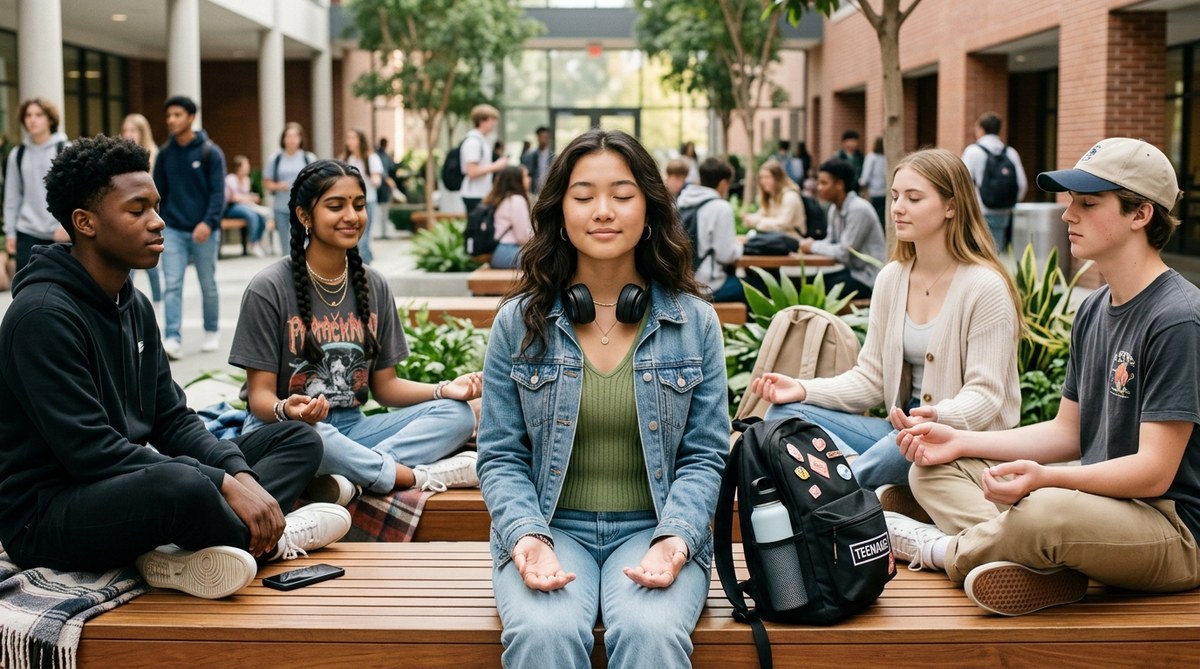
Your brain is buzzing. Emails pile up. Deadlines loom. Or maybe a group project just went off the rails. You feel the tension building in your shoulders. In those moments, sitting down for a long meditation feels impossible. But here is the good news. You do not need an hour. You do not even need ten minutes. You just need five.
Struggling to focus during a chaotic day? These 5-minute mindfulness exercises are designed for busy schedules. Whether you are at your desk, in the library, or between classes, these simple techniques can lower stress, sharpen concentration, and bring you back to the present moment. No special apps or equipment required. Just a willingness to pause and breathe for a few moments.
Why Five Minutes Is All It Takes
You might think you need a dedicated meditation cushion or a silent retreat to feel the benefits of mindfulness. That is not true. Research shows that even short bursts of focused awareness can shift your nervous system. Five minutes is long enough to interrupt the stress cycle but short enough to fit into any schedule. Think of it as a mental palate cleanser. It washes away the residual stress from the last task and sets you up for the next one.
Consistency matters more than duration. A five minute practice you actually do is better than a thirty minute practice you avoid. In 2026, the pressure to be constantly productive is real. Between classes, side hustles, and social commitments, your brain rarely gets a break. That is where these micro practices come in. They are designed to work with your life, not against it.
5 Simple Exercises to Reset Your Brain
You do not need a yoga mat or a calming playlist. These exercises can be done with your eyes open or closed, sitting at a desk or standing in a line. Pick one and try it the next time you feel overwhelmed.
1. The 5-4-3-2-1 Grounding Technique
This exercise pulls you straight out of your head and into the present moment. It works by engaging your five senses, one at a time.
Here is how to do it:
1. Look around and notice 5 things you can see. A crack in the wall. The color of your coffee mug. The light from the window.
2. Notice 4 things you can feel. The fabric of your shirt. The floor under your feet. The air on your skin.
3. Listen for 3 things you can hear. The hum of the air conditioner. A distant conversation. Your own breathing.
4. Notice 2 things you can smell. The scent of your hand soap. The leftover aroma of your lunch.
5. Notice 1 thing you can taste. The mint from your gum. The last sip of water.
By the time you reach one, your brain has shifted from panic mode to observation mode. It is one of the most effective 5-minute mindfulness exercises for high stress moments.
2. Box Breathing
This technique is popular with Navy SEALs and first responders. It is simple, discreet, and incredibly effective at slowing down your heart rate.
The pattern is simple:
– Inhale slowly through your nose for a count of 4.
– Hold your breath for a count of 4.
– Exhale slowly through your mouth for a count of 4.
– Hold your lungs empty for a count of 4.
Repeat this cycle for two to three minutes. If four seconds feels too long, start with three. The counting gives your racing mind something concrete to do. It stops the spiral of anxious thoughts and forces your body into a state of calm. You can do this right before a meeting, a test, or a difficult conversation.
3. The Mindful Sip
You probably drink coffee, tea, or water multiple times a day. Turn that habit into a reset tool. The next time you take a drink, stop everything else. Put your phone down. Do not scroll. Do not read.
For the next three minutes, just focus on the drink.
– Notice the warmth or coolness of the cup in your hands.
– Watch the steam rise or the condensation form.
– Take a sip and hold it in your mouth. Notice the flavor, the texture, and the temperature.
– Swallow and follow the sensation as it moves down your throat.
This exercise transforms an automatic behavior into a conscious act of self care. It is a reminder that you are allowed to slow down, even for a minute.
4. Body Scan at Your Desk
Stress lives in the body. You might not notice that you are clenching your jaw or hunching your shoulders until they start to ache. A body scan is a way to check in with your physical self.
Close your eyes or soften your gaze. Start at the top of your head.
– Notice any tension in your scalp or forehead. Relax it.
– Move to your jaw. Unclench your teeth.
– Drop your shoulders away from your ears.
– Feel your hands resting on your desk or lap. Let them be heavy.
– Scan down to your legs and feet. Press them into the floor.
Take about one minute per area. The goal is not to change anything, just to notice it. Once you notice tension, you can choose to let it go. This is a powerful way to reset your brain by calming your body first.
5. One Sentence Gratitude
Your brain has a negativity bias. It is wired to look for threats. That is why one bad comment can ruin a whole day of good feedback. To counter this, you need to intentionally look for the good.
Set a timer for five minutes. Take a few deep breaths. Then, write down one sentence.
– “I am glad I got a seat on the bus today.”
– “My friend made me laugh earlier.”
– “This coffee tastes really good.”
It does not have to be profound. It just has to be true. This simple practice retrains your brain to scan for positive moments. Over time, it shifts your baseline mood. It is a tiny investment that pays huge dividends in how you handle stress throughout the day.
If you are looking for more ways to build a positive mindset, check out our guide to simple morning habits that actually boost mental health.
Common Mistakes and How to Avoid Them
Mindfulness sounds simple, but it trips people up all the time. Here is a breakdown of common mistakes and the simple fixes that make these 5-minute mindfulness exercises actually work.
| Common Mistakes | What to Do Instead |
|---|---|
| Trying to clear your mind completely | Focus on just one thing, like your breath or a sound. |
| Getting frustrated when thoughts pop up | Expect thoughts to come. Gently label them as “thinking” and go back to your focus. |
| Doing it perfectly for one day, then quitting | Aim for consistency, not perfection. Five minutes daily beats thirty minutes once. |
| Waiting until you are already overwhelmed | Practice when you are calm so the skill is there when you need it. |
| Judging yourself for being bad at it | There is no such thing as being bad at mindfulness. Every time you notice you are distracted, you just had a moment of mindfulness. |
Expert Advice on Getting Started
You might feel silly staring at your coffee or counting your breath. That is normal. The real magic happens when you do it anyway.
“Mindfulness is not about stopping your thoughts. It is about realizing that you are not your thoughts. You are the one watching them.” This idea takes the pressure off. You are not trying to silence your brain. You are just noticing what it is doing. That shift alone can reduce stress.
The moment you realize you were distracted and bring your attention back is the moment of strength. It is like a rep for your brain. Every time you do it, you get stronger.
Your Five Minute Reset Plan
It helps to have a simple plan so you do not have to think about what to do when stress hits. Here is a sample schedule.
- Morning (Before starting work or school): Box Breathing (3 rounds). This sets a calm baseline for the day.
- Afternoon (Post lunch slump): Mindful Sip. Use your coffee break as a mindfulness break.
- Evening (Before studying or logging off): One Sentence Gratitude. End the day on a positive note.
- Anytime stress spikes: 5-4-3-2-1 Grounding. Use this as your emergency reset button.
You can mix and match based on your day. The only rule is to give yourself the full five minutes. Do not cut it short. You deserve that time.
For those times when school or work feels impossible to keep up with, our guide to managing exam stress without burning out has more practical strategies that pair well with these exercises.
Small Pause, Big Difference
You do not have to change your entire lifestyle to feel less stressed. You just have to start with five minutes. One exercise. One moment of intention. It sounds small because it is. But small things, done consistently, build resilience over time.
The next time you feel your stress levels rise, try one of these 5-minute mindfulness exercises. Put down your phone. Take a breath. Notice where you are. You will be surprised at how much calm you can create in just a few hundred seconds. You have got this.





Post Comment