How to Build a Morning Routine That Actually Sticks in College
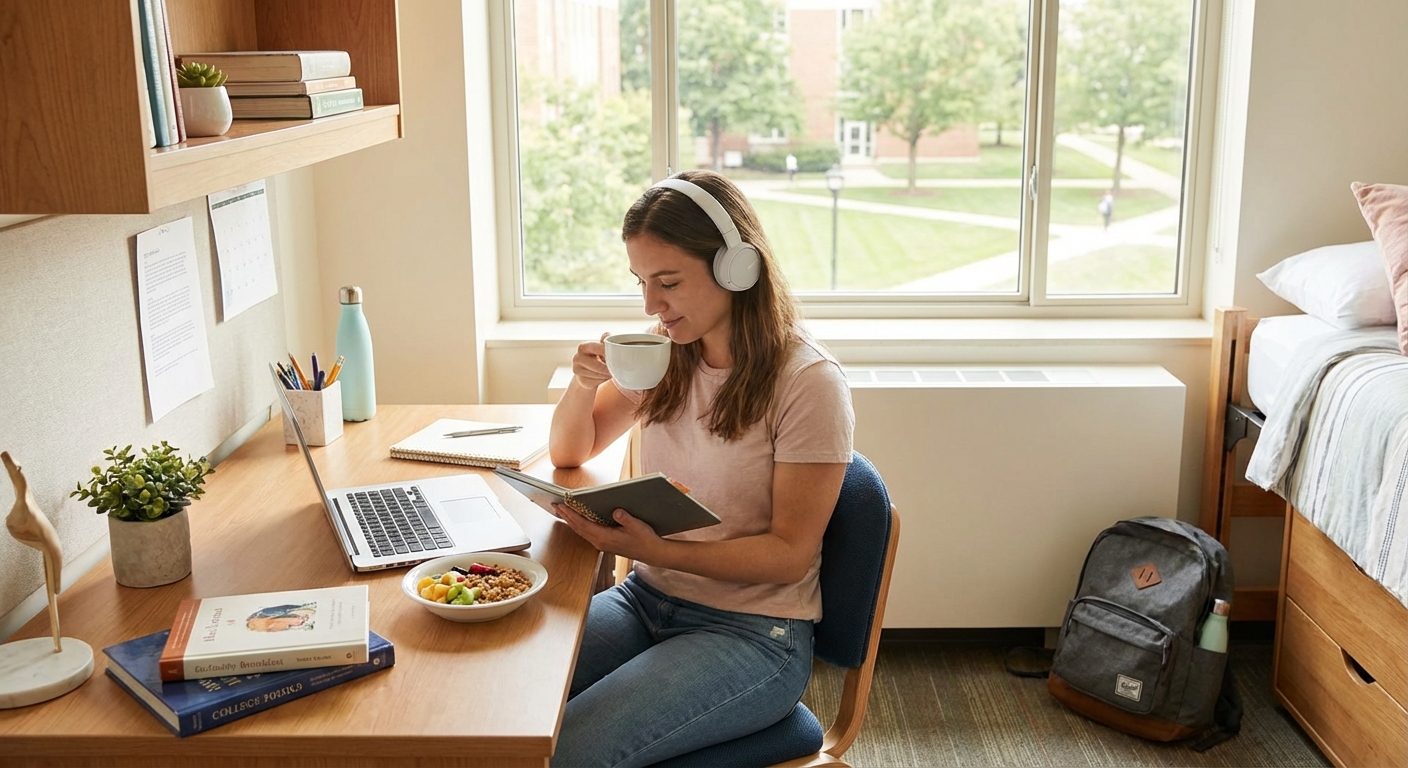
You set three alarms. You hit snooze on all of them. You wake up 15 minutes before class, throw on yesterday’s hoodie, and sprint across campus with a granola bar hanging out of your mouth.
Sound familiar?
Most college students know they need a better morning routine. The problem isn’t motivation. It’s that traditional morning routines were designed for people with normal sleep schedules, consistent wake times, and zero 8 AM lectures after pulling an all-nighter.
A morning routine for college students needs flexibility, not perfection. Start with three core habits that take under 15 minutes total. Build consistency around your class schedule, not against it. Focus on what makes you feel awake and ready, not what productivity influencers say you should do. Small, sustainable changes beat elaborate routines you’ll abandon by week two.
Why Most Morning Routines Fail in College
College life doesn’t follow a 9-to-5 pattern.
Your schedule changes every semester. Some days you start at 8 AM. Others at 2 PM. You might have back-to-back classes on Monday and nothing until noon on Wednesday.
Then there’s the sleep situation. Late night study sessions. Group project meetings at 11 PM. That friend who always wants to grab supper at midnight.
Traditional morning routines assume you wake up at the same time every day. They assume you have 90 minutes to journal, meditate, work out, and make a smoothie bowl.
That’s not realistic for most students.
The routines that actually stick are the ones that adapt to your life, not the other way around.
The Three-Tier System for Building Your Routine

Think of your morning routine in three tiers based on how much time you have.
Tier 1: The Bare Minimum (5 Minutes)
This is your emergency routine. The one you do even when you wake up late.
- Drink a full glass of water
- Wash your face
- Get dressed in real clothes (not pajamas)
That’s it. No exceptions. Even on your worst mornings, you can manage five minutes.
These three actions signal to your brain that the day has started. They create a boundary between sleep mode and awake mode.
Tier 2: The Standard Routine (15 Minutes)
This is what you aim for on regular days.
- Drink water
- Wash face and brush teeth
- Get dressed
- Eat something (even if it’s just toast)
- Check your schedule for the day
Adding breakfast and a schedule check makes a huge difference. You’re not just awake. You’re prepared.
If you want to add simple morning skincare, this is where it fits naturally.
Tier 3: The Full Routine (30 Minutes)
This is for days when you have extra time or when you really need to feel put together.
- Everything from Tier 2
- Ten minutes of movement (stretching, walking, or light exercise)
- Review notes or reading for your first class
- Make your bed
The movement doesn’t need to be intense. Just something to get your blood flowing. Walk to a further dining hall. Do some basic stretches. Take the stairs instead of the elevator.
Making your bed is optional but powerful. You’ve accomplished something before leaving your room. That momentum carries forward.
How to Actually Wake Up When Your Alarm Goes Off
The snooze button is your enemy. Here’s why.
When you hit snooze, you start a new sleep cycle. But you’re not going to complete it. You’re just making yourself groggier.
Try these instead:
- Put your phone across the room so you have to physically get up
- Use an alarm that gradually increases in volume
- Set your alarm to your favorite upbeat song, not a jarring sound
- Open your blinds immediately after waking up (light helps)
- Have water by your bed to drink the moment you wake
The water trick works surprisingly well. Your body is dehydrated after 6-8 hours of sleep. Drinking water immediately helps you feel more alert.
Some students swear by the “5-4-3-2-1” method. When your alarm goes off, count down from five, then immediately throw off your covers and stand up. No thinking. Just action.
Common Morning Routine Mistakes and How to Fix Them
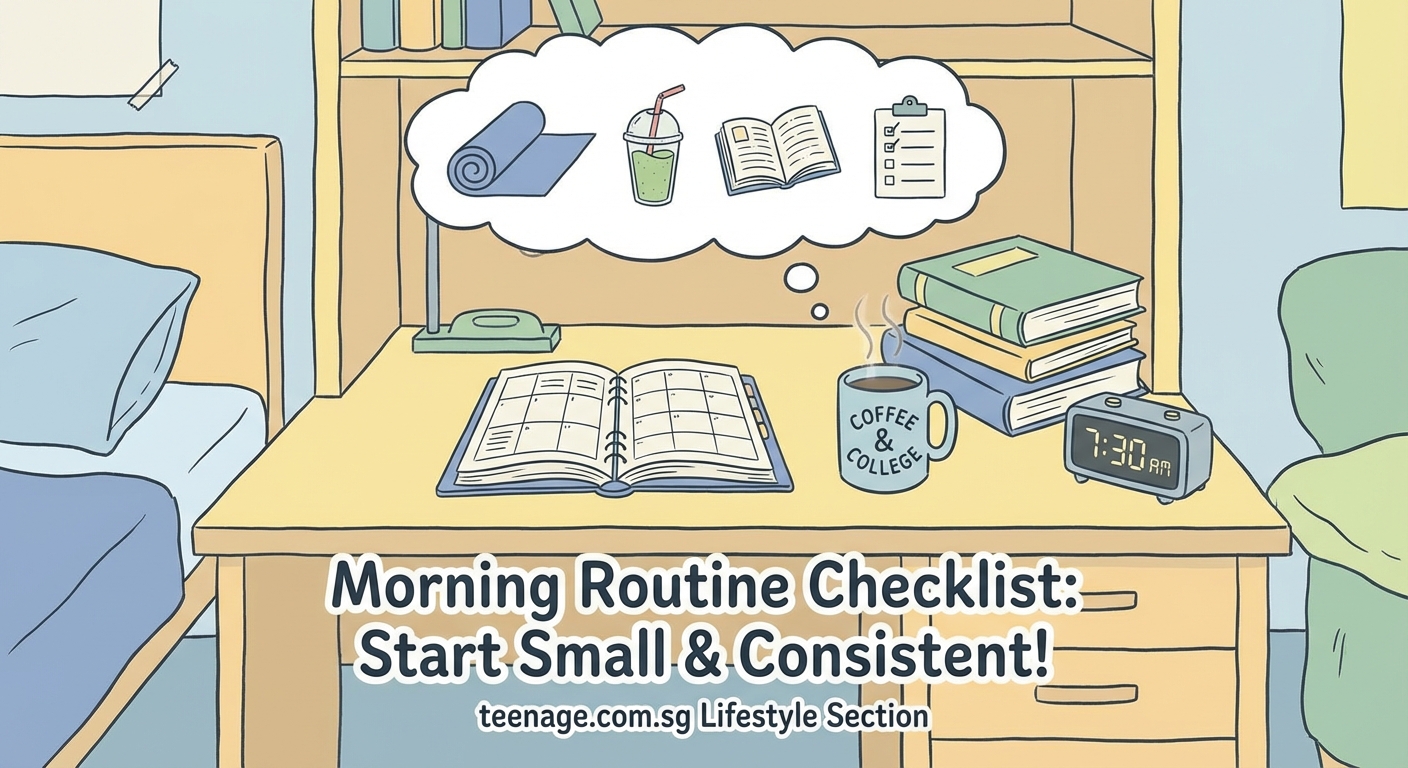
| Mistake | Why It Fails | Better Approach |
|---|---|---|
| Trying to wake up two hours earlier overnight | Your body can’t adjust that fast | Shift wake time by 15 minutes every few days |
| Checking social media first thing | Puts you in reactive mode | Wait until after your Tier 1 routine |
| Skipping breakfast to save time | Crashes your energy by 10 AM | Keep grab-and-go options ready |
| Making routines too complicated | Too many steps = too easy to quit | Start with just three habits |
| Using the same routine every day | Doesn’t match variable schedule | Build flexible tiers |
| Expecting perfection | One bad day feels like failure | Aim for 80% consistency |
The social media trap is real. You check Instagram “for just a minute” and suddenly 30 minutes are gone. You’re stressed about things that don’t matter. Your morning is already reactive instead of intentional.
Wait until you’ve completed at least your Tier 1 routine before touching your phone beyond turning off the alarm.
Building Routines Around Different Class Schedules
Your routine needs to bend with your schedule.
For 8 AM classes:
Wake up by 7:15 at the latest. Use Tier 1 or Tier 2. Save the full routine for days when you have more time. Prep everything the night before (clothes, bag, breakfast).
For 10 AM or later classes:
This is your chance for a Tier 3 routine. Use the extra time wisely. Don’t just scroll in bed for an extra hour. Actually get up earlier and do the full routine.
For days with no morning classes:
Stick to a consistent wake time anyway, at least within an hour of your usual time. Sleeping until 2 PM on free days makes it harder to wake up when you need to.
For exam weeks:
Don’t abandon your routine when stress peaks. That’s when you need it most. Even just Tier 1 helps. It creates structure when everything feels chaotic.
If you’re struggling with exam stress, maintaining morning consistency helps more than you’d think.
The Night Before Matters More Than You Think

Your morning routine actually starts the night before.
Set yourself up for success:
- Lay out clothes
- Pack your bag
- Check tomorrow’s schedule
- Set multiple alarms
- Put water by your bed
- Plug in your phone across the room
This takes five minutes at night but saves 15 minutes of chaos in the morning.
Also consider what time you’re going to bed. You can’t build a sustainable morning routine if you’re only getting four hours of sleep. If you’re constantly exhausted, check out why you’re always tired for deeper solutions.
“The best morning routine is the one you’ll actually do. Start so small it feels almost silly. Once that becomes automatic, add one more thing. Build slowly.” – College counselor and time management coach
Making Your Routine Stick Past Week Two
Most students start strong. Then week two hits and the routine falls apart.
Here’s how to build real consistency:
Track without judgment. Use a simple habit tracker. Mark days you complete your routine. Don’t beat yourself up about misses. Just notice patterns.
Start smaller than you think necessary. If you want a 30-minute routine, start with 10 minutes. Make it so easy you can’t say no.
Link to existing habits. Attach new habits to things you already do. “After I brush my teeth, I’ll drink water.” “After I get dressed, I’ll check my schedule.”
Prepare for obstacles. What will you do when you oversleep? When you have an early exam? When you’re sick? Plan for these scenarios instead of letting them derail you.
Find an accountability partner. Text a friend when you complete your routine. Or find someone who wants to build better habits too. Check in with each other.
Adjust as needed. Your routine should evolve. What works in September might not work in November. That’s fine. Flexibility is the point.
The students who succeed long-term are the ones who treat their routine as a flexible framework, not a rigid rule.
What to Include Based on Your Goals
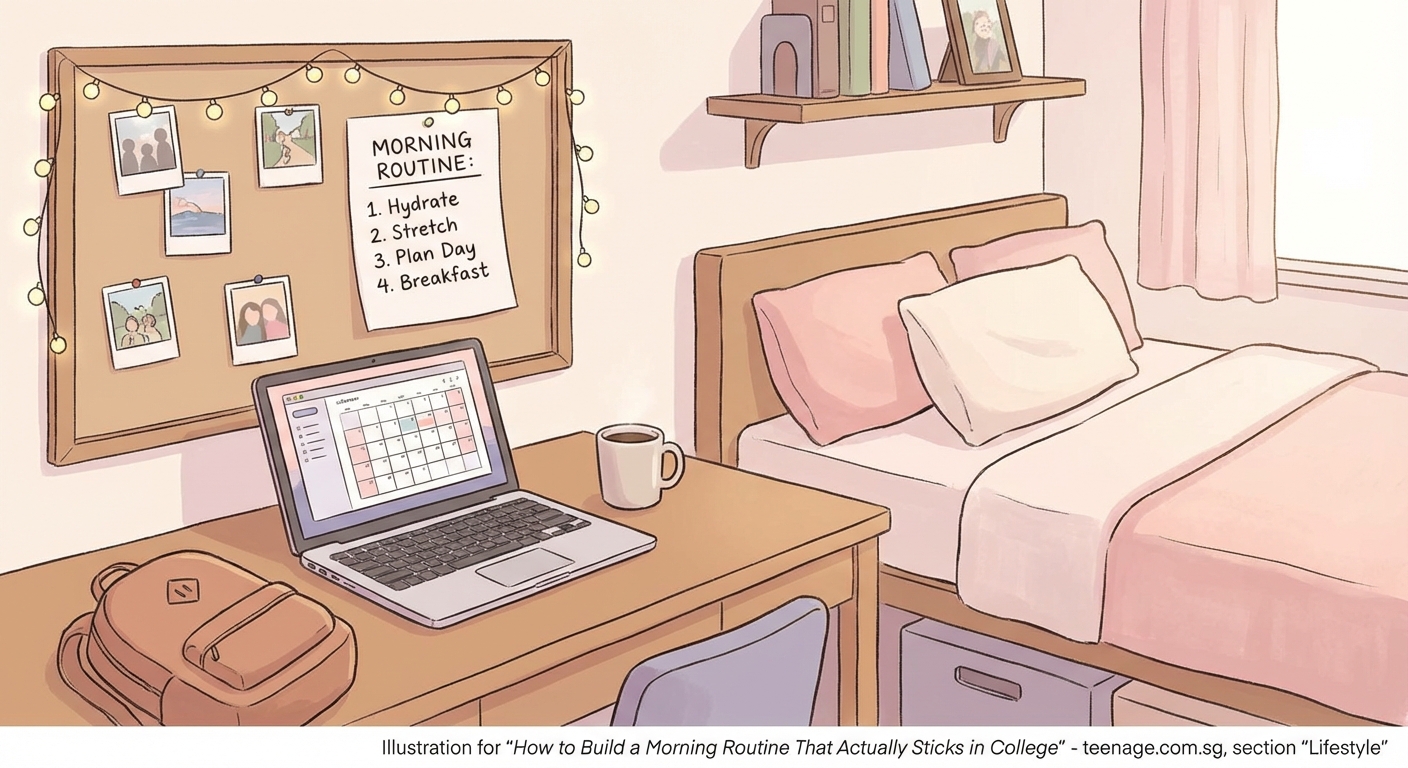
Different goals need different morning elements.
If you want better grades:
– Review notes for your first class (5 minutes)
– Eat protein for sustained focus
– Check assignment deadlines
If you want more energy:
– Prioritize sleep quality over routine length
– Add movement to your morning
– Eat breakfast every single day
If you want less stress:
– Build in buffer time so you’re not rushing
– Check your schedule the night before
– Include one calming activity (stretching, deep breathing)
If you want to feel more put together:
– Shower in the morning instead of night
– Actually style your hair
– Wear real outfits, not just comfort clothes
You don’t need to do everything. Pick what matters most to you right now. You can always add more later.
For students interested in overall wellness, combining morning routines with simple morning habits that boost mental health creates compound benefits.
Quick Breakfast Ideas That Take Under 5 Minutes
You need to eat something. Your brain runs on glucose. Skipping breakfast tanks your focus by mid-morning.
Easy options that require almost zero prep:
- Overnight oats (make the night before)
- Banana with peanut butter
- Greek yogurt with granola
- String cheese and an apple
- Protein bar and fruit
- Toast with avocado
- Hard-boiled eggs (prep on Sunday)
- Smoothie (if you have a blender)
Keep backup options in your room. Granola bars. Nuts. Dried fruit. Something is always better than nothing.
If you’re living on campus and want more variety, check out these breakfast ideas that’ll make you want to wake up early for inspiration.
When Life Gets Messy and Routines Fall Apart
You will have bad weeks.
Midterms hit. You get sick. A family emergency happens. Your roommate keeps you up all night. You fall behind on assignments and everything feels overwhelming.
During these times, fall back to Tier 1. Just do the bare minimum.
Drink water. Wash face. Get dressed.
That’s enough. Seriously.
Maintaining even the smallest routine during chaos helps you recover faster. It’s an anchor when everything else is unstable.
Don’t wait until life is perfect to restart. Life is never perfect. Just pick up where you left off.
Adjusting Your Routine Each Semester
Your schedule changes every few months. Your routine should too.
At the start of each semester:
- Map out your class times
- Identify your earliest days
- Calculate how much morning time you have
- Adjust your routine tiers accordingly
- Plan for known busy periods (exam weeks, project deadlines)
What worked last semester might not work this semester. That doesn’t mean you failed. It means you’re adapting.
Students who maintain morning routines long-term are the ones who rebuild and adjust regularly. They don’t expect one routine to work forever.
Making Mornings Actually Enjoyable
Your morning routine shouldn’t feel like punishment.
Add something you genuinely enjoy:
- Listen to your favorite playlist while getting ready
- Make coffee or tea you actually like
- Wear clothes that make you feel good
- Open your window for fresh air
- Light a candle if your dorm allows it
- Text a friend good morning
Small pleasures make the routine something you want to do, not something you have to do.
If mornings are when you feel most creative, use that time for something fun. Journal. Sketch. Work on a personal project. Not every morning minute needs to be productive in the traditional sense.
The Role of Your Environment
Your physical space impacts your routine more than you think.
Make your morning easier by organizing your space:
- Keep a water bottle within arm’s reach of your bed
- Hang tomorrow’s outfit where you can see it
- Put your backpack by the door
- Keep breakfast supplies in one place
- Have a designated spot for keys, wallet, student ID
The less friction, the better. Every small obstacle you remove makes consistency easier.
If you’re in a dorm, work with what you have. You might not be able to control everything about your space, but you can optimize your corner of it. Students looking to improve their living situation might find ideas in budget-friendly ways to upgrade your dorm room.
Dealing With Roommates and Shared Spaces
Living with others complicates morning routines.
Your roommate might have a completely different schedule. They might be loud in the morning. Or they might need total silence while you need music.
Communication helps:
- Discuss sleep schedules early
- Agree on quiet hours
- Use headphones for music or alarms
- Keep a small flashlight for early mornings
- Prep clothes in the bathroom if getting dressed wakes them
Most roommate conflicts come from assumptions, not actual incompatibility. Talk about what you need. Find compromises.
If your roommate consistently disrupts your sleep, that’s a bigger issue worth addressing. You can’t build a sustainable morning routine on four hours of broken sleep.
Why Consistency Beats Perfection
You don’t need a perfect routine. You need a consistent one.
Doing your Tier 1 routine six days a week beats doing an elaborate routine twice a week and then giving up.
Progress isn’t linear. Some weeks will be better than others. That’s normal.
What matters is that you keep showing up. Even when it’s hard. Even when you don’t feel like it. Even when you mess up.
The students who transform their mornings aren’t the ones who start with intense routines. They’re the ones who start small and stick with it long enough for it to become automatic.
Your Morning Routine Shapes Your Whole Day
How you start your morning influences everything that follows.
When you wake up rushed and stressed, you carry that energy into class. Into conversations. Into your work.
When you wake up with intention and structure, even just 15 minutes of it, you start from a place of control instead of chaos.
A morning routine for college students isn’t about becoming a productivity robot. It’s about giving yourself a fighting chance to handle whatever the day throws at you.
You don’t need to wake up at 5 AM. You don’t need a 90-minute routine. You don’t need to be perfect.
You just need three core habits, some flexibility, and the willingness to keep trying even when you fall off track.
Start tomorrow with just Tier 1. Five minutes. That’s all.
Build from there.














Post Comment