The Best Career Paths for Introverts Who Hate Small Talk

If you’ve ever faked a bathroom break to escape awkward office chitchat, you’re not alone. For introverts, forced social interaction isn’t just uncomfortable. It’s exhausting. The good news? Plenty of careers let you do meaningful work without draining your social battery every single day.
The best jobs for introverts prioritize independent work, deep focus, and minimal forced socializing. Roles like data analyst, software developer, graphic designer, and technical writer offer strong pay and career growth without constant meetings or small talk. Success comes from matching your personality to work environments that respect your need for quiet, focused time.
Understanding what introverts actually need from work
Being an introvert doesn’t mean you hate people or can’t communicate. It means social interaction drains your energy instead of recharging it. You might be great at presentations or client calls, but you need alone time afterward to recover.
Most workplaces ignore this reality. They design open offices, schedule endless meetings, and expect constant collaboration. That setup works for some people. For introverts, it’s a recipe for burnout.
The right career respects your working style. It gives you space to think deeply, work independently, and contribute without performing extroversion all day long.
What makes a job genuinely introvert friendly
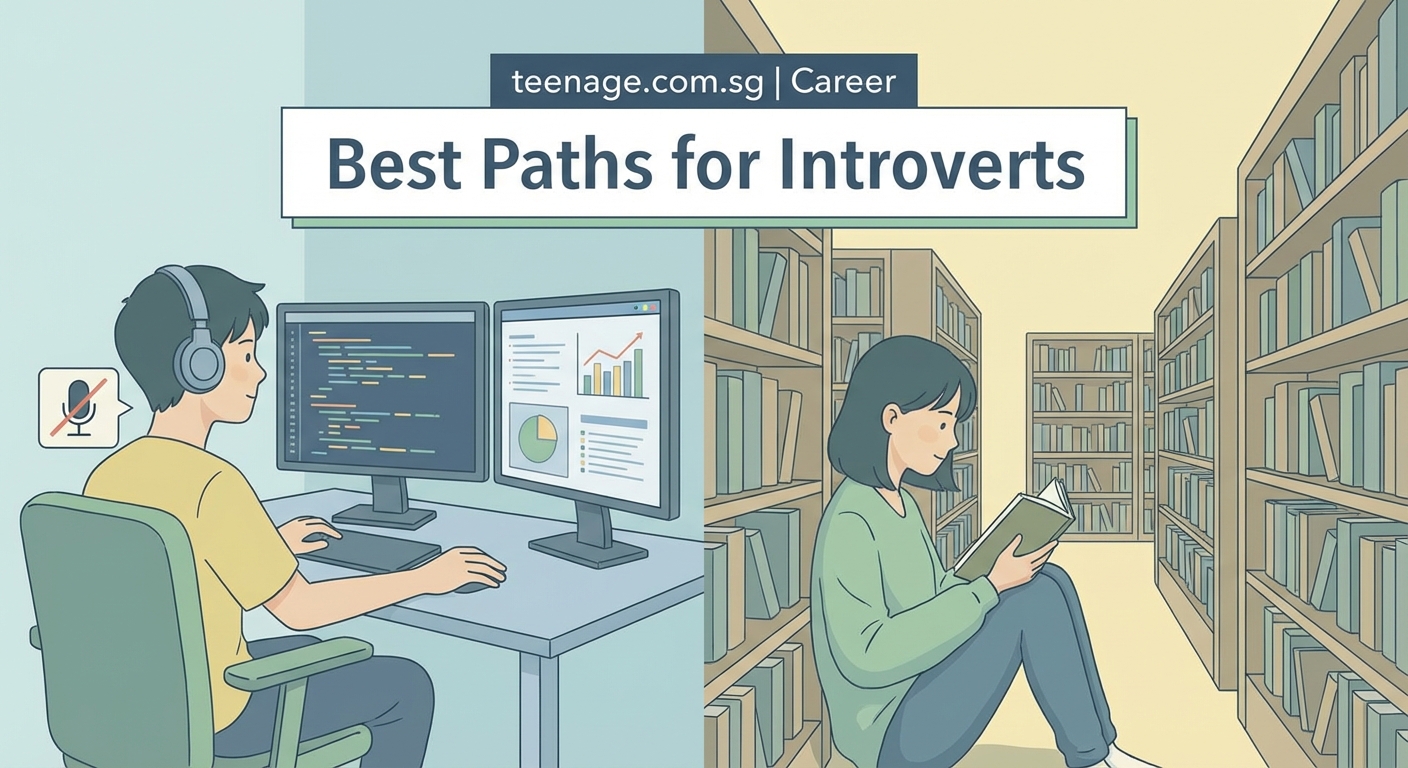
Not every “work from home” job is automatically perfect for introverts. Some remote roles involve back to back video calls and constant Slack messages. That’s just as draining as an open office.
Here’s what actually matters:
- Minimal forced socializing outside of necessary communication
- Control over your schedule and work environment
- Deep work time without constant interruptions
- Written communication preferred over meetings
- Independent projects you can own start to finish
- Clear expectations without office politics
Jobs that check these boxes let you do your best work without pretending to be someone you’re not.
Top career paths that actually work for introverted people
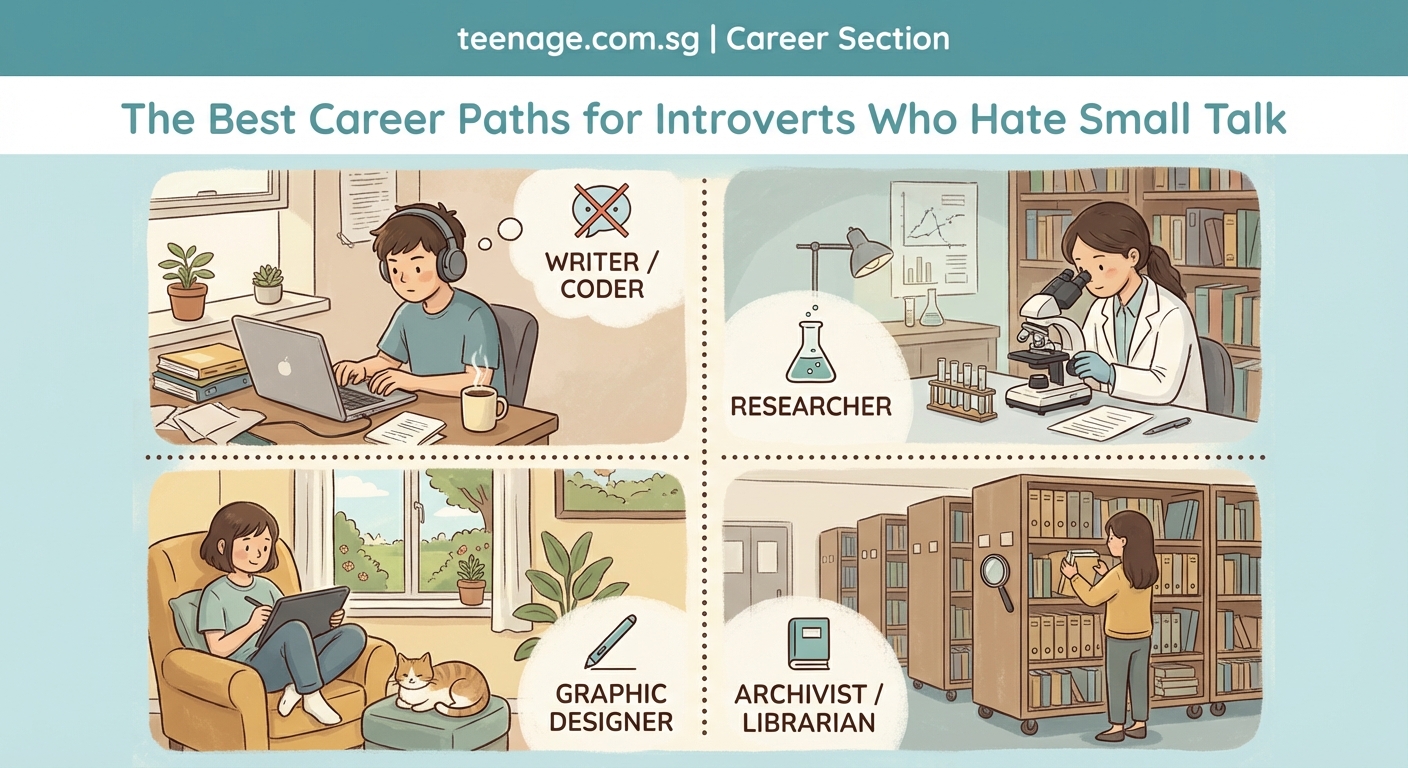
Software developer or programmer
Writing code requires intense concentration and problem solving. Most of your day involves working alone or with small teams on specific technical challenges.
Yes, you’ll have some meetings. Stand ups, planning sessions, code reviews. But the bulk of your time goes to focused work. Many tech companies also offer remote options and flexible schedules.
The field pays well too. Entry level developers in Singapore earn around SGD 3,500 to 5,000 monthly. Senior developers can make SGD 8,000 or more.
Data analyst or data scientist
If you like finding patterns and solving puzzles, data work might fit perfectly. You spend most of your time cleaning datasets, running analyses, and building models. The work is detail oriented and requires sustained focus.
Communication happens mainly through reports and dashboards rather than constant meetings. You present findings occasionally, but most interaction is asynchronous.
The demand for data skills keeps growing across industries. You can work in finance, healthcare, tech, government, or startups.
Graphic designer or UX designer
Design work involves lots of solo creative time. You research, sketch, prototype, and refine visual solutions. Client meetings and feedback sessions happen, but they’re structured and purposeful rather than random small talk.
Many designers work freelance or remotely, giving you even more control over your environment. You can take on projects that interest you and build a portfolio at your own pace.
Starting out might mean working in house to learn the ropes. But the path to independence is clear if you want it. If you’re interested in building a creative career while staying on budget, that mindset applies to your professional toolkit too.
Technical writer or content strategist
Someone has to write all those user manuals, help docs, and technical guides. Technical writers translate complex information into clear instructions. The work requires research, organization, and precision.
Most of your time goes to writing and editing alone. You interview subject matter experts occasionally, but those conversations have clear goals. No forced lunch meetings or water cooler chat required.
The role works well for people who enjoy learning new topics and explaining them clearly. You can specialize in software documentation, medical writing, engineering specs, or other technical fields.
Accountant or financial analyst
Number crunching suits introverted brains perfectly. Accounting involves focused work on financial records, tax prep, audits, and reporting. The work is structured and detail oriented.
You’ll interact with clients or colleagues, but conversations center on specific financial questions. There’s less social performance and more straightforward problem solving.
The career path is stable with clear progression. You can work in public accounting, corporate finance, or start your own practice eventually.
Research scientist or lab technician
Science careers offer tons of focused lab time. Whether you’re running experiments, analyzing samples, or writing research papers, the work demands concentration and precision.
Collaboration happens, but it’s usually with other introverts who respect quiet work time. Lab environments tend to be calmer than typical offices.
Fields like biology, chemistry, environmental science, and medical research all need people who can work independently on complex problems.
How to evaluate whether a job will actually suit you
Job descriptions don’t always reveal the social demands of a role. A position might sound perfect on paper but involve constant client calls or open office chaos.
Here’s how to figure out the real story before accepting an offer:
- Ask about typical daily schedules during interviews. How many meetings? What kind?
- Request a workplace tour if possible. Check the office layout and noise levels.
- Talk to current employees about work culture and communication styles.
- Clarify remote work policies and flexibility around schedules.
- Understand team size and collaboration expectations for your specific role.
Don’t be afraid to ask direct questions. A company that respects different working styles will appreciate your honesty.
Common mistakes introverts make when job hunting
Forcing yourself into extroverted roles
Sales, event planning, and customer service jobs can work for some introverts. But if the thought of constant socializing makes you anxious, don’t convince yourself you’ll “get used to it.” You probably won’t. Choose roles that match your natural strengths instead of fighting against them.
Ignoring red flags about company culture
“We’re like a family” and “fast paced environment” often mean constant interaction and unclear boundaries. “Open and collaborative” might translate to open office hell. Pay attention to these signals.
Undervaluing your strengths
Introverts often excel at deep thinking, careful analysis, independent problem solving, and written communication. These skills are valuable. Don’t downplay them because they’re not loud or flashy.
Building career skills that play to introvert strengths

| Skill Area | Why It Matters | How to Develop It |
|---|---|---|
| Technical expertise | Depth beats breadth for many introvert friendly roles | Online courses, certifications, personal projects |
| Written communication | Lets you communicate clearly without draining energy | Practice writing docs, emails, reports regularly |
| Analytical thinking | Core skill for data, research, and technical work | Work on puzzles, learn statistics, study logic |
| Self management | Independence requires strong organization | Use project management tools, set clear goals |
| Specialized knowledge | Expertise makes you valuable and harder to replace | Pick a niche and go deep rather than staying general |
These skills compound over time. The better you get, the more autonomy you earn.
Making the transition to a more introvert friendly career
Switching careers feels risky, especially if you’re leaving a stable job. But staying in a role that drains you daily has costs too. Burnout, health problems, and missed opportunities add up.
Start by building skills on the side. Take evening courses, work on freelance projects, or volunteer for relevant work. This lets you test new directions without immediately quitting your current job.
“The best time to look for a job is when you already have one. You make better decisions when you’re not desperate, and you can be selective about company culture and role fit.” – Career counselor at a Singapore university
Network with people in your target field. Join online communities, attend meetups when you have the energy, and reach out for informational interviews. Most people enjoy talking about their work if you ask thoughtful questions.
When you’re ready to apply, tailor your resume to highlight relevant skills. Explain how your current experience transfers to the new role. Employers care more about what you can do than your exact job history. If you’re preparing for interviews, check out tips on what to say and wear to make a strong impression.
Remote work realities for introverts
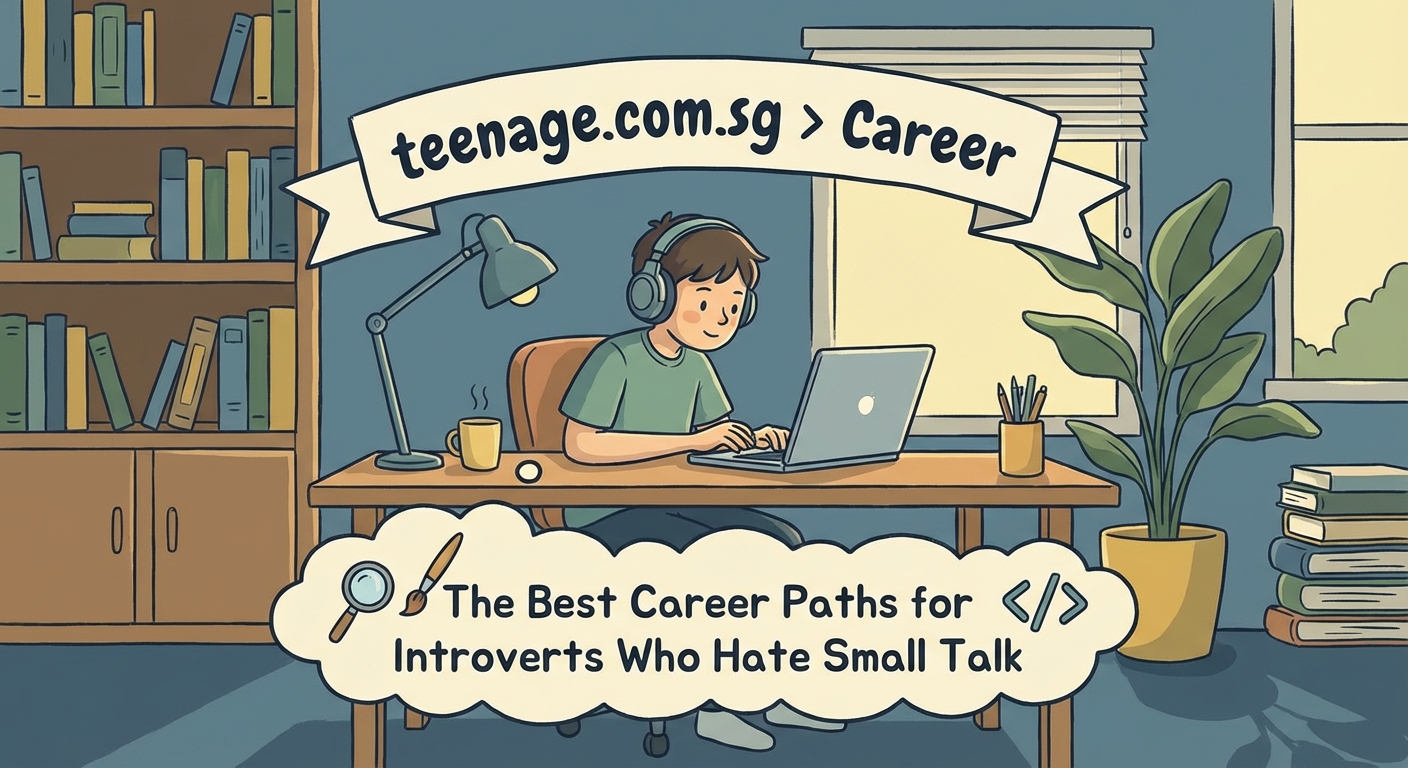
Remote jobs sound perfect for introverts. No commute, no office small talk, complete control over your environment. And yes, many remote roles deliver on that promise.
But some remote companies overcompensate for distance with excessive meetings and constant check ins. You end up on Zoom all day, which can be even more draining than in person interaction.
Look for companies with strong asynchronous communication cultures. They use written updates, documentation, and recorded videos instead of defaulting to meetings. GitLab, Automattic, and many tech startups operate this way.
Ask about meeting culture during interviews. How many video calls per week? Are cameras required? Can you block focus time on your calendar? These details matter more than whether the job is technically remote.
Side hustles that work well for introverted income
Full time employment isn’t the only path. Many introverts build successful freelance careers or side businesses that give them complete control over their work.
- Freelance writing or editing for blogs, businesses, or publications
- Web development or app creation for clients or your own products
- Graphic design or illustration through platforms like Fiverr or direct clients
- Online tutoring in subjects you know well, often one on one
- Digital product creation like courses, templates, or stock assets
These options let you work independently and choose projects that interest you. Income can be unpredictable starting out, but many people eventually earn more than traditional employment while maintaining better work life balance. For students looking to earn while studying, there are side hustles you can start right away.
Education paths that lead to introvert friendly careers
You don’t always need a four year degree to access good introvert friendly work. Many technical skills can be learned through bootcamps, online courses, or self study.
Degree programs that open doors:
- Computer science or software engineering
- Data science or statistics
- Accounting or finance
- Design or digital media
- Library science or information management
Alternative learning paths:
- Coding bootcamps for software development (12 to 24 weeks)
- Online courses for data analysis, design, or writing
- Professional certifications in accounting, project management, or technical fields
- Apprenticeships or internships that provide hands on experience
The best path depends on your timeline, budget, and learning style. Research job requirements in your target field and work backward from there.
Real talk about salary expectations
Introvert friendly jobs span the full income spectrum. Some pay extremely well, others start modest but grow with experience.
Higher paying options (SGD 60,000+ annually):
- Software developer
- Data scientist
- UX designer
- Financial analyst
- Research scientist
Moderate income roles (SGD 36,000 to 60,000 annually):
- Technical writer
- Graphic designer
- Accountant
- Lab technician
- Web developer
Entry level or freelance (Variable, often SGD 24,000 to 36,000 starting):
- Junior designer
- Content writer
- Data entry specialist
- Junior developer
- Research assistant
Your income grows as you gain experience and specialize. Many introverts reach high earning levels because they develop deep expertise in focused areas.
Finding workplaces that actually respect boundaries
Company culture matters more than job title. A great role at a toxic company will still drain you. A decent role at a respectful company can be genuinely fulfilling.
Green flags to look for:
- Clear documentation and written communication norms
- Respect for focus time and “do not disturb” signals
- Flexible schedules or remote options
- Small teams with defined responsibilities
- Leadership that values results over face time
Red flags to watch for:
- “Always on” expectations with after hours messages
- Open offices with no quiet spaces
- Excessive meetings without clear agendas
- Social events treated as mandatory
- Managers who equate visibility with productivity
Trust your gut during interviews. If the environment feels overwhelming during a one hour visit, imagine working there every day.
Your career should work with your personality, not against it
You don’t need to change who you are to build a successful career. The best jobs for introverts let you contribute meaningfully while respecting your need for focused, independent work time.
Start by identifying what drains you most in your current situation. Constant meetings? Open office noise? Forced socializing? Then look for roles and companies that minimize those specific pain points.
Your introversion is a strength, not a limitation. The ability to focus deeply, think independently, and communicate thoughtfully matters in every field. Find work that lets you use those strengths instead of fighting them. When you do, work stops feeling like a daily performance and starts feeling like something you can actually sustain long term. For more support on managing the pressures of work and life, consider reading about balancing school, social life, and self care for practical strategies.














Post Comment