The Real Reason You Can’t Focus (And How to Train Your Brain Better)

You sit down to study for tomorrow’s exam. Five minutes later, you’re watching TikTok. Sound familiar?
You’re not lazy, and you’re not broken. Your brain is doing exactly what it’s been trained to do in a world designed to fragment your attention. The real question isn’t why can’t I focus, but rather: what’s hijacking your concentration, and how do you take it back?
Your focus problems stem from predictable brain patterns, not character flaws. Modern life overloads your attention system through constant notifications, poor sleep, stress, and reward-seeking behavior. By understanding how your brain processes attention and implementing targeted strategies like single-tasking, environment design, and cognitive breaks, you can rebuild your concentration capacity within weeks. Small, consistent changes create measurable improvements in mental clarity and productivity.
Your Brain Wasn’t Built for This
Human attention evolved to scan for threats and opportunities, not to read dense textbooks for three hours straight.
Your ancestors needed to notice movement in the bushes while gathering food. That same system now fires every time your phone buzzes. The problem? Your notification count creates the same neural response as a potential predator.
Modern environments flood your attention system with more stimuli in one day than your great-grandparents encountered in a week. Your brain hasn’t evolved to filter this onslaught. It’s operating with Stone Age hardware running 2024 software.
Research shows the average person checks their phone 96 times per day. That’s once every ten minutes during waking hours. Each check fragments your attention, forcing your brain to context-switch. The cognitive cost is massive.
The Four Attention Thieves Sabotaging Your Focus
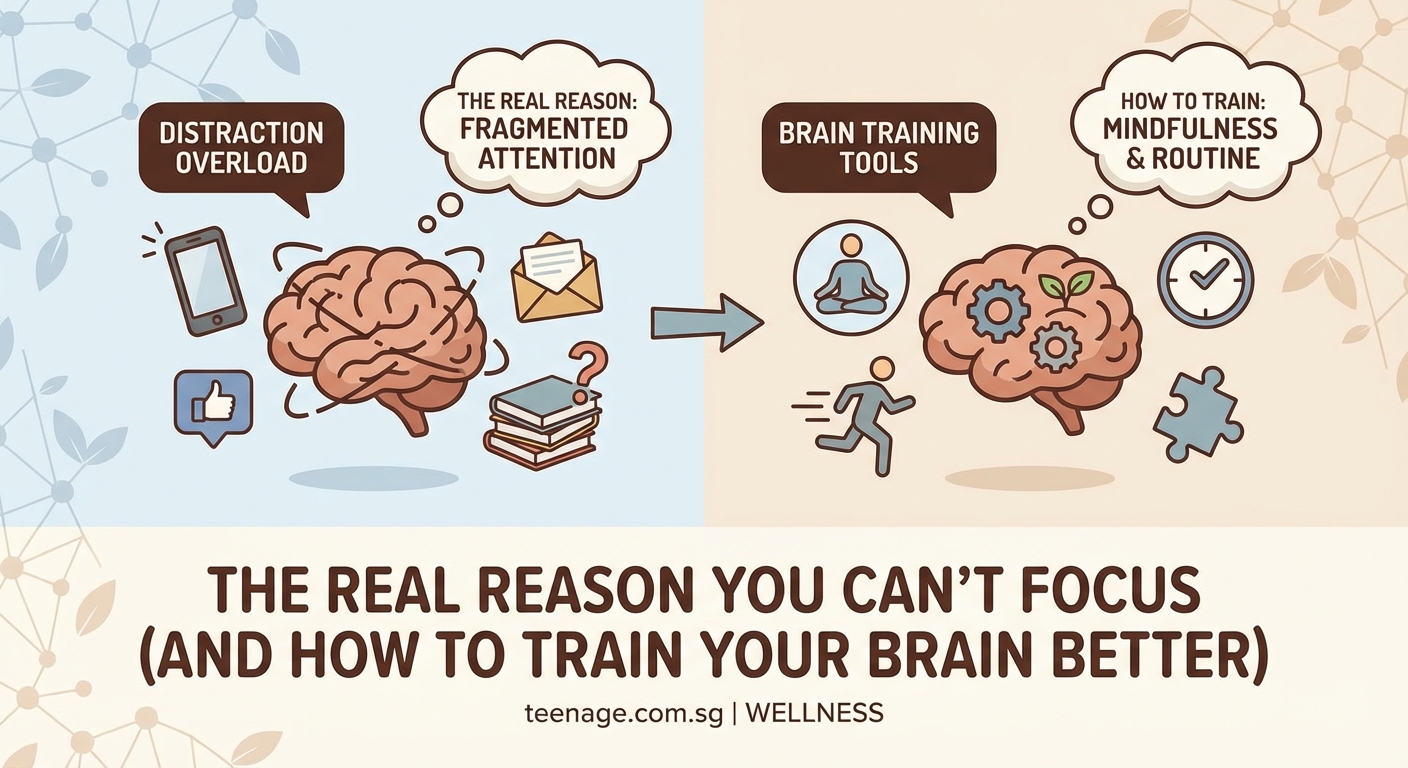
Understanding what breaks your concentration is the first step to protecting it.
Digital Interruptions
Every notification triggers a dopamine micro-hit. Your brain learns to crave these hits. Over time, you become conditioned to seek interruptions rather than resist them.
Studies reveal it takes an average of 23 minutes to fully return to a task after an interruption. If you’re interrupted every ten minutes, you never reach deep focus.
Sleep Deprivation
Your prefrontal cortex, the brain region responsible for executive function and sustained attention, is exquisitely sensitive to sleep loss.
Missing even one hour of sleep impairs your concentration as much as being legally drunk. Chronic sleep debt creates a fog that makes focus feel impossible, no matter how hard you try.
Stress and Anxiety
When your stress response activates, blood flow shifts from your prefrontal cortex to your amygdala. This ancient survival mechanism helped your ancestors react to danger. Today, it means worrying about your assignment deadline literally reduces your ability to complete the assignment.
Chronic stress keeps your brain in threat-detection mode. You scan for problems instead of focusing on solutions.
Poor Nutrition and Dehydration
Your brain uses 20% of your body’s energy despite being only 2% of your weight. When blood sugar crashes or you’re dehydrated, cognitive function tanks.
Skipping breakfast, loading up on simple carbs, or forgetting to drink water creates energy fluctuations that destroy sustained attention.
How Attention Actually Works in Your Brain
Your brain has three attention networks working together.
The alerting network keeps you awake and ready. The orienting network shifts focus to new stimuli. The executive network maintains concentration on chosen tasks.
Think of these like a security system. Alerting is the power supply. Orienting is the motion detector. Executive control is the decision-maker evaluating threats.
When you can’t focus, usually the orienting network is overactive (constantly detecting new stimuli) while the executive network is underperforming (failing to maintain chosen priorities).
“Attention is not just about focusing harder. It’s about training your brain to ignore the right things at the right time.” – Dr. Amishi Jha, neuroscientist
This insight changes everything. Focus isn’t about willpower. It’s about building better filtering systems.
The Science-Backed Method to Rebuild Your Focus
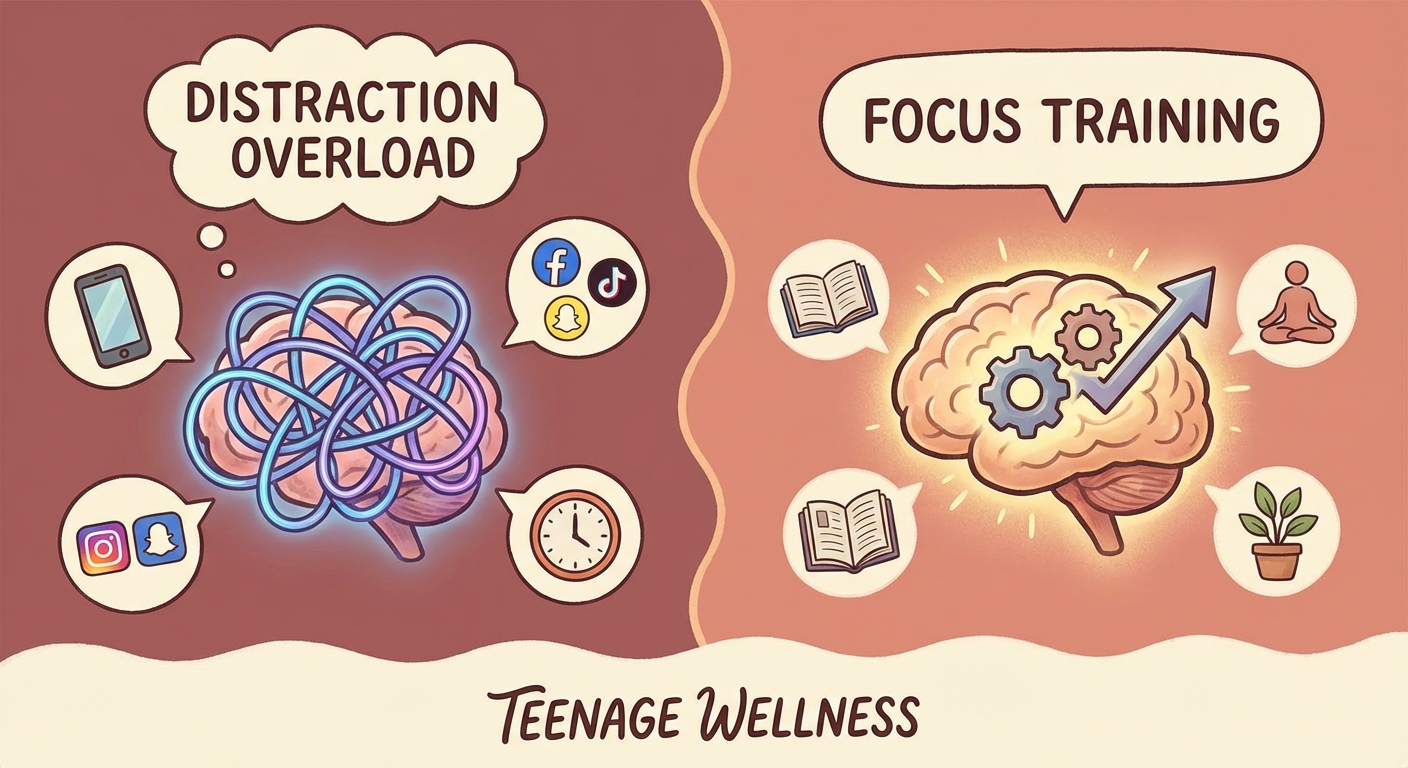
Training your attention requires deliberate practice, just like building muscle.
1. Start with a baseline assessment
Track your focus for three days before changing anything. Set a timer for 25 minutes and count how many times your mind wanders or you check your phone during a single task.
Write down the number. This is your baseline. Most people are shocked by how often their attention drifts.
2. Create a distraction-free zone
Your environment shapes your behavior more than your intentions. Remove temptation rather than relying on self-control.
Put your phone in another room. Use website blockers. Wear headphones even if you’re not playing music. These physical barriers reduce cognitive load.
3. Practice single-tasking in short bursts
Start with 10-minute focus sessions. Do one thing. Just one. When your mind wanders, gently return to the task.
Gradually increase duration as your attention stamina builds. Most people can reach 45-minute deep focus sessions within four weeks of consistent practice.
4. Build recovery into your schedule
Your brain needs breaks to consolidate learning and restore attention resources. The ideal pattern: 50 minutes of focused work followed by 10 minutes of genuine rest.
During breaks, move your body. Look at distant objects to reset eye focus. Avoid switching to different screen tasks, which don’t provide real recovery.
5. Optimize your sleep schedule
Set a consistent bedtime. Aim for seven to nine hours. Treat sleep as non-negotiable infrastructure for cognitive performance.
Your focus tomorrow is built by your sleep tonight. There’s no hack that compensates for chronic sleep debt.
Practical Strategies That Work Right Now
These tactics create immediate improvements while you build long-term capacity.
For morning focus:
– Delay phone checking for 30 minutes after waking
– Eat protein with breakfast to stabilize blood sugar
– Do your hardest cognitive work first, before decision fatigue sets in
– Get natural light exposure within one hour of waking to set your circadian rhythm
For afternoon slumps:
– Take a 10-minute walk instead of reaching for caffeine
– Do a two-minute breathing exercise to reset your nervous system
– Switch to easier tasks that require less executive function
– Stay hydrated (aim for clear or pale yellow urine)
For evening preparation:
– Set out tomorrow’s priorities before you finish today
– Charge your phone outside your bedroom
– Dim lights two hours before bed to support melatonin production
– Avoid screens 30 minutes before sleep
If you’re constantly battling procrastination alongside focus issues, the study hacks that actually work for procrastinators can complement these attention-building strategies.
Common Focus Mistakes and How to Fix Them
| Mistake | Why It Fails | Better Approach |
|---|---|---|
| Trying to focus for hours without breaks | Attention is a limited resource that depletes | Use timed intervals with built-in recovery |
| Multitasking to “save time” | Task-switching costs 40% productivity | Batch similar tasks, complete one before starting another |
| Relying on willpower to resist distractions | Willpower depletes throughout the day | Redesign environment to remove temptation |
| Working in the same position all day | Physical stillness reduces alertness | Change postures, stand, or move every 30 minutes |
| Using background TV or random music | Unpredictable audio triggers orienting response | Use consistent ambient sound or silence |
| Skipping meals to keep working | Low blood sugar impairs prefrontal cortex | Eat regular meals with protein and complex carbs |
When to Seek Professional Help
Sometimes concentration difficulties signal underlying conditions that need medical attention.
If you experience persistent focus problems alongside these symptoms, consult a healthcare provider:
- Inability to complete daily tasks despite trying focus techniques
- Focus problems that started suddenly or worsened dramatically
- Accompanying mood changes, memory loss, or personality shifts
- Difficulty focusing that impairs work, relationships, or safety
- Symptoms of depression or anxiety interfering with daily life
ADHD, anxiety disorders, depression, thyroid problems, and sleep disorders all affect concentration. Professional diagnosis opens treatment options that self-help strategies can’t address.
Building Your Personal Focus System
Your attention is trainable, but the training must fit your life.
Some people focus best in coffee shops with ambient noise. Others need total silence. Some work best in 90-minute blocks. Others prefer 25-minute sprints.
Experiment systematically. Change one variable at a time. Track what works. Your optimal focus system will be unique to your brain, schedule, and environment.
The goal isn’t perfect concentration. That doesn’t exist. The goal is building enough attentional control to complete what matters to you.
Start with your workspace. Creating an environment that supports focus makes everything else easier, much like how upgrading your dorm room can transform your study experience.
Your Attention Muscle Gets Stronger with Use
Focus is a skill, not a fixed trait.
Every time you notice your mind wandering and bring it back, you’re strengthening neural pathways. Every distraction you resist makes the next one easier to ignore. Every focused session builds capacity for the next.
The first week feels hard because you’re breaking old patterns and building new ones. Your brain resists change. That resistance isn’t failure. It’s the friction of growth.
Most people notice measurable improvements within two weeks of consistent practice. After a month, new habits start feeling natural. After three months, you’ll wonder how you ever worked any other way.
Your brain is plastic, meaning it physically reorganizes based on how you use it. The attention patterns you practice today become the default settings of tomorrow.
Start small. Pick one strategy from this article. Practice it for one week. Then add another. Sustainable change comes from stacking small wins, not overhauling everything at once.
Your focus isn’t broken. It’s just been trained by an environment designed to fragment it. With deliberate practice and better systems, you can train it back.














Post Comment