The Real Reason Your Homemade Iced Coffee Tastes Nothing Like Starbucks (And How to Fix It)

You’ve tried making iced coffee at home a dozen times. You’ve got the beans, the ice, the milk. Yet somehow, every sip tastes watery, bitter, or just plain wrong compared to what you get at Starbucks. The difference isn’t magic or some secret ingredient you can’t pronounce. It’s a handful of small mistakes that add up to a completely different drink. And once you know what they are, you can actually fix them.
Your homemade iced coffee tastes different because you’re probably brewing hot coffee and pouring it over ice, which dilutes flavor instantly. Starbucks uses concentrated cold brew or double-strength espresso, specific ice-to-coffee ratios, and precise milk proportions. Switching to cold brew concentrate, using coffee ice cubes, and measuring your ingredients will give you cafe-quality results at home without spending five dollars every morning.
You’re Brewing It Wrong From the Start
Most people make iced coffee by brewing a regular pot of hot coffee and dumping it over ice. That’s the first problem.
Hot coffee is brewed at a strength designed to be consumed hot. When you pour it over ice, the melting ice dilutes it immediately. What you’re left with is weak, sad coffee that tastes nothing like the cold, smooth drink you paid for yesterday.
Starbucks doesn’t do this. Their iced coffee is either cold brew (which is naturally concentrated) or espresso shots designed to hold up against ice and milk. The coffee itself is stronger before anything else gets added.
Here’s what you should do instead:
- Brew your coffee at double strength if you’re using hot coffee. Use twice the amount of grounds you normally would.
- Let it cool to room temperature before adding ice. This prevents immediate dilution.
- Better yet, switch to cold brew. It’s smoother, less acidic, and already concentrated.
Cold brew takes time, but it’s hands-off. You steep coarse coffee grounds in cold water for 12 to 24 hours, then strain. The result is a concentrate that you can dilute with water, milk, or pour directly over ice without losing flavor.
Your Ice Is Sabotaging Everything
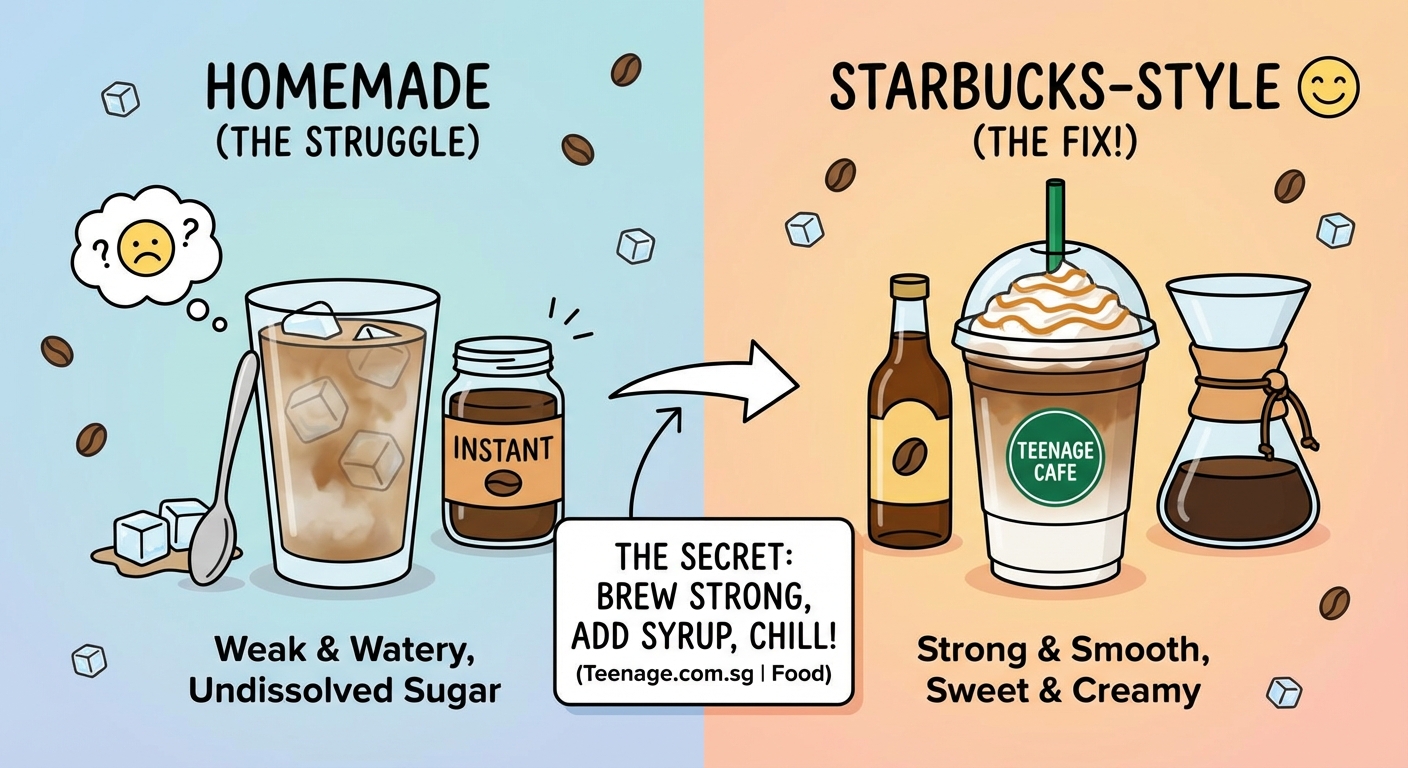
Regular ice cubes are just frozen water. As they melt, they water down your coffee. This is why your homemade version tastes weaker and weaker as you drink it.
Cafes use a lot of ice, but they also account for dilution in their recipes. They start with a stronger base. You probably don’t.
The fix is simple: make coffee ice cubes. Brew extra coffee, let it cool, and freeze it in ice cube trays. When those cubes melt, they add more coffee flavor instead of diluting it.
You can also use less ice overall if you’re starting with cold coffee. Room temperature or chilled coffee won’t melt ice as fast as hot coffee will.
The Ratios Are Completely Off
Starbucks has precise recipes. Every drink is measured. You’re probably eyeballing everything.
Here’s a comparison of what’s actually in a standard iced coffee versus what most people do at home:
| Element | Starbucks Approach | Typical Homemade Approach |
|---|---|---|
| Coffee Base | Cold brew concentrate or double-shot espresso | Regular strength hot coffee |
| Ice Amount | Fills cup, but coffee is pre-concentrated | Fills cup, coffee is regular strength |
| Milk | 2-4 oz depending on size, measured | Poured until it looks right |
| Sweetener | Pumps of syrup, consistent amount | Spoonfuls of sugar, inconsistent |
| Water | Added to concentrate in specific ratio | None, or random |
If you want your iced coffee to taste consistent and cafe-like, you need to measure. Get a small kitchen scale or use measuring cups. Write down what works so you can repeat it.
A solid starting recipe:
- Use 1 part cold brew concentrate to 1 part water or milk.
- Add 4-6 coffee ice cubes.
- Add 1-2 tablespoons of sweetener if desired.
- Top with 2-3 ounces of milk.
Adjust from there based on your taste, but start with measurements.
You’re Using the Wrong Milk (Or Adding It Wrong)

Starbucks uses whole milk as the default. Whole milk has fat, and fat carries flavor. It also creates a creamier texture.
If you’re using skim milk or a watery plant-based milk, your iced coffee will taste thin. The coffee flavor won’t be as rounded. It’ll taste sharper, more bitter, less balanced.
Try whole milk, oat milk, or a barista blend plant milk. These are formulated to froth and blend better with coffee. They won’t separate or taste watery.
Also, don’t just dump the milk in. Pour it slowly or shake the whole drink together. Starbucks baristas swirl the cup or shake it in a shaker. This integrates the milk and coffee instead of leaving them layered.
“The biggest mistake people make is thinking any milk will do. The type of milk changes the entire mouthfeel and flavor balance. Whole milk or a high-fat alternative is non-negotiable if you want it to taste like a cafe drink.” — Specialty coffee trainer
Your Coffee Beans Are Stale or Wrong
Starbucks roasts their beans in large batches and moves through them fast. The beans you buy at the grocery store might have been sitting on the shelf for months.
Coffee starts losing flavor about two weeks after roasting. If your beans don’t have a roast date on the bag, they’re probably already stale.
Stale coffee tastes flat, dull, or overly bitter. No amount of ice or milk will fix that.
Buy fresh beans from a local roaster or a brand that stamps the roast date on the bag. Store them in an airtight container away from light and heat. Grind them right before you brew.
Also, use the right roast. Starbucks iced coffee uses a medium to dark roast. If you’re using a light roast, it’s going to taste brighter and more acidic, which might not be what you’re expecting.
You’re Skipping the Sweetener (Or Using the Wrong One)
Even if you order your Starbucks iced coffee unsweetened, the coffee itself has a flavor profile that’s been carefully developed. The beans, the roast, the brew method all contribute to a balanced taste.
At home, if your coffee tastes too bitter or sour, a little sweetener can fix that. But regular granulated sugar doesn’t dissolve well in cold liquid. You’ll end up with gritty sugar at the bottom of your cup.
Starbucks uses liquid sweeteners: syrups. They mix in instantly and distribute evenly.
You can make simple syrup at home in five minutes. Combine equal parts sugar and water in a pot, heat until the sugar dissolves, then let it cool. Store it in the fridge.
Or use honey, agave, or maple syrup. These are already liquid and will blend right in.
Flavored syrups are also an option. Vanilla, caramel, hazelnut. These add the signature cafe taste that plain sugar won’t give you.
The Water Quality Matters More Than You Think
Coffee is mostly water. If your tap water tastes like chlorine or metal, your coffee will too.
Starbucks uses filtered water. It’s consistent, clean, and doesn’t add off flavors.
If your homemade iced coffee tastes weird and you can’t figure out why, try using filtered or bottled water. It’s a small change that can make a big difference.
You don’t need fancy equipment. A simple pitcher filter works fine. Just make sure the water tastes good on its own before you brew with it.
You’re Not Letting It Chill Properly
If you’re in a hurry and pour hot coffee directly over ice, you’re shocking the coffee. The rapid temperature change can bring out bitter flavors and cause immediate dilution.
Let your coffee cool down first. Brew it, let it sit at room temperature for 30 minutes, then refrigerate it. Once it’s cold, pour it over ice.
Or brew it the night before and store it in the fridge. Cold coffee over ice is way better than hot coffee over ice.
This also applies if you’re using espresso. Pull your shots, let them cool for a minute, then build your drink. The flavor will be smoother.
What You Can Do Right Now
You don’t need to overhaul your entire kitchen to make better iced coffee. Start with these changes:
- Switch to cold brew or double-strength coffee
- Make coffee ice cubes
- Measure your ingredients
- Use whole milk or a high-fat milk alternative
- Buy fresh beans with a roast date
- Use liquid sweetener instead of granulated sugar
- Filter your water
Pick two or three of these and try them tomorrow. You’ll notice the difference immediately.
If you’re serious about leveling up other parts of your routine, the same attention to detail applies. Just like learning skills they don’t teach in school, making great coffee at home is about understanding the process and practicing until it becomes second nature.
Common Mistakes and Fixes
Here are the most frequent errors and how to correct them:
- Mistake: Pouring hot coffee over ice. Fix: Brew double-strength or use cold brew.
- Mistake: Using regular ice cubes. Fix: Freeze leftover coffee into ice cubes.
- Mistake: Eyeballing measurements. Fix: Use a scale or measuring cups.
- Mistake: Adding skim milk. Fix: Switch to whole milk or oat milk.
- Mistake: Using stale beans. Fix: Buy fresh beans with a roast date.
- Mistake: Adding granulated sugar. Fix: Use simple syrup or liquid sweetener.
- Mistake: Using tap water that tastes off. Fix: Filter your water.
Why Cold Brew Is Worth the Wait
Cold brew is the easiest way to get cafe-quality iced coffee at home. It’s forgiving, smooth, and naturally sweet.
You don’t need special equipment. A mason jar and a fine mesh strainer work fine. Here’s the basic process:
- Combine 1 cup of coarse coffee grounds with 4 cups of cold water in a jar.
- Stir, cover, and let it sit at room temperature or in the fridge for 12 to 24 hours.
- Strain out the grounds using a fine mesh strainer or cheesecloth.
- You’re left with cold brew concentrate.
Dilute the concentrate with equal parts water or milk, add ice, and you’re done. The concentrate keeps in the fridge for up to two weeks, so you can make a big batch on Sunday and have iced coffee ready all week.
This is the method that gets you closest to what Starbucks serves without spending money every day.
The Role of Grind Size
If you’re grinding your own beans, grind size matters.
For cold brew, use a coarse grind. Think sea salt texture. If the grind is too fine, your cold brew will be over-extracted and bitter.
For hot coffee that you’re cooling down, use a medium grind. This is the standard drip coffee grind.
If you’re using espresso, the grind is fine, almost like powdered sugar. But you’ll need an espresso machine to pull proper shots.
Most people don’t have an espresso machine at home. That’s fine. Cold brew or strong drip coffee will get you close enough.
Bringing Cafe Vibes to Your Morning Routine
Making iced coffee at home isn’t just about saving money. It’s about control.
You get to choose the beans, the strength, the sweetness, the milk. You can make it exactly how you like it, every single time.
And once you nail the recipe, it takes less time than driving to Starbucks and waiting in line.
Start with cold brew. Make a batch this weekend. Freeze some coffee ice cubes. Measure your milk and sweetener. Taste it, adjust it, write it down.
By next week, you’ll have your own signature iced coffee that tastes just as good as anything you’d pay for. And you’ll never have to wonder why your homemade version tastes off again.













Post Comment