We Tested Every Viral Ramen Upgrade Trend So You Don’t Have To

Your phone lights up with another ramen video. Someone’s dropping an entire block of cream cheese into boiling noodles. Another creator swears by adding peanut butter. Your For You page is basically a ramen laboratory at this point, and you’re wondering which trends are worth the extra dollar at the grocery store.
We spent two weeks testing every major viral ramen hack circulating on TikTok, Instagram, and YouTube. Some transformed our 50-cent packets into restaurant-worthy meals. Others belonged straight in the trash.
We tested 12 popular viral ramen hacks to separate genuine upgrades from social media nonsense. The best modifications include cream cheese stirred into broth, soft-boiled eggs with runny yolks, and garlic butter added at the end. Skip the peanut butter trend and the ice bath hack. Most upgrades cost under two dollars and take less than five minutes extra.
The cream cheese phenomenon actually delivers
This trend dominated our feeds for months. The concept seems weird at first. You drop a full block of cream cheese into your steaming ramen, let it melt, then stir until creamy.
The result shocked us.
The broth transforms into something silky and rich. It tastes like you added heavy cream and butter, but the tanginess from the cream cheese cuts through the saltiness perfectly. We tested this with spicy ramen varieties, and the cooling effect made even the hottest packets manageable.
Cost per serving: About $1.50 extra
Difficulty: Literally just drop it in
Verdict: Absolutely worth the hype
One warning, though. Use the full-fat version. We tried it with low-fat cream cheese, and it separated into weird clumps instead of melting smoothly.
Soft-boiled eggs beat hard-boiled every time
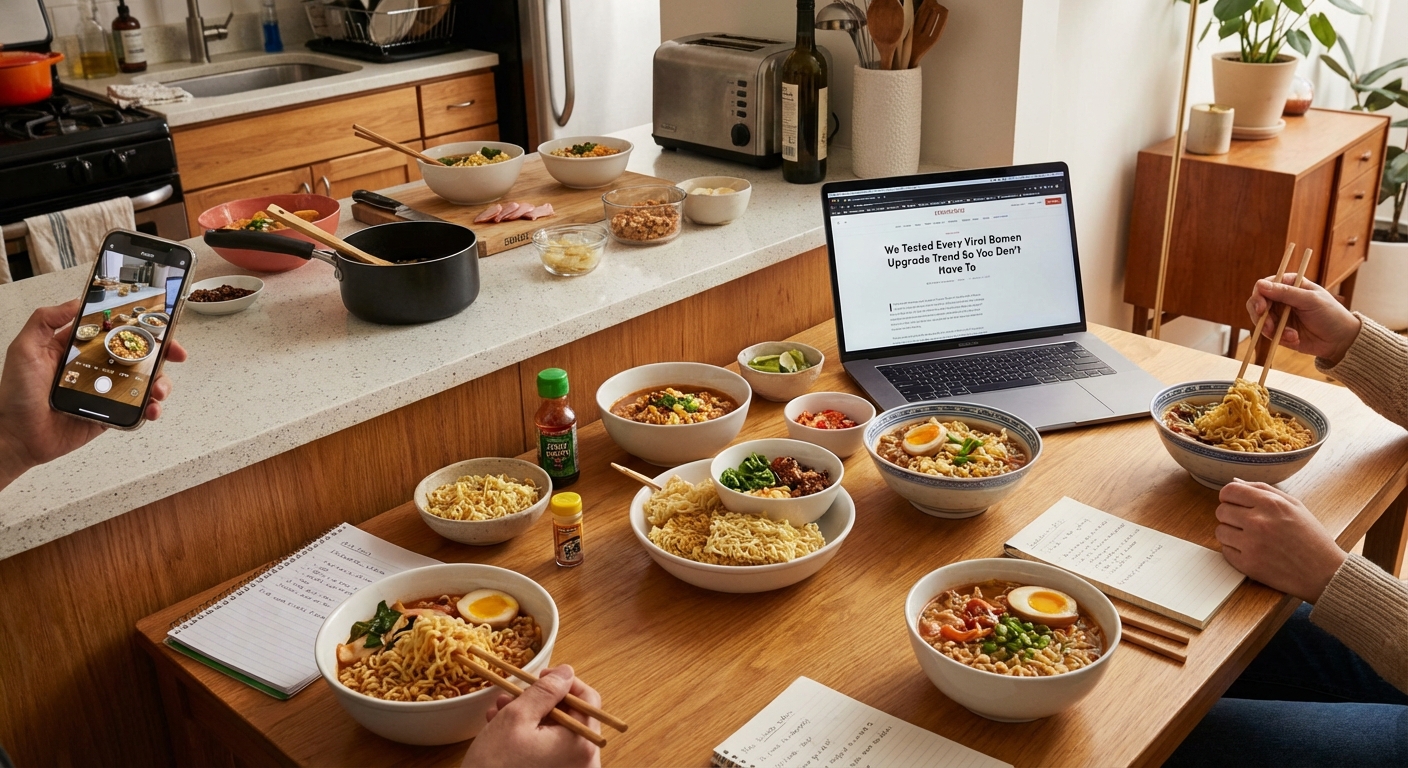
Everyone adds eggs to ramen. The difference comes down to timing.
Hard-boiled eggs (the kind you see in instant ramen ads) are fine. But soft-boiled eggs with jammy, golden yolks create an entirely different experience. When you break the yolk, it mixes with the broth and creates this luxurious, velvety texture.
Here’s the method that worked best for us:
- Bring a small pot of water to a rolling boil
- Gently lower room-temperature eggs into the water with a spoon
- Set a timer for exactly 6 minutes and 30 seconds
- Prepare an ice bath while the eggs cook
- Transfer eggs immediately to ice water for 2 minutes
- Peel carefully and add to your finished ramen
The ice bath stops the cooking process at the perfect moment. Your yolk stays runny, and the whites set just enough to hold together.
Cost per serving: $0.30
Difficulty: Requires precise timing
Verdict: Game changer if you can nail the timing
The garlic butter hack lives up to expectations
This one’s simple but effective. You add a tablespoon of butter and minced garlic to your finished ramen. Some versions call for garlic powder, but fresh garlic makes a noticeable difference.
The butter adds richness without overwhelming the original flavor profile. The garlic brings a savory punch that makes even the cheapest ramen taste more complex. We tested this across chicken, beef, and shrimp varieties, and it improved all of them.
Pro tip: brown your minced garlic in the butter for 30 seconds before adding it. The toasted garlic flavor takes this from good to restaurant quality.
Cost per serving: $0.40
Difficulty: Minimal
Verdict: Easy win for garlic lovers
Why the peanut butter trend fell flat

TikTok promised that adding peanut butter would create a Thai-inspired peanut noodle situation. We tested smooth and crunchy versions with multiple ramen flavors.
It didn’t work.
The peanut butter made the broth gritty and overpowering. The artificial chicken or beef flavoring clashed with the peanut taste. Even when we tried natural peanut butter, the texture remained off-putting.
The only scenario where this worked was when we completely ditched the seasoning packet and built our own sauce with peanut butter, soy sauce, sesame oil, and rice vinegar. But at that point, you’re making a different dish entirely.
Cost per serving: $0.50
Difficulty: Easy to execute, hard to enjoy
Verdict: Skip it unless you’re creating your own sauce from scratch
Cheese pulls work with the right cheese
Another Instagram favorite involves adding mozzarella or American cheese slices to create those satisfying cheese pulls. We tested both varieties plus cheddar and processed cheese singles.
The winner? American cheese slices.
They melt evenly into the broth without separating or getting greasy. Mozzarella created impressive visual pulls for videos but added almost no flavor. Cheddar overwhelmed the broth and made everything taste like mac and cheese (not necessarily bad, just unexpected).
For the best results, tear the cheese slice into smaller pieces and distribute them across your noodles. Let them melt for 30 seconds before stirring.
Cost per serving: $0.60
Difficulty: None
Verdict: Fun for content, genuinely tasty with American cheese
The vegetable additions that matter
Raw vegetables in ramen seems obvious, but timing and selection matter more than you’d think.
Vegetables that worked:
– Baby spinach (added at the very end, wilts perfectly)
– Thinly sliced mushrooms (added during cooking)
– Frozen corn (added with noodles)
– Bean sprouts (added raw at the end for crunch)
– Green onions (always a winner)
Vegetables that didn’t:
– Broccoli florets (took too long to cook properly)
– Cherry tomatoes (made the broth weirdly acidic)
– Bell peppers (stayed too crunchy)
– Carrots (needed pre-cooking)
The best approach combines cooked and raw elements. We loved adding frozen corn and mushrooms during the cooking process, then topping with fresh spinach and green onions right before eating.
Cost per serving: $0.75 to $1.50
Difficulty: Just chopping
Verdict: Essential for making ramen feel like an actual meal
Sesame oil transforms the aroma
A few drops of toasted sesame oil at the end changed everything about the eating experience. The nutty aroma made our dorm room smell like an actual restaurant instead of instant noodles.
The key word is “drops.” We’re talking maybe half a teaspoon maximum. Sesame oil has an intense flavor, and too much turns your ramen bitter and overwhelming.
We also tested chili oil for spice lovers. That worked beautifully with any ramen variety, adding heat and complexity without requiring extra ingredients.
Cost per serving: $0.20
Difficulty: Measuring carefully
Verdict: Small investment, huge impact
What we learned about viral trends versus practical upgrades
After testing dozens of modifications, patterns emerged. The hacks that went most viral weren’t always the most practical or delicious.
| Hack | Viral Status | Actual Quality | Cost | Worth It? |
|---|---|---|---|---|
| Cream cheese | Extremely high | Excellent | $1.50 | Yes |
| Soft-boiled egg | Medium | Excellent | $0.30 | Yes |
| Garlic butter | Medium | Very good | $0.40 | Yes |
| Peanut butter | Very high | Poor | $0.50 | No |
| American cheese | High | Good | $0.60 | Sometimes |
| Sesame oil | Low | Excellent | $0.20 | Yes |
| Ice bath noodles | High | Terrible | $0 | Never |
| Instant coffee | Medium | Confusing | $0.10 | No |
The ice bath hack deserves special mention. Creators claimed that shocking your noodles in ice water after cooking makes them chewier and more “authentic.” In reality, it just made them cold and required reheating. The texture difference was minimal at best.
The instant coffee trend (adding a tiny amount of instant coffee to beef ramen for “depth”) tasted exactly like you’d expect: ramen with a weird coffee aftertaste. Some people swear by it. We are not those people.
Building your ultimate ramen upgrade strategy
Based on our testing, here’s the approach that balances cost, effort, and results.
The basic upgrade (under $1 total):
– Soft-boiled egg
– Sesame oil drizzle
– Green onions
The comfort food version (under $2 total):
– Cream cheese
– American cheese slice
– Garlic butter
– Frozen corn
The fancy version (under $3 total):
– Soft-boiled egg
– Sautéed mushrooms
– Baby spinach
– Garlic butter
– Sesame oil
– Bean sprouts
None of these require advanced cooking skills. The most complicated step is timing your egg properly, and even that becomes automatic after a few tries.
The hacks we wanted to love but couldn’t
Some trends looked amazing on camera but disappointed in practice. The “ramen carbonara” hack involved mixing raw egg yolk with the noodles off heat. It created a creamy texture similar to actual carbonara, but the raw egg factor made us nervous about food safety, especially for anyone making this in a dorm without proper temperature control.
The “ramen pizza” trend (using fried ramen as a pizza crust) was more novelty than actual improvement. It tasted fine but required way more effort than just making regular ramen or ordering actual pizza.
Turning ramen into a “burrito” by wrapping it in a tortilla with cheese felt like something you’d do on a dare, not an actual meal upgrade. The textures clashed, and the whole thing fell apart immediately.
“The best ramen hacks enhance what’s already there instead of completely transforming the dish. You want to upgrade your noodles, not disguise them.” – College student who’s been perfecting ramen for four years
How to avoid common mistakes
We made every possible error during our testing phase. Learn from our mistakes:
Don’t add upgrades too early. Cream cheese needs to go in after you’ve turned off the heat. Otherwise, it can separate or burn on the bottom of the pot.
Don’t skip the seasoning packet entirely. Even when adding lots of extras, that packet provides the base flavor. You can use less of it, but ditching it completely usually results in bland noodles.
Don’t overcook your noodles. When you’re adding eggs, vegetables, and other ingredients, the noodles continue cooking. Pull them off heat about 30 seconds earlier than the package suggests.
Don’t forget about texture contrast. The best upgraded ramen has soft noodles, creamy elements, and something crunchy. That’s why bean sprouts or green onions matter more than you’d think.
Don’t try every hack at once. We made this mistake early on. Combining cream cheese, peanut butter, and three types of cheese created an inedible disaster. Stick to complementary flavors.
The budget breakdown that matters
College students and anyone on a tight budget need real numbers. Here’s what upgrading actually costs compared to eating out.
A basic packet of ramen: $0.50
A fully upgraded bowl with our “fancy version”: $3.50 total
A comparable restaurant ramen bowl: $12 to $18
A comparable delivery ramen bowl (with fees): $18 to $25
Even our most expensive upgrade costs less than a quarter of what you’d pay for delivery. And you can mix and match based on what’s in your fridge.
Buying ingredients in bulk drops costs even further. A block of cream cheese gives you 8 servings. A bottle of sesame oil lasts months. Eggs are cheap everywhere.
When to use which hack
Not every situation calls for the same upgrade approach. Match your modification to your circumstances.
Late night study session: Garlic butter and green onions. Fast, satisfying, won’t make you too full to focus.
Actual hunger after class: Full comfort food version with cream cheese and eggs. This becomes a real meal that keeps you full.
Impressing someone: Fancy version with multiple toppings arranged nicely. Presentation matters when you’re trying to prove you can cook.
Hangover recovery: American cheese and soft-boiled egg. Comforting without being too rich or spicy.
Post-workout: Add extra vegetables and double the eggs for protein. Skip the cream cheese to keep it lighter.
Content creation: Cheese pull hacks and anything visually impressive. Sometimes you need that perfect shot for your stories, even if why everyone’s talking about the latest k-drama that just dropped on netflix is what you’re actually binge-watching while you eat.
The tools that actually help
You don’t need specialty equipment, but a few basic items make upgrades easier.
A small pot with a lid beats the microwave for texture and control. Microwaved ramen works in a pinch, but you can’t properly soft-boil eggs or melt cream cheese evenly that way.
A slotted spoon helps with egg transfers and fishing out noodles without dumping all the broth.
A sharp knife matters more for vegetables than you’d think. Trying to slice green onions with a dull blade is frustrating and potentially dangerous.
Small prep bowls let you organize your ingredients before cooking. This sounds excessive, but when your noodles are ready in three minutes, having everything chopped and measured prevents overcooking.
Why some trends stick around
The cream cheese hack has staying power because it fundamentally improves the eating experience. It’s not just different; it’s better. The same goes for soft-boiled eggs and garlic butter.
Meanwhile, trends like the ice bath method or instant coffee addition fade because they’re more about novelty than improvement. They give you something to post about, but you won’t actually make them twice.
The best viral ramen hacks solve real problems. Ramen broth can be thin and one-dimensional. Cream cheese fixes that. Plain noodles need protein and richness. Eggs provide both. The base flavor needs depth. Garlic butter delivers.
Trends that create new problems (like requiring ice baths or making you question food safety) don’t last beyond their initial viral moment.
Making upgrades work in different living situations
Dorm room with just a microwave:
You’re limited but not helpless. Microwave your ramen in a large bowl. Add cream cheese and American cheese after cooking (they’ll melt from residual heat). Top with green onions and sesame oil. Skip the soft-boiled egg unless you have access to a communal kitchen.
Shared kitchen access:
This opens up everything. Boil eggs in batches and store them in the fridge for the week. Prep your vegetables in advance. You can even make garlic butter ahead of time and keep it in a small container.
Full kitchen:
You have no excuses. Try every hack. Experiment with combinations. Make your own variations.
Office break room:
Similar to dorm limitations. Stick to ingredients that don’t require cooking. Sesame oil, pre-cooked eggs from home, and cheese work well. Skip anything that needs precise timing or temperature control.
The unexpected benefits of upgraded ramen
Better ramen made us more likely to eat at home instead of ordering delivery. That saved money and time.
Learning to properly time a soft-boiled egg translated to other cooking skills. If you can nail that six-and-a-half-minute window, you can handle most basic cooking techniques.
Having go-to upgrades reduced decision fatigue. Instead of staring at delivery apps for 20 minutes, we knew exactly how to make something satisfying in less time.
The vegetables we bought for ramen got used in other meals too. Buying green onions or mushrooms for noodles meant having them available for eggs, sandwiches, or whatever else we made.
What actually matters for your next bowl
After all this testing, the truth is simple. Three upgrades transform ramen from survival food to something you’d actually choose to eat: a properly cooked egg, something creamy (cream cheese or butter), and fresh aromatics (garlic and green onions).
Everything else is optional. Nice to have, fun to try, good for variety. But those three elements create the foundation of genuinely better ramen.
Start there. Master the soft-boiled egg timing. Get comfortable with cream cheese ratios. Learn how much garlic you personally prefer.
Then experiment with the other hacks based on what sounds good to you. Not everything that goes viral will match your taste preferences, and that’s completely fine. The goal isn’t to follow every trend. It’s to find the upgrades that make your meals better without adding stress or breaking your budget.
Your ramen, your rules. Just maybe skip the peanut butter thing unless you really, truly love the idea of nutty, artificial-chicken-flavored broth. We tried it so you don’t have to, and trust us on this one.













Post Comment