Why Your Gut Health Might Be Affecting Your Mood (And How to Fix It)

You know that nervous feeling in your stomach before a big presentation? Or how stress can mess with your digestion? That’s your gut and brain talking to each other. And it turns out, this conversation goes both ways in ways that might explain why you’ve been feeling off lately.
Your gut and brain communicate constantly through the gut-brain axis, affecting both your digestion and mental state. The trillions of bacteria in your digestive system produce neurotransmitters like serotonin that directly influence your mood. By improving your gut health through diet, stress management, and lifestyle changes, you can significantly boost your emotional wellbeing and reduce symptoms of anxiety and depression.
Understanding the gut-brain connection
Your digestive system isn’t just about breaking down food. It houses around 100 trillion bacteria, collectively called the gut microbiome. These tiny organisms do way more than help you digest lunch.
They produce neurotransmitters. They regulate inflammation. They even communicate directly with your brain through what scientists call the gut-brain axis.
Think of this axis as a superhighway connecting your gut and brain. Messages travel both directions constantly. When your gut bacteria are happy and balanced, they send positive signals upward. When they’re out of whack, those signals can contribute to anxiety, depression, and mood swings.
The vagus nerve plays a major role here. This nerve runs from your brainstem to your abdomen, carrying signals back and forth. Studies show that certain gut bacteria can activate the vagus nerve, sending messages that influence your emotional state.
About 90% of your body’s serotonin is produced in your gut. Yes, the same serotonin that antidepressants target. Your gut bacteria help regulate this production. When your microbiome is imbalanced, serotonin production can drop, potentially affecting your mood.
Why your gut might be making you feel down
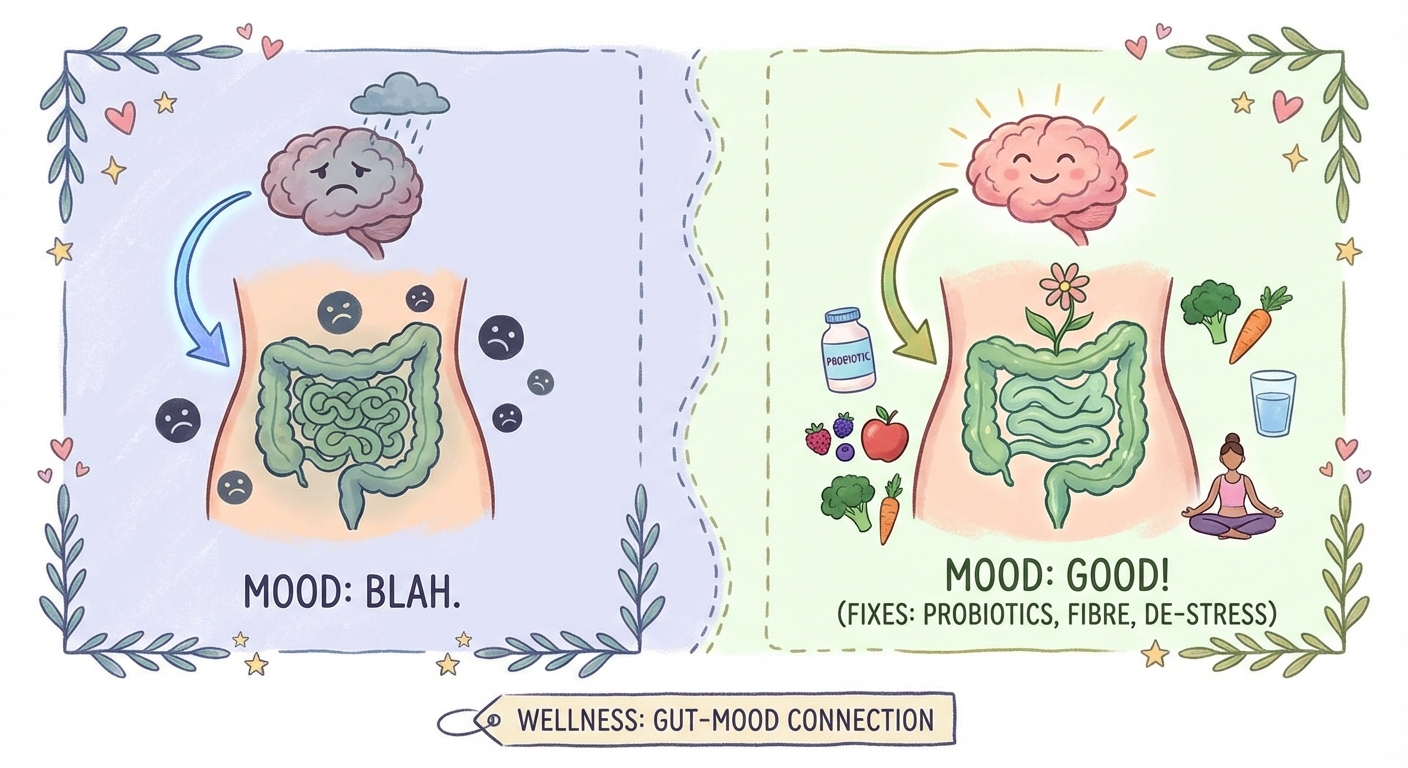
Several gut issues can mess with your mental health without you realizing it.
Inflammation in the digestive tract can trigger system-wide inflammation. This inflammatory response has been linked to depression and anxiety. Your body essentially stays in a low-level state of alert, which affects how you feel emotionally.
An imbalanced microbiome, called dysbiosis, can happen for many reasons. Antibiotics wipe out good bacteria along with bad. Processed foods feed harmful bacteria while starving beneficial ones. Chronic stress alters the gut environment, making it harder for good bacteria to thrive.
Food intolerances create ongoing digestive distress. When your gut is constantly irritated, it sends stress signals to your brain. Over time, this can contribute to mood problems. Many people don’t realize they’re intolerant to certain foods until they eliminate them and notice their mood improves.
Poor gut barrier function, sometimes called leaky gut, allows particles to escape the digestive tract and enter the bloodstream. This triggers immune responses and inflammation that can affect brain function and mood regulation.
“The gut microbiome is like a forgotten organ. We’re only beginning to understand how profoundly it influences our mental health. Small changes in diet and lifestyle can create measurable improvements in both gut health and emotional wellbeing within weeks.”
Signs your gut might be affecting your mood
Not sure if your digestive system is influencing how you feel? Watch for these patterns.
Common indicators include:
- Mood swings that seem to correlate with digestive issues
- Anxiety or depression that worsens after certain meals
- Brain fog that comes and goes with digestive symptoms
- Sleep problems paired with stomach discomfort
- Unexplained irritability alongside bloating or gas
- Energy crashes that coincide with digestive distress
If you notice these connections, your gut health and mood are likely linked. The good news? You can do something about it.
How to rebuild your gut for better mental health
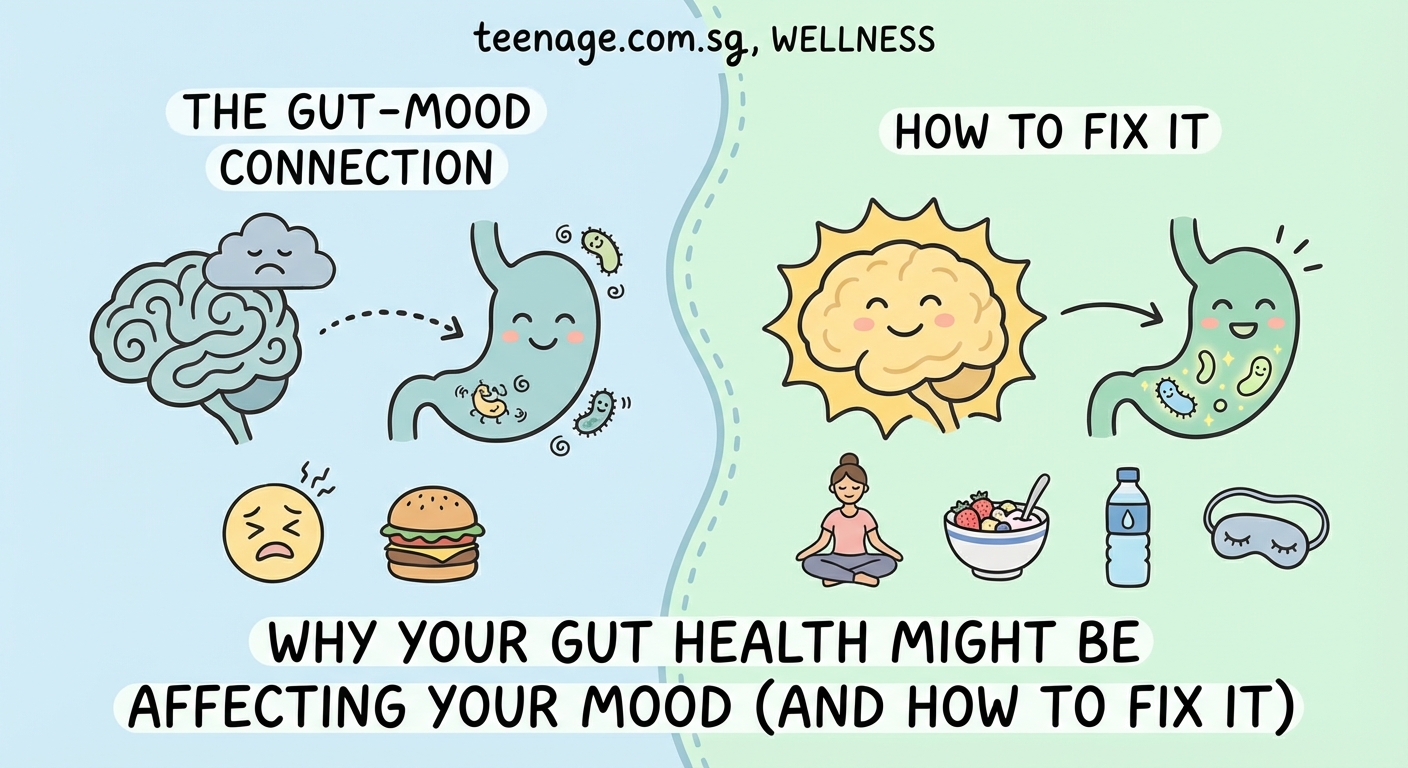
Improving your gut microbiome takes time, but the payoff is worth it. Here’s a step-by-step approach.
1. Add more fiber and fermented foods
Your gut bacteria feed on fiber. When you eat more vegetables, fruits, whole grains, and legumes, you’re literally feeding the good bacteria in your system.
Fermented foods introduce beneficial bacteria directly. Yogurt with live cultures, kefir, sauerkraut, kimchi, and kombucha all contain probiotics that can help rebalance your microbiome.
Start small. Add one serving of fermented food daily. Increase your fiber intake gradually to avoid digestive upset. Your gut needs time to adjust.
2. Cut back on processed foods and added sugar
Highly processed foods and excess sugar feed harmful bacteria. These bacteria produce compounds that can negatively affect your mood and mental clarity.
You don’t need to eliminate everything overnight. Start by swapping one processed snack for whole food options. Replace sugary drinks with water or herbal tea. Small changes add up.
3. Manage stress through daily practices
Stress directly harms your gut microbiome. It changes the bacterial composition and increases gut permeability. Finding ways to manage stress protects your gut and your mood.
Try these approaches:
- Ten minutes of deep breathing each morning
- A short walk outside during lunch
- Journaling before bed
- Stretching or yoga between tasks
Even if social media is ruining your sleep, creating a calming evening routine can help both your gut and your rest quality.
4. Prioritize consistent sleep
Your gut bacteria follow a circadian rhythm just like you do. Irregular sleep patterns disrupt this rhythm, leading to microbiome imbalance.
Aim for seven to nine hours nightly. Keep a consistent sleep schedule, even on weekends. Your gut will thank you, and your mood will likely improve.
5. Move your body regularly
Exercise benefits your gut microbiome in multiple ways. It increases bacterial diversity, reduces inflammation, and improves gut barrier function.
You don’t need intense workouts. A 30-minute walk most days makes a difference. Find movement you enjoy so you’ll stick with it.
6. Consider probiotic and prebiotic supplements
While food should be your primary source, supplements can help in certain situations. Probiotics introduce beneficial bacteria. Prebiotics provide food for those bacteria.
Look for multi-strain probiotics with at least 10 billion CFUs. Prebiotic fiber supplements can help if you struggle to get enough fiber from food.
Always check with a healthcare provider before starting supplements, especially if you have underlying health conditions.
Common mistakes that sabotage gut health
| Mistake | Why It Hurts Your Gut | Better Approach |
|---|---|---|
| Taking antibiotics without probiotics | Wipes out beneficial bacteria along with harmful ones | Take probiotics during and after antibiotic treatment |
| Eating the same foods every day | Reduces bacterial diversity | Rotate different vegetables, proteins, and whole grains |
| Skipping meals regularly | Disrupts gut bacteria rhythms | Eat at consistent times, even if meals are smaller |
| Relying on artificial sweeteners | Can alter gut bacteria composition negatively | Use small amounts of natural sweeteners like honey or maple syrup |
| Drinking too much alcohol | Increases gut permeability and inflammation | Limit to moderate amounts, take breaks between drinking days |
| Not drinking enough water | Affects digestion and bacterial environment | Aim for eight glasses daily, more if you exercise |
What to expect when you start improving your gut
Changes won’t happen overnight. Your microbiome needs time to rebalance.
In the first week, you might notice digestive changes. Some people experience temporary bloating as their gut adjusts to more fiber. This usually passes.
By week two to three, many people report better energy levels. Your body is getting better at extracting nutrients from food.
Around week four to six, mood improvements often become noticeable. You might feel less anxious, more emotionally stable, or generally more positive.
After two to three months, the changes become more established. Your gut bacteria have had time to shift toward a healthier balance. Many people report sustained improvements in both digestive symptoms and mental wellbeing.
Keep in mind that everyone’s timeline differs. Some people see changes faster, others need more time. Consistency matters more than speed.
When professional help makes sense
Sometimes gut issues need medical attention. See a doctor if you experience:
- Severe or persistent abdominal pain
- Unexplained weight loss
- Blood in your stool
- Chronic diarrhea or constipation that doesn’t improve
- Depression or anxiety that interferes with daily life
A gastroenterologist can test for specific conditions like inflammatory bowel disease, celiac disease, or small intestinal bacterial overgrowth (SIBO). These conditions require targeted treatment beyond general lifestyle changes.
Mental health professionals can help if mood issues persist despite gut health improvements. Sometimes you need both approaches working together.
Building habits that stick
Knowing what to do is one thing. Actually doing it consistently is another.
Start with one change at a time. Pick the easiest modification first. Maybe that’s adding a daily yogurt or taking a 15-minute walk. Master that before adding more.
Track your progress. Note how you feel physically and emotionally each day. Patterns will emerge. You’ll see which changes make the biggest difference for you.
Find accountability. Tell a friend about your goals. Join an online community focused on gut health. Having support makes consistency easier.
Be patient with yourself. Some days you’ll nail it. Other days you’ll eat pizza and skip your walk. That’s fine. What matters is getting back on track the next day.
Your gut is worth the investment
Taking care of your gut health and mood isn’t about perfection. It’s about making choices that support both your digestive system and your mental wellbeing most of the time.
The connection between your gut and brain is real, powerful, and something you can influence. Small, consistent changes in what you eat, how you manage stress, and how you live your daily life can create meaningful improvements in how you feel.
Start where you are. Pick one thing from this article to try this week. Notice what happens. Then build from there. Your gut and your mood will both benefit from the attention you give them.














Post Comment