The Unwritten Rules of TikTok That Every Singapore Teen Should Know
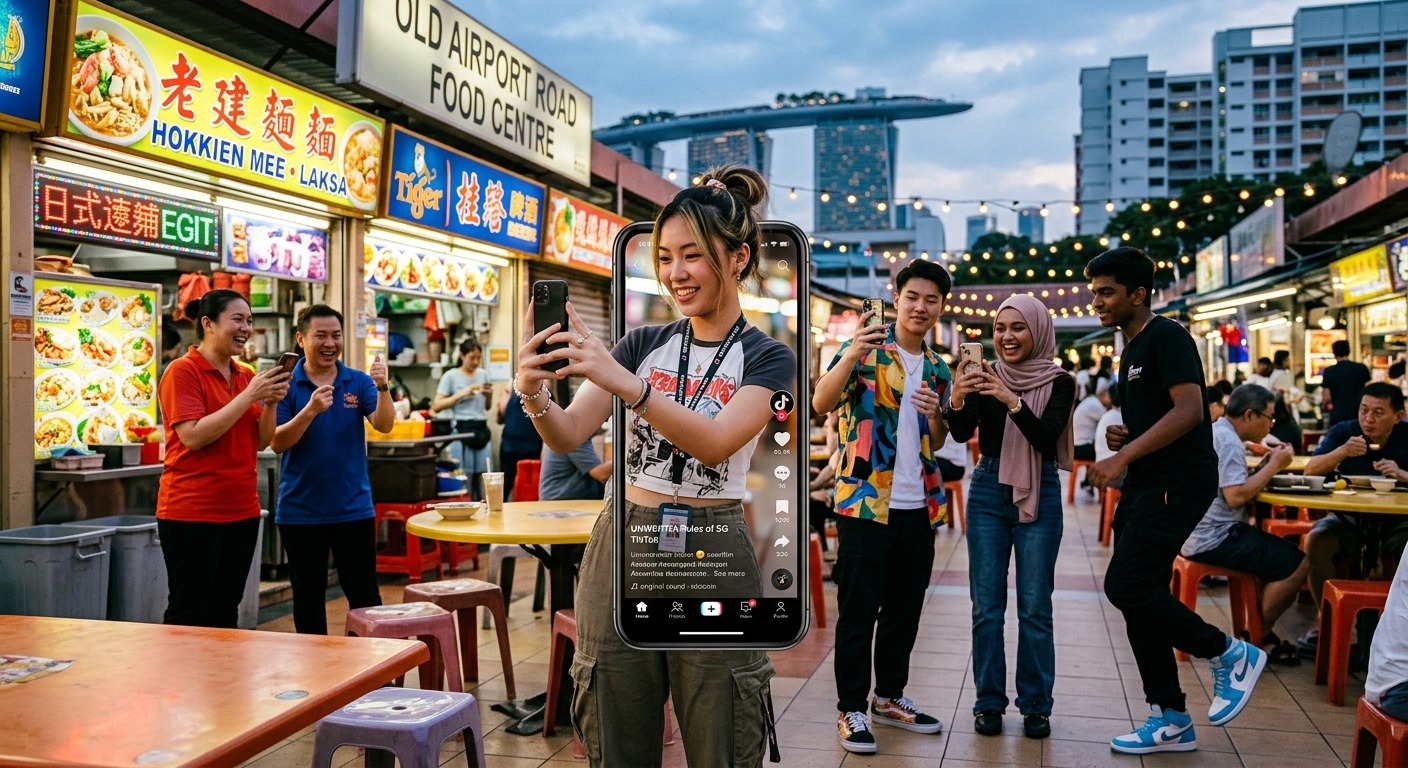
You’re on the North-South Line, earphones in, phone tilted so the auntie beside you can’t see your screen. The MRT slides from Bishan toward Ang Mo Kio and you’re already three videos deep before the doors close. That is the Singapore TikTok experience. The platform runs on invisible rules nobody explains in the tutorial. Break them and your comment looks out of place. Know them and your content actually connects.
TL;DR: The Invisible Rulebook
TikTok is far more than a short-video app. It runs on its own etiquette, timing, and visual vocabulary that shifts constantly. Singapore teens who thrive here understand when to post, how to read a comment section properly, what a duet or stitch signals about your relationship to another creator, and why certain visual cues carry weight that a newcomer would completely miss. This article walks through the unspoken layer underneath every trending sound.
The Comment Section Has Its Own Secret Language
TikTok comments are not like Instagram or Reddit. The vibe is faster, more self-referential, and built around inside jokes that can shift within a week. On Singapore feeds, a huge portion of the comment humour is layered with local references. “Confirm plus chop” appears under videos about obviously bad decisions. “Sian” shows up when a creator recounts a frustrating moment. These are not random choices. They signal that the commenter belongs to the same world as the creator.
The first thing to understand is the “main character” comment. When someone posts about an embarrassing moment, a string of replies will appear saying things like “bestie you are NOT the main character here.” It sounds harsh but the tone is almost always affectionate. Reading it as genuine criticism would be the wrong call entirely.
There is also the pinned comment culture. Creators pin certain replies to set the tone for the whole thread. If a creator pins a playful response, the section stays light and riffing. If they pin a clarification, most readers will follow that cue and keep things civil. Reading the pinned comment first gives you the temperature of the entire discussion before you type anything yourself.
The algorithm-friendly comment is another real phenomenon. Short, specific, and reactive comments like “that part at 0:17 though” pull more engagement back than generic ones like “so relatable!” Singapore creators will often reply to specific comments before vague ones. If you want your comment noticed, write something that proves you actually watched the video through to the end.
What It Actually Means to Be Dueted or Stitched
A duet splits the screen. Your video plays on one side while someone else’s plays on the other in real time. A stitch lets another creator clip up to five seconds of your video and build their own content directly on top of it. Both are tools for conversation, but they carry very different social meanings depending on who uses them and why.
Getting duetted by a bigger account is a genuine signal of visibility. It doesn’t always mean they agree with you. On TikTok, duets are used to react, mock, praise, and debate. Context matters enormously. A straight-faced duet from a popular creator who normally makes critique content is a very different thing from a clearly delighted reaction duet from someone with a large following who loves what you made.
Singapore teens have developed a local version of duet culture around food and travel content. Someone posts their hawker centre recommendation, another creator duets it eating the exact same dish, and the comment section becomes a whole conversation about that specific stall. That chain of response is one of the main ways local food recommendations actually travel across the platform and reach people who wouldn’t otherwise have stumbled on them.
Stitches work more like citations. You’re pulling someone’s moment and placing it inside your own narrative. When a local creator stitches a viral overseas video to contrast it with a Singapore version of the same situation, it signals creative ownership. That is a higher-effort move than a duet and tends to perform better because the content stands entirely on its own without leaning on the original.
The etiquette here is straightforward. If you don’t want to be duetted or stitched, turn those settings off. If you leave them on, you’re implicitly opening the door to conversation. Most creators in Singapore leave them on. That openness is part of how the local creator network stays connected.
Timing Your Post Around Singapore Life
The For You Page doesn’t just surface what’s globally popular. TikTok’s recommendation algorithm weights recency, completion rate, and local engagement patterns heavily, which how TikTok recommends videos breaks down in detail. In Singapore, that plays out in very specific ways tied to the rhythms of local life.
School holidays are a posting goldmine. When the June and November breaks hit, teen creators see their completion rates climb noticeably. More people have the time to actually finish watching a video rather than cutting out before their MRT stop arrives. Longer videos perform better during holiday weeks. Short, punchy content does better during term time when everyone is genuinely time-crunched and scrolling in five-minute windows between classes.
The MRT commute window is a measurable reality. Morning peak from around 7am to 9am and evening peak from about 5.30pm to 7.30pm are the hours when Singaporeans scroll hardest. Most of that scrolling happens without sound because nobody wants to be that person on the train. If your video depends entirely on audio to land its punchline, it will underperform during these windows. Text overlays and captions are not just accessibility features. They are a commuter survival strategy.
Exam season is the one period where posting anything heavily school-related feels a little tone-deaf. Content that is light, escapist, or food-focused tends to hold up well during those weeks. Study content also performs surprisingly well during the O and A Level periods because students feel slightly less guilty watching something that at least looks like productivity, even when it isn’t.
TikTok’s Visual Shorthand and Why It Matters
TikTok has built its own visual vocabulary over years of meme cycles and inside jokes. Certain text fonts, specific color grading styles, and even the way a creator holds their phone all carry meaning that long-time users read instantly but newcomers miss completely. This layer of shorthand is what separates content that feels native to the platform from content that looks like it was filmed for somewhere else and posted here by accident.
The Emoji Layer That Most People Misread
The most misread part of this vocabulary is how emojis work specifically on TikTok. TikTok emojis operate differently from standard Unicode ones because TikTok has its own set of secret emoji codes that render as custom platform-exclusive images when typed between square brackets in comments. These faces and poses don’t show up on any other app. Using the wrong emoji for a situation, or reaching for a standard face when the community uses a TikTok-specific one, marks you immediately as someone who hasn’t spent enough time in the comment sections to pick up the shorthand.
The skull emoji is a classic example of how meaning shifts completely on the platform. Off TikTok it looks morbid. On TikTok, “I’m dead” is the highest expression of laughter. The crying-laughing face that dominated every other platform for years is mostly used ironically now. Using it sincerely can come across as a little dated, the emoji equivalent of sending a text that ends with “LOL” without any awareness of how that reads in 2026. Keeping track of how emoji meaning shifts is part of staying fluent in the culture.
Singapore-specific visual cues appear throughout local content as well. Red and green color schemes under hawker centre lighting. School uniform clips that signal a very specific kind of relatability. HDB corridor backdrops that immediately read as local without anyone needing to add a location tag. These visuals function as shorthand signals that tell a viewer this content was made specifically for them, not adapted from somewhere else and relabelled.
Why the Same Reaction Lands Completely Differently Depending on Context
This is the rule that trips up most newcomers. A comment warmly received on one video can start a minor argument on another. TikTok’s tone shifts by creator, by community, and by exactly where a trend sits in its lifecycle when you arrive.
When a joke trend is in its first three days, the comment section is open and playful. Everyone is riffing and adding new angles to the bit. By the end of week two, the tone shifts toward gatekeeping. Comments start questioning whether a creator genuinely understands the original joke or whether they’re just chasing reach. Jumping in late can make you look like you’re performing participation rather than actually being part of it.
Singapore-specific etiquette kicks in around local slang. If a non-local creator uses Singlish in a way that feels performed rather than natural, the comment section will clock it almost immediately. Local creators can mix Singlish and English freely without it reading as inauthentic because the community knows the difference between someone who grew up speaking it and someone who picked it up to seem relatable. The unspoken rule is that context and history matter. The community has a long memory and pays close attention to who actually lives the experiences they’re posting about.
How Singapore Creators Built Their Own Corner of the Feed
There is a specific section of TikTok that belongs entirely to Singapore content. It doesn’t trend globally but it circulates intensely within the local community. Creators who document polytechnic life, National Service experiences, affordable café spots near Jurong or Tampines, or the particular stress of managing Singapore’s academic calendar have built loyal followings that overseas accounts simply cannot replicate. The content resonates because it is exact. It isn’t a general Southeast Asian teen experience. It is a specifically Singaporean one, right down to the complaining about PSLE and the joy of a $3.50 cai png plate.
Supporting local creators by watching their videos through to the end, sharing them across other platforms, and leaving specific comments does something measurable. It signals to the algorithm that this content type deserves more distribution within the Singapore cluster. When enough people in the same geographic area engage with a creator consistently, that creator’s content starts appearing on more local feeds without needing to go viral elsewhere first.
The local creator community is also relatively tight-knit and well-connected. Collaborations happen fast. If you notice the same group of Singapore creators appearing on each other’s content repeatedly, that is usually an organic network that formed through comment interactions and mutual support built up steadily over time. Getting into that circle starts with genuine engagement, not with mass-following or copy-paste comments.
Your Feed, Your Signal, Your Reputation
TikTok builds a profile of you through every action you take, not just the videos you post. What you watch to the end, what you skip at the three-second mark, who you follow after a single video, and what time of day you’re most active all shape what gets served back to you. The app is constantly reading the way you behave, and your feed over time becomes a fairly accurate mirror of those patterns.
Your comment history is also a kind of public portfolio. The comment section is not private. Other creators and potential followers scroll your comment history before deciding whether to follow you. Comments that show genuine engagement, sharp humour, and good faith build a reputation steadily. Comments that are dismissive, combative, or tone-deaf tend to linger far longer than most people realise. What you write on someone else’s video is still part of your presence on the platform.
The unofficial code underlying all of TikTok’s culture is simple even if the execution is subtle. Give more than you take. Engage specifically rather than generically. Know when to join a conversation and when to let it pass. The unwritten rules are not fixed law. TikTok’s culture moves fast and the norms shift with it. Stay curious, stay paying attention, and the feed will keep showing you exactly where things are headed next.













Post Comment