Why Your Face Wash Might Be Making Your Breakouts Worse
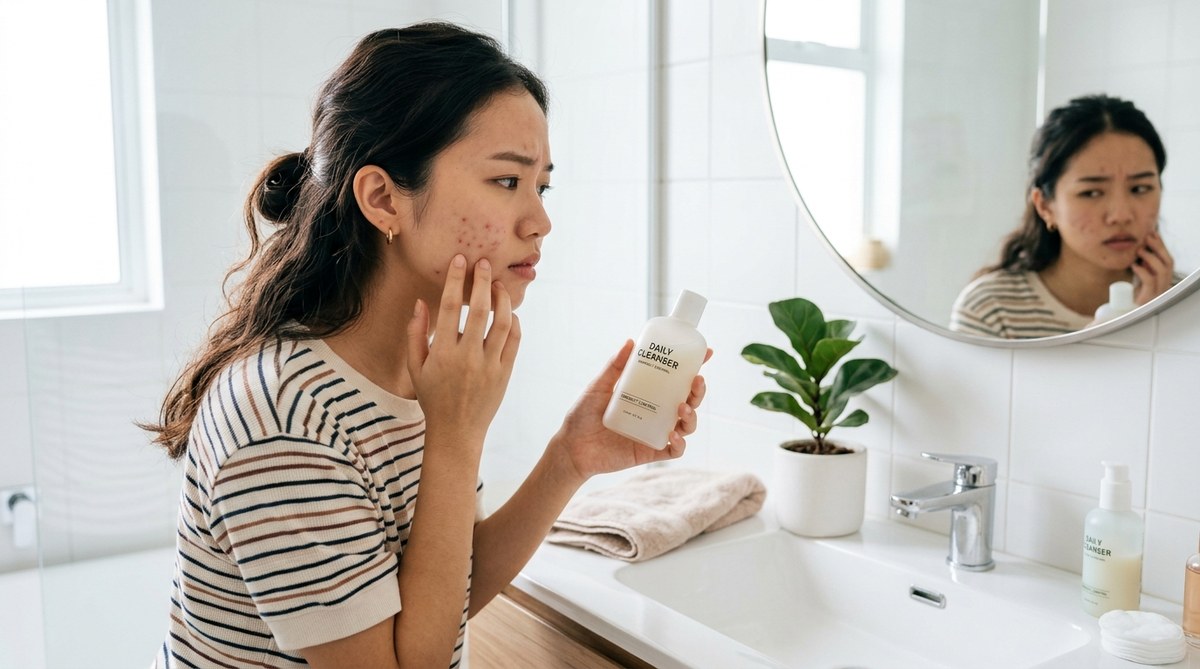
You wash your face every morning and every night. You scrub, rinse, and pat dry. Yet somehow, instead of clearing up, your skin looks angrier than before. New pimples pop up where you never had them. Your cheeks feel tight and sting when you apply moisturizer. It feels like your skincare routine is working against you.
If that sounds familiar, you are not imagining things. The cleanser you trust to clean your face could be the very thing triggering those unwanted breakouts. Let’s break down exactly why this happens and what you can do about it.
Many face washes strip your skin of its natural oils, which causes your oil glands to go into overdrive. This excess oil mixes with dead skin cells and clogs pores, leading to breakouts. Harsh sulfates, heavy fragrances, and certain oils can also irritate acne-prone skin. The fix is choosing a gentle, non-comedogenic cleanser with the right pH balance.
The Hidden Science of Why Face Wash Backfires
Your skin has a protective barrier called the acid mantle. This thin, slightly acidic layer keeps moisture in and bacteria out. When you use a cleanser that is too harsh, it strips this barrier away. Your skin panics. It sends signals to produce more oil to compensate for what was lost. More oil means clogged pores. Clogged pores mean breakouts.
This is the most common reason why face wash causes breakouts. You are not dirty. You are over-cleansed.
The Sulfate Problem
Many foaming cleansers contain sulfates like sodium lauryl sulfate (SLS) or sodium laureth sulfate (SLES). These ingredients create that satisfying lather you see in ads. But they are also strong detergents. They can strip your skin’s natural lipids faster than your face can recover.
- SLS and SLES can disrupt your skin barrier after just one wash.
- A damaged barrier loses water and lets irritants in.
- Irritation triggers inflammation, which is a direct cause of acne.
“If your face feels tight or squeaky clean after washing, that’s a red flag. Healthy skin should feel comfortable, not stripped.” — Dr. Michelle Lee, board-certified dermatologist
Ingredient Culprits That Trigger Breakouts
Some face washes contain ingredients that are known pore-cloggers. Even if a product is labeled “for acne,” it might still contain problematic components. Here is a table of common ingredients to watch out for:
| Ingredient Type | Why It Causes Breakouts | Where It Hides |
|---|---|---|
| Coconut oil | Highly comedogenic (clogs pores) | Cream cleansers, oil-based washes |
| Cocoa butter | Thick, heavy, traps dead skin | Moisturizing face washes |
| Isopropyl myristate | Penetrates deeply and irritates follicles | “Non-greasy” formulas |
| Fragrance (parfum) | Irritates sensitive skin, triggers inflammation | Almost any scented product |
| Alcohol denat. | Strips barrier, leads to rebound oil | Gel cleansers for oily skin |
If you see any of these on the back of your bottle, your face wash might be the reason your skin is rebelling.
How to Tell If Your Face Wash Is the Problem
You can run a simple test. Stop using your current cleanser for three days. Just rinse your face with lukewarm water in the morning and at night. If your skin starts to calm down, your face wash was the culprit.
Here is a numbered process to help you diagnose the issue:
- Stop all active products. No cleanser, no toner, no serum. Just water for 72 hours.
- Observe your skin. Note any reduction in redness, new pimples, or tightness.
- Introduce a gentle cleanser. Pick one with a pH around 5.5 (more on that below).
- Wait one week. Compare your skin’s condition to before the test.
- Make the switch. If your skin improves, throw out the old cleanser for good.
What to Look for in a Safe Face Wash
Not all cleansers are created equal. When you shop for a new one, keep these guidelines in mind:
- Low pH (5.0 to 6.0). Your skin’s natural pH is around 5.5. A cleanser that matches this won’t disrupt your barrier.
- Non-comedogenic. This means the product is formulated to not clog pores. Look for it on the label.
- Sulfate-free. Choose gentle surfactants like coco-glucoside or decyl glucoside instead.
- Fragrance-free. Artificial fragrances are a top cause of skin irritation and allergic reactions.
Examples of Gentle Cleanser Types
- Cream or lotion cleansers (great for dry or sensitive skin)
- Gel cleansers with mild surfactants (good for oily skin, if formulated correctly)
- Micellar water (a no-rinse option that is very gentle)
Avoid anything that foams aggressively or contains “peeling” beads. Physical scrubbing can worsen acne by spreading bacteria and breaking down your skin barrier.
The Over-Cleansing Trap
Many people with acne think washing more often will help. They wash three or four times a day. They use harsh scrubs. They double-cleanse with oil-based products that leave a film behind.
This approach backfires hard.
- Over-washing strips your barrier, causing dehydration.
- Dehydrated skin produces more oil to protect itself.
- More oil equals more clogged pores.
Stick to washing your face twice a day. If you sweat heavily from a workout, rinse with water only and follow up with a gentle cleanser later.
When to See a Professional
If you have tried switching to a gentle, non-comedogenic cleanser and your breakouts continue, it might be time to check in with a dermatologist. Persistent acne can have underlying causes like hormonal imbalances, bacterial overgrowth, or even a reaction to other products in your routine (like sunscreen or makeup).
A professional can help you identify whether your face wash is the issue or if something else is going on. For more on building a routine that works, check out our guide on how to build a simple morning skincare routine in under 5 minutes.
Also, be aware that some products cause a “purging” phase where your skin pushes out existing clogs. This is different from a breakout. If you start a new active ingredient like salicylic acid or benzoyl peroxide, give it four to six weeks before judging results. But if your cleanser is the only new product, purging is unlikely. It is probably a true breakout.
Your Cleanser Should Be Your Friend, Not Your Enemy
Your face wash is supposed to be the gentlest step in your routine. It should remove dirt and oil without taking your skin’s defenses with it. If your cleanser leaves your face feeling tight, red, or irritated, it is not doing you any favors. It is actively making your acne worse.
Switch to a mild, pH-balanced, fragrance-free cleanser. Give your skin two weeks to reset. Watch the difference. Your face will thank you by staying calm, clear, and comfortable. That is the kind of glow you can actually feel good about.














Post Comment